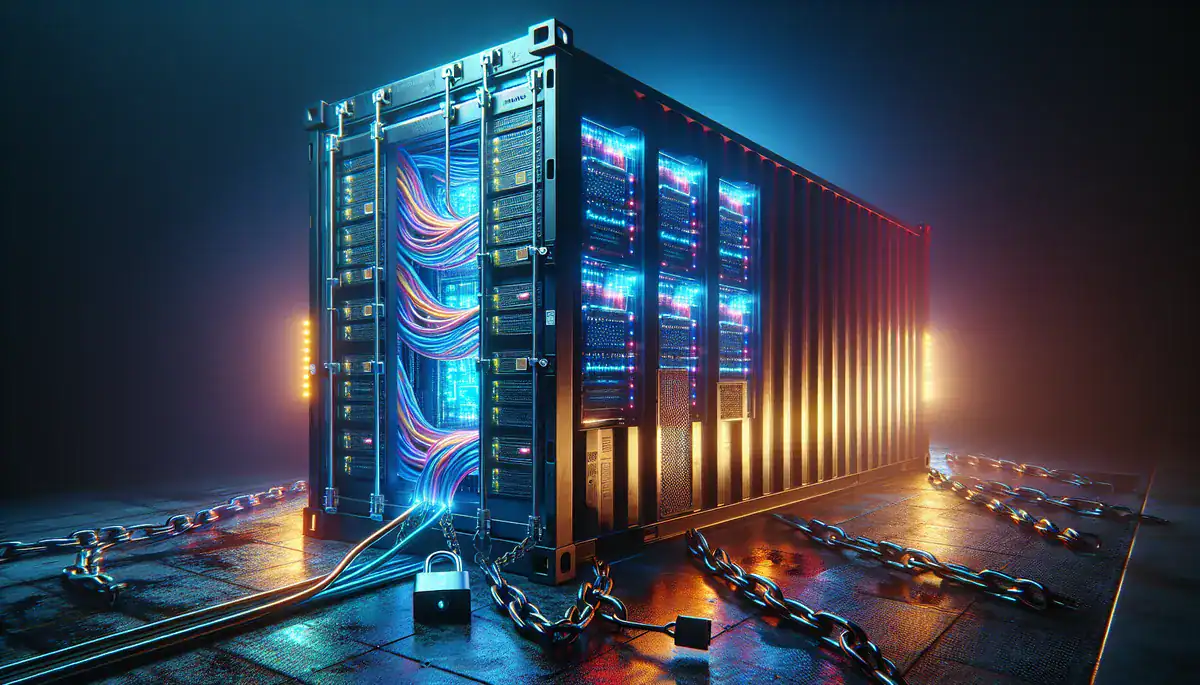
Strait of Hormuz Blocks $104 Oil and Breaks Global Trade

Closure of the Strait of Hormuz disrupts 10 million barrels of daily oil flow, sending crude toward $104 and fracturing global trade routes overnight.

Ten million barrels of oil, gone every day. When U.S. and Israeli strikes on Iran triggered hostilities on February 28, 2026 and Iran effectively closed the Strait of Hormuz on March 4, global energy markets entered structural shock — Brent crude gained 30.72% in just three weeks as aviation, food, fertilizer, and European natural gas markets fractured simultaneously. The cascade is still in motion, and the final damage has not yet been tallied. Read more »

Musk’s Terafab: A $20B Bet to Build Chips and Cut Out TSMC

Elon Musk's Terafab project launches with a $20B commitment to manufacture AI chips domestically at Austin's Seaholm site, challenging TSMC's supply dominance.

Twenty billion dollars. That’s the opening number Musk put on the table at Austin’s defunct Seaholm Power Plant on March 21, 2026. Standing in a century-old industrial shell, he announced Terafab — a joint semiconductor fabrication facility backed by Tesla, SpaceX, and xAI, targeting 2-nanometer chips and a terawatt of annual compute output. Read more »

LeCun’s $1.03B Bet: Why World Models Will Outlast LLMs

AMI Labs raises $1.03B across just 12 employees to advance world models as Yann LeCun argues they will ultimately surpass large language models in AI development.

$1.03 billion. Twelve employees. No product. Four months old. Those four facts describe AMI Labs — Advanced Machine Intelligence Labs — and the company that just closed Europe’s largest seed round in history. The money came from Nvidia, Toyota, Samsung, Jeff Bezos, Eric Schmidt, and a dozen others who collectively decided that the Turing Award winner behind them is right about something everyone else is getting wrong. Read more »

DarkSword Planted on Ukraine.gov Puts 220M iPhones at Risk

DarkSword malware planted on Ukraine.gov infrastructure leaves an estimated 220 million iPhones vulnerable, according to iVerify's threat research findings.

Two hundred and twenty million. That is iVerify’s estimate of how many iPhones remain fully vulnerable to DarkSword, a newly discovered iOS exploit kit that chains six software flaws — three of them exploited as zero-days before Apple could patch them — into a silent, browser-triggered takeover. No malicious app download required. No unusual permission prompt. A single visit to a compromised website is all it takes. Read more »

$2.5B AI Chip Smuggling Tanks $SMCI 33% — They Used a Hair Dryer

AI chip smuggling operation moves $2.5B in restricted servers to China concealed inside consumer goods including a hair dryer, triggering a $SMCI share drop of 33%.

Two point five billion dollars. That is the total value of AI servers allegedly smuggled to China using, among other tools, a hair dryer to peel off serial number stickers. On March 19, the U.S. Attorney for the Southern District of New York indicted three men — including Super Micro Computer ($SMCI) co-founder Yih-Shyan “Wally” Liaw — on charges of conspiring to violate the Export Controls Reform Act, smuggling, and defrauding the United States government. The case has instantly become the largest AI chip smuggling prosecution in U.S. history. Read more »

Digital Commodities: SEC-CFTC Name 16 Cryptos, March 2026

SEC and CFTC formally designate 16 digital assets including BTC, ETH, XRP, and SOL under crypto commodities classification rules effective March 2026.

Sixteen. That’s the number that just redrew the map of U.S. crypto regulation. On March 17, 2026, the SEC and CFTC jointly released a 68-page interpretive guidance naming Bitcoin, Ethereum, Solana, and 13 other major cryptocurrencies as digital commodities — not securities. For the first time in American regulatory history, the two agencies agreed on what crypto assets are, and what they are not, in a single binding document. Read more »

After SCOTUS Strikes Down IEEPA Tariffs, the Trade War Enters Round Two

SCOTUS strikes down IEEPA tariffs as 96% of the trade-war cost burden falls on American businesses and consumers rather than foreign exporters.

Ninety-six percent. That is how much of the tariff bill landed on American businesses and consumers — not foreign exporters. The Kiel Institute reached this conclusion after analyzing 25 million shipments worth $4 trillion, finding that foreign sellers absorbed only pennies on each tariff dollar. The promise that Trump tariffs would make trading partners pay turned out to be an invoice addressed to Main Street. Read more »