Key Takeaways
Small language models (SLMs) are lightweight AI systems that typically run on 1 to 7 billion parameters, and unlike large language models (LLMs) with hundreds of billions to trillions of parameters, they execute directly on smartphones and laptops without an internet connection. Through knowledge distillation, pruning, and quantization, compact models like Microsoft Phi-4-mini (3.8B), Google Gemma, and Meta Llama 3.2 (1B-3B) approach the quality of far larger cloud models. The core payoff is cutting cloud inference costs by up to 90% while keeping data on the device for privacy.
- SLM size: typically 1B-7B parameters (under 10B is considered “small”)
- Three compression techniques: distillation, pruning, quantization
- Up to 90% lower cloud inference cost; data stays on the device
- Next step: the narrower and more repetitive the task, the better the SLM fit
Can you run a ChatGPT-style assistant on your phone with no internet connection? That question is exactly what small language models (SLMs) answer. The generative AI that once lived only in the cloud is now moving into the device in your pocket.
This is your guide to on-device small language models explained for 2026: what an SLM is, how it differs from a large model, and why it can stay useful at a fraction of the size. Walk through the model comparisons and the decision criteria, and you will be able to answer one question on your own — when should you actually reach for an SLM?
What Are Small Language Models (SLMs)?
On-device small language models are lightweight AI systems that typically run on 1 to 7 billion parameters (the weights a model learns during training). The industry generally treats anything under 10 billion parameters as “small.”
A large language model in the GPT family, by contrast, carries hundreds of billions to trillions of parameters. The gap is often two orders of magnitude, and that single difference reshapes where the model runs and what it costs to operate.
SLMs are frequently trained on smaller, curated datasets tuned to a specific task rather than the entire open web. The result is a model that matches larger systems on narrow problems while running directly on resource-constrained hardware like a smartphone or a laptop.

SLM vs LLM — Four Decisive Differences
The difference between small and large language models goes well beyond raw size. It splits along four axes: parameter scale, where the model runs, cost, and privacy.
The first axis is parameter scale. SLMs sit in the billions; LLMs reach the hundreds of billions or trillions, which fundamentally changes the memory and compute each one demands.
The second axis is where the model runs. An LLM lives on GPU servers in a data center, while an SLM executes on the device itself — meaning it keeps working even with the network switched off.
The third and fourth axes are cost and privacy. Remove the cloud call and inference cost collapses; keep user data on the handset and the risk of exposure drops with it.
- Parameters: SLM 1B-7B vs LLM hundreds of billions to trillions
- Execution: on-device (the handset) vs cloud server
- Latency / offline: ultra-low latency, works offline vs network-dependent
- Privacy / cost: data stays local, low cost vs data leaves the device, higher cost
Three Techniques That Shrink Giant Models
So how do you compress the knowledge of a few hundred billion parameters into a few billion? Three techniques do the heavy lifting: knowledge distillation, pruning, and quantization.
Knowledge distillation trains a small “student” model to imitate the outputs of a large “teacher” model. The judgment patterns the big model accumulated are transferred into the small one, shrinking the size while preserving as much capability as possible.
Pruning cuts away the parameters that contribute least to the result. By removing connections that barely move the output, the model sheds compute and memory without losing much accuracy.
Quantization lightens the model by lowering numerical precision. Storing a weight in 4 bits instead of 32, for example, sharply reduces memory use and lets the same model fit onto a smaller device.
These three rarely work alone. A model is distilled from a larger teacher, pruned of its excess, and quantized down to a final footprint — and only then is it lean enough to live inside a phone.

The 2026 SLM Lineup — Phi, Gemma, Llama, Qwen
Which models actually put these techniques to work? In 2026, the small language models most often deployed on-device come from Microsoft (Phi), Google (Gemma), and Meta (Llama 3.2).
Microsoft’s Phi is the poster child for efficiency. Phi-3 Mini matched far larger models on several benchmarks with just 3.8 billion parameters, and its successor Phi-4-mini (3.8B) scored 67.3% on MMLU, a standard test of broad knowledge.
Meta’s Llama 3.2 ships in 1B and 3B versions tuned for edge and mobile, handling a long 128K-token context. Google’s Gemma ships in 1B, 4B, 12B, and 27B sizes, designed to run fast directly on devices — from phones to workstations.
Alibaba’s Qwen family and other multilingual small models are expanding quickly as well. Each model has a different strength, so the real skill is matching the model to the shape of the task.
- Microsoft Phi-4-mini: 3.8B, 67.3% MMLU — efficiency-first reasoning and coding
- Meta Llama 3.2: 1B / 3B, 128K context — optimized for edge and mobile
- Google Gemma: 1B, 4B, 12B, 27B — built to run directly on devices
- Alibaba Qwen: strong multilingual coverage — global, multi-language tasks
The good news is that anyone can download and try these models. Public repositories such as Hugging Face host the weights, and a laptop app or a mobile runtime is usually enough to run them.
If the categories blur together, it helps to pin down the basics first. For how SLMs, LLMs, and the agents built on top of them relate, the breakdown in AI Agent vs Chatbot vs LLM makes the picture much clearer.
Why AI Is Leaving the Cloud for Your Device
The appeal of on-device AI comes down to three things: speed, privacy, and cost. Each one points back to the same root cause — the work no longer has to travel to a server.
Start with speed. Skip the round trip to the cloud and the network latency disappears, so real-time translation or a voice assistant responds the instant you ask.
Privacy is the second draw. Because the data is processed inside the device rather than shipped to a server, sensitive material like messages, photos, and documents is far less likely to leave the handset.
What makes all of this possible is the hardware. Flagship phones in 2026 carry 12-16GB of unified memory, enough to run models up to about 7B, and dedicated NPUs (neural processing units) push generation to roughly 15-30 tokens per second on flagships and 5-15 on mid-range devices.
That efficiency race is being run at the training stage too. The push to build smarter models on less power runs parallel to research on AI energy efficiency, where the goal is more capability per watt.
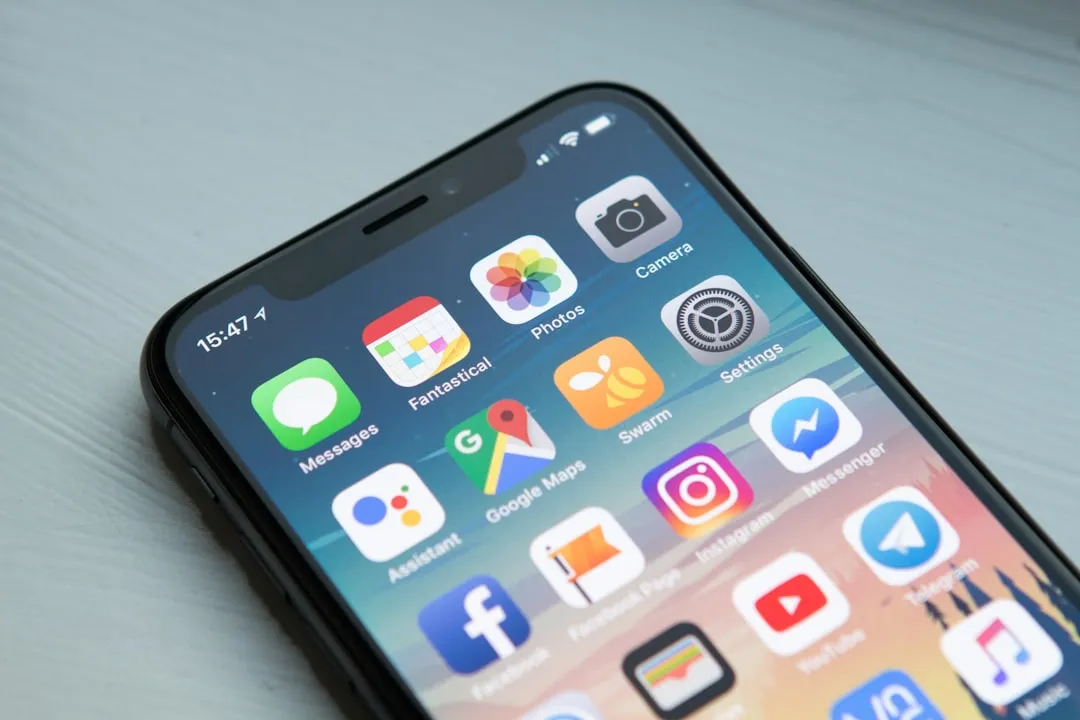
Where On-Device SLMs Are Actually Used
Small language models are already woven into everyday use. The clearest territories are real-time translation, voice assistants, document summarization, and personalized suggestions.
The most tangible win is real-time translation and voice input. Even on a plane with no signal or abroad without roaming, the on-device model processes the sentence immediately.
In the workplace, document summarization and email drafting are quickly becoming standard. Sensitive internal files can be handled on the device instead of being sent to an external server, which is exactly why security-conscious organizations prefer the on-device route.
For developers, code completion and a local chatbot are equally compelling. They work without an internet connection and cost nothing per call, so repetitive code suggestions or internal document search carry no usage anxiety.
Put simply, an SLM behaves less like a grand general-purpose AI and more like a small assistant that is always nearby. The more frequent, immediate, and quiet the task, the more the on-device model is worth.
When Does an SLM Make Sense?
So when should you actually choose a small language model? The starting point is a single question — how narrow and repetitive is the task?
If you process classification, summarization, translation, or customer support at high volume with predictable patterns, an SLM is a strong candidate. Research firm Gartner projects that by 2027, enterprise use of small, task-specific models will be at least three times that of general-purpose LLMs.
Gartner VP Analyst Sumit Agarwal frames the shift this way. “The variety of tasks in business workflows and the need for greater accuracy are driving the shift towards specialized models.”
The trend shows up in the market data as well. The global SLM market was estimated at roughly $7.76 billion in 2023 and is projected to reach about $20.7 billion by 2030.
Cost is the other decisive factor. At 1M tokens per day, a GPT-4o-class cloud API runs about $300-600 a month and a higher tier $500-1,800, while moving the same work on-device can cut inference cost 70-90% after the hardware investment.
None of this means SLMs replace LLMs outright. Thomas Randall, Research Director at Info-Tech Research Group, argues that “the SLM versus LLM dichotomy is not a helpful one,” and that the two are better understood as a division of labor.
The debate over what the “future shape” of AI looks like is far from settled. If you want a view that points away from ever-larger models, LeCun’s world models argument is worth reading alongside this one.
The Limits and Caveats of SLMs
The strengths are real, and so are the limits. The biggest weakness is complex general reasoning — for work that demands broad knowledge and deep, multi-step thinking, large models still lead.
The device itself imposes constraints. Memory ceilings and heat mean you cannot load an arbitrarily large model, and performance can degrade once you step outside the model’s specialized domain.
Freshness and breadth of knowledge are weak spots too. A smaller model holds less information, so it struggles with events after its training cutoff or questions that require sprawling background context.
These gaps can be designed around, however. Pairing the model with on-device search (retrieval augmentation) or calling a cloud LLM only for the hard questions is a common way to cover an SLM’s blind spots.
The practical answer, then, is not either/or but a division of labor. Light, everyday tasks run on the device’s SLM while complex reasoning falls to a cloud LLM — a hybrid pattern that is quickly becoming the default.
Ultimately, small language models are rewriting the answer to where AI should live. Watch which model size new phones ship by default, and how much further cost falls when the same task runs on the device — those two signals will tell you how fast this shift is moving.
AI Agent vs Chatbot vs LLM: The 2026 Complete Guide
Frequently Asked Questions (FAQ)
Q1. What is the difference between a small language model (SLM) and a large language model (LLM)?
The biggest differences are parameter scale and where the model runs. An SLM typically uses 1B-7B parameters and executes directly on devices like phones and laptops, while an LLM uses hundreds of billions to trillions of parameters and runs on cloud servers. SLMs win on cost, latency, and privacy; LLMs win on complex, general-purpose reasoning.
Q2. How many parameters does an SLM have?
The industry generally treats anything under 10 billion parameters as “small,” and mobile-deployable SLMs cluster in the 1B-7B range. Microsoft Phi-4-mini, for example, is 3.8B, and Meta Llama 3.2 ships in 1B and 3B versions.
Q3. Which SLMs can run on a smartphone?
Meta Llama 3.2 (1B / 3B), Google Gemma, and the Microsoft Phi family are the usual choices. Flagship phones in 2026 carry 12-16GB of unified memory, enough to run models up to about 7B, with generation speeds around 15-30 tokens per second on flagship devices.
Q4. How much can an SLM cut costs?
Moving high-frequency, repetitive work on-device can cut cloud inference costs by up to 90%. At 1M tokens per day a GPT-4o-class cloud API runs about $300-600 a month, but shifting on-device delivers a reported 70-90% reduction after the hardware investment.
Q5. How do SLMs stay capable at such a small size?
They combine three techniques: knowledge distillation (transferring a large teacher model’s knowledge into a small student), pruning (removing low-importance parameters), and quantization (lowering numerical precision to save memory and compute). That compression is why a 3.8B-parameter Phi-3 Mini can approach the quality of far larger models.
Q6. When is an SLM the better choice over an LLM?
SLMs are the better choice when the task is narrow, repetitive, and high-volume — classification, summarization, translation, customer support — or when privacy matters and offline operation is required. Gartner projects that by 2027, enterprise use of small, task-specific models will be at least three times that of general-purpose LLMs.
References
- InfoWorld (2026-05-04) — SLM parameter range (1B-7B, under 10B); up to 90% cloud cost reduction
- Gartner press release (2025-04-09) — by 2027, small task-specific model use at least 3x general-purpose LLMs (Sumit Agarwal quote, primary)
- InfoWorld — Info-Tech, Thomas Randall (2026-05-04) — “the SLM versus LLM dichotomy is not a helpful one”
- Microsoft — Phi-3 Technical Report (arXiv 2404.14219) — phi-3-mini at 3.8B rivals Mixtral 8x7B and GPT-3.5; small enough to run on a phone
- Microsoft — Phi-4-mini-instruct official model card — 3.8B parameters, 67.3 on MMLU (5-shot)
- Meta AI official announcement (2024-09-25) — Llama 3.2 1B/3B lightweight text models, 128K context, edge and mobile optimized
- Google official announcement — Gemma 3 — 1B, 4B, 12B, 27B; built to run directly on devices
- TecAce (2026-04-30) — 2026 flagships 12-16GB unified memory, 7B ceiling; 15-30 tokens/sec
- Digital Applied (2026-04-03) — 1M tokens/day cloud API costs; 70-90% on-device savings
- Hugging Face (2026-04-20) — three compression techniques (distillation, pruning, quantization)
- Grand View Research — Small Language Model Market Report — global SLM market $7.76B (2023) to $20.7B (2030), 15.1% CAGR
Stay Ahead of the Curve
Get the latest insights on AI, tech, and markets — delivered in both Korean and English.

Jugger | Backend Developer
A backend engineer working in enterprise solutions software since June 2021. The hands-on perspective from system design, API implementation, and production operations directly informs this site’s
AI, IT, and cloud infrastructure coverage.
For topics outside direct professional experience—blockchain and macroeconomics—analysis is built on primary-source citations such as SEC filings, whitepapers, institutional research, and government
statistics. Speculation is clearly separated from verified fact, and unverified claims are not published.
AI tools assist with drafting, but every article is reviewed, revised, and verified before publication. Errors are corrected with visible notes when discovered.
Contact: jjunggulee@gmail.com