- One year after Liberation Day, U.S. manufacturing shed 100,000 jobs and 26,664 importers filed for $120B in tariff refunds after the Supreme Court struck down IEEPA tariffs 6-3
- The administration pivoted to Section 301 investigations against 16+ countries, 100% pharmaceutical tariffs, and a temporary 10% global tariff expiring July 24
- The EU sealed landmark trade deals with India (2 billion people), MERCOSUR, and Australia — all without the United States at the table
One hundred and sixty billion dollars. That is how much Trump tariffs extracted from American importers before the Supreme Court pulled the plug. Liberation Day was supposed to shrink the trade deficit and resurrect manufacturing.
Instead, the goods deficit hit an all-time high, factories shed six figures worth of workers, and the rest of the world quietly signed trade deals that left the United States on the outside. One year later, the bill has arrived — and it is larger than anyone in the White House projected.

Liberation Day by the Numbers: A One-Year Scorecard
On April 2, 2025, the administration announced a 10% baseline tariff on all trading partners, with country-specific rates climbing as high as 50%. After a round of bilateral negotiations, the tariffs took full effect in August. The stated goal was straightforward: close the trade gap and bring manufacturing jobs home.
By the time the Supreme Court intervened, the federal government had collected more than $160 billion in tariff revenue. Had the tariffs remained in place, projections estimated an additional $1.4 trillion in collections through 2035. The key here is where that money actually came from — not from foreign governments, but from American importers who passed the costs downstream.
Household-level estimates put the annual burden at roughly $2,500 per family. And the trade deficit that tariffs were designed to fix? It ballooned to an all-time high in 2025.
The policy achieved the opposite of its stated objective. The deficit was supposed to shrink — instead, it set a record.
- Revenue collected: $160B+ (projected $1.4T through 2035 before court ruling)
- Household impact: ~$2,500 annual cost increase per family
- Trade deficit: Hit all-time record in 2025 (goal was reduction)
The Supreme Court Draws a Line: A 6-3 Ruling That Rewrote Trade Law
On February 20, 2026, the Supreme Court ruled 6-3 in Learning Resources, Inc. v. Trump that tariffs imposed under the International Emergency Economic Powers Act (IEEPA) — a 1977 law granting the president authority to regulate commerce during foreign-threat emergencies — exceeded presidential authority. Chief Justice John Roberts authored the majority opinion.
The legal reasoning was precise. The word “regulate” in IEEPA does not encompass the power to impose tariffs, the Court held. Interpreting it that way would collide with a constitutional provision that explicitly bars taxes on exports.
Put simply, the emergency-powers shortcut to trade barriers was sealed shut by the nation’s highest court. The ruling drew a clear boundary around presidential trade authority.
The administration’s response came within hours. On the same day the ruling dropped, it invoked Section 122 of the Trade Act of 1974 to impose a 10% global tariff, effective immediately. There was a catch: Section 122 carries a 150-day sunset clause, meaning this tariff expires on July 24, 2026.
The $120 Billion Refund Rush: Why 26,664 Companies Are in Line
With IEEPA tariffs voided, the question of refunds became the most consequential financial issue for American importers. As of early April, 26,664 importers have registered for refunds totaling approximately $120 billion — roughly 78% of all IEEPA duties paid to date.
The refund claims portal is 85% complete, while the processing system stands at 60% readiness. Customs and Border Protection (CBP) is set to begin accepting claims on April 20, 2026, with each claim subject to a review period of up to 45 days. In practice, actual refund disbursements will likely stretch across several months.
The takeaway: even if companies eventually recover their tariff payments, the consumer-facing damage is already done. Those $120 billion in duties were baked into import prices, rippled through supply chains, and ultimately landed on the shoulders of end consumers. Corporate balance sheets may heal, but household purchasing power has already taken the hit.
49% Recession Odds: The Model That’s Never Been Wrong
100,000 Manufacturing Jobs: Where Did They Go?
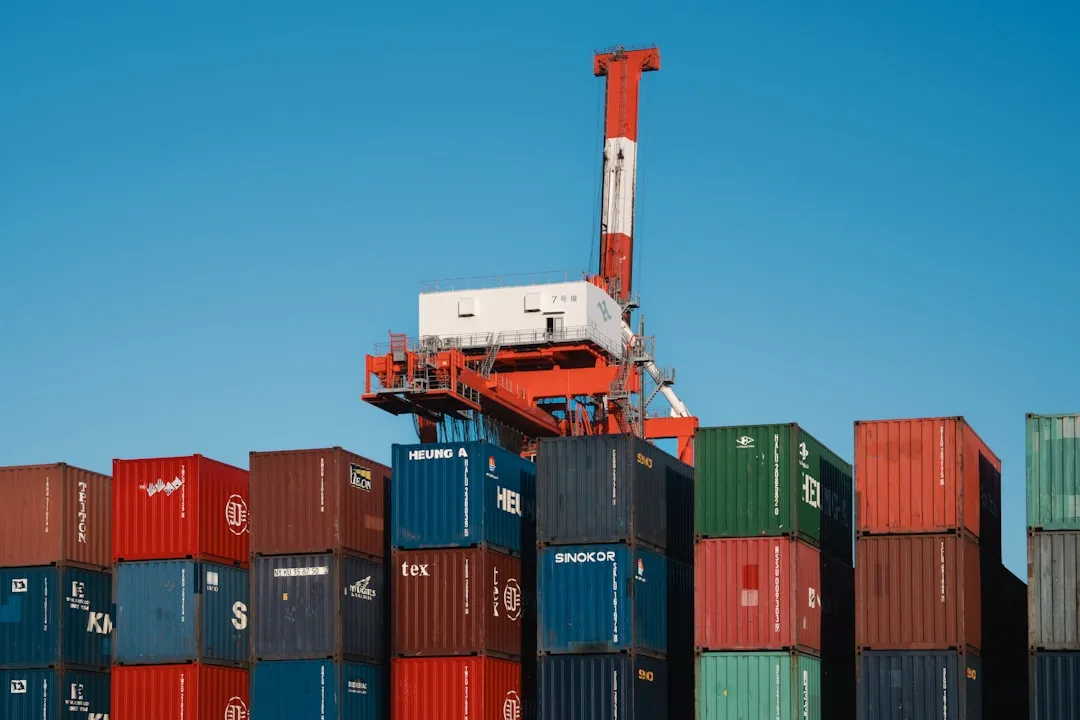
The central promise of Trump tariffs was a manufacturing renaissance. The numbers tell a different story. Between January 2025 and April 2026, the U.S. manufacturing sector recorded a net loss of 100,000 jobs, and the sector’s share of total nonfarm employment fell to its lowest level since 1939.
The ISM Manufacturing Index — a monthly gauge of factory-sector health published by the Institute for Supply Management — spent nine consecutive months in contraction territory after tariffs took effect. A modest rebound appeared in January and February 2026, but the readings remained far from signaling a sustained expansion. Rather than creating jobs, tariffs drove up raw material costs and eroded competitiveness.
Agriculture absorbed an equally severe blow. The U.S. agricultural trade deficit widened from $37 billion to $41 billion, a 10.8% increase.
Tariff-driven cost increases for farm machinery and agrochemicals alone totaled $958 million between February and October 2025. Farm organizations warned that growers were “financially underwater,” with bankruptcies climbing.
Why this matters: tariffs were marketed as a tool to reshore production. Instead, they raised input costs for the manufacturers and farmers who were supposed to benefit. The jobs didn’t come back — and the workers who remained faced higher costs on every side.
The World Moved On: A Trade Map Redrawn Without the U.S.
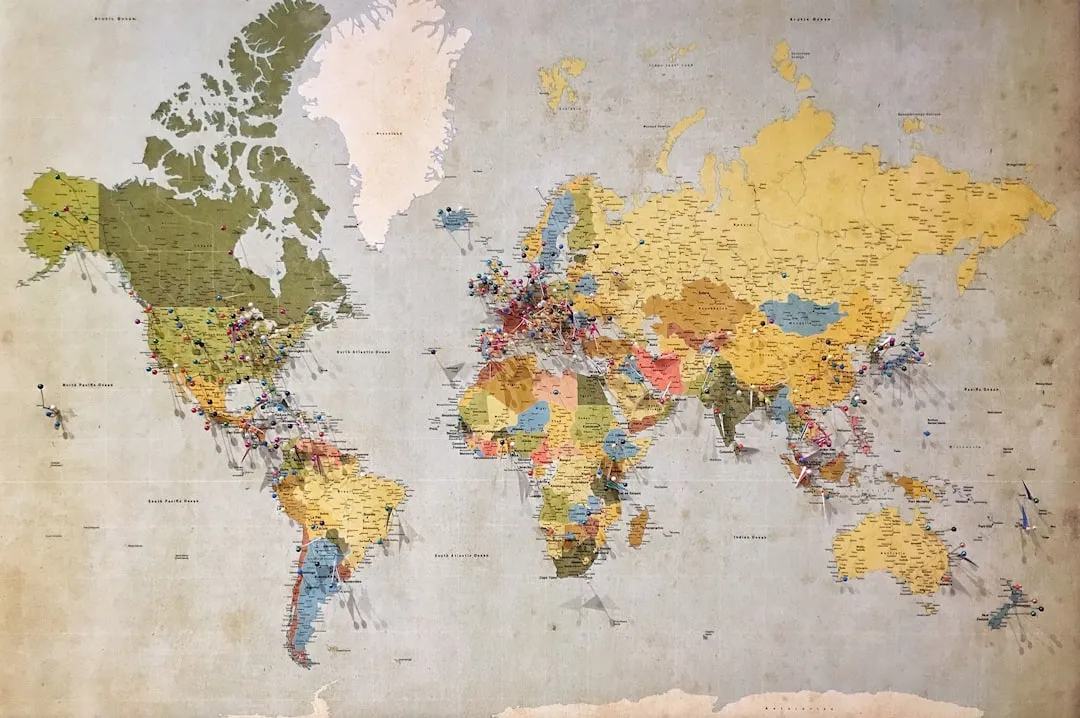
While America was building tariff walls, the rest of the world was tearing them down. The most striking example is the EU-India Free Trade Agreement. Covering roughly 2 billion people, this deal commits the EU to eliminating tariffs on 96.6% of imports from India, while India will cut duties on 99.5% of its EU imports over several years.
On January 17, 2026, the EU and MERCOSUR — the South American bloc comprising Argentina, Brazil, Paraguay, and Uruguay — signed an agreement to phase out tariffs on 91-92% of exports over 15 years. In March, the EU-Australia FTA was finalized after eight years of negotiations. Canada and China also reached a targeted agreement to reduce tariffs on electric vehicles and canola oil.
In short, every major trade deal of 2026 shares one feature: the United States is absent. The EU-India pact alone places roughly one-quarter of the world’s population inside a free trade zone that American exporters must navigate from outside, paying tariffs that their European and Indian competitors do not.
This realignment carries a structural quality that makes it difficult to reverse. Supply chains rerouted around the U.S. during the tariff era will not snap back simply because tariffs are lifted. Companies have already invested in new logistics networks, signed new supplier contracts, and built relationships with non-American partners.
$141 Oil Prices Meet $4 Gas as Hormuz Blockade Shakes Economy
Plan B: Section 301 Probes and 100% Pharmaceutical Tariffs
The Supreme Court closed the IEEPA door, but the administration pivoted to alternative legal authorities with remarkable speed. Under Section 301 of the Trade Act of 1974, it launched unfair trade practice investigations against 16 countries and the EU. These probes could result in targeted, product-specific tariffs once findings are published.
On April 2, 2026 — the one-year anniversary of Liberation Day — the administration unveiled a new wave of tariffs. Imported pharmaceuticals now face 100% duties, with exemptions available only for companies that agree to expand domestic production or lower consumer prices in the U.S. Steel, aluminum, and copper products where the metal content exceeds 15% by weight face a 25% tariff, while raw materials are taxed at 50%.
The Court ruling did not end Trump tariffs — it forced a change of legal instrument. The direction of policy, if anything, has intensified.
With pharmaceuticals, metals, and agricultural products all now carrying new or elevated duties, corporate planning uncertainty has not diminished. Businesses that hoped the Supreme Court decision would bring clarity instead find themselves facing a new tariff landscape built on different statutory foundations.
What Comes Next: The July 24 Deadline and Three Scenarios
The 10% global tariff imposed under Section 122 expires on July 24, 2026. Three paths branch out from that deadline.
Congress could provide legislative authority to extend or formalize the tariff. The administration could invoke yet another trade statute to raise rates. Or the tariff could simply lapse when the 150-day window closes.
On the U.S.-China front, tariffs remain at an average of 47.5% across all product categories, while China’s retaliatory tariffs on American goods stand at 31.9%. The tariff walls on both sides of the Pacific remain formidable, with no scheduled negotiations to bring them down.
Two variables will determine the second half of 2026. The first is the administration’s next move after the July 24 Section 122 expiration. The second is whether Section 301 investigations produce additional tariffs that further raise costs for importers and consumers.
The implementation timelines for the EU-India, MERCOSUR, and Australia trade agreements and the July 24 Section 122 expiration date are the two axes to track simultaneously. Whether the U.S. returns to multilateral trade negotiations or the global realignment accelerates further — that fork in the road arrives this summer.
References
- SCOTUSblog (2026-02-20) — Supreme Court 6-3 ruling declared IEEPA tariffs unconstitutional, Chief Justice Roberts authored majority opinion
- CNN (2026-02-20) — IEEPA tariffs collected $160B+, projected $1.4T through 2035 voided by ruling
- Spectrum News (2026-04-02) — 26,664 importers registered for $120B in IEEPA refunds, new pharmaceutical 100% tariffs announced
- NTU (2026-04-02) — Manufacturing sector shed 100,000 jobs, employment ratio fell to lowest since 1939
- NTU (2026-04-02) — ISM Manufacturing Index contracted for 9 consecutive months post-tariffs
- NTU (2026-04-02) — Agricultural trade deficit rose 10.8% ($37B to $41B), farm input costs up $958M
- Marketplace (2026-01-20) — EU-India FTA covering 2 billion people, EU eliminating 96.6% of tariffs on Indian imports
- Marketplace (2026-04-01) — EU-MERCOSUR agreement signed, 91-92% duty phase-out over 15 years
- CNBC (2026-03-24) — EU-Australia FTA concluded after 8 years of negotiations
- Tax Foundation (2026-04-02) — U.S. tariffs on China at 47.5%, China counter-tariffs at 31.9%
Stay Ahead of the Curve
Get the latest insights on AI, tech, and markets — delivered in both Korean and English.

Jugger | Backend Developer
A backend engineer working in enterprise solutions software since June 2021. The hands-on perspective from system design, API implementation, and production operations directly informs this site’s
AI, IT, and cloud infrastructure coverage.
For topics outside direct professional experience—blockchain and macroeconomics—analysis is built on primary-source citations such as SEC filings, whitepapers, institutional research, and government
statistics. Speculation is clearly separated from verified fact, and unverified claims are not published.
AI tools assist with drafting, but every article is reviewed, revised, and verified before publication. Errors are corrected with visible notes when discovered.
Contact: jjunggulee@gmail.com