Key Takeaways — Mira Murati × Google Cloud GB300 Deal
Mira Murati’s $12B AI startup Thinking Machines Lab signed a single-digit billion dollar AI infrastructure deal with Google Cloud on April 22, 2026, at Google Cloud Next 2026. The agreement bundles Nvidia’s latest GB300 chips inside A4X Max virtual machines with Kubernetes Engine, Spanner, and storage services. It is the lab’s first cloud provider contract and operates as a bridge to the separate 1-gigawatt NVIDIA Vera Rubin partnership slated for early 2027.
- Deal size: single-digit billions USD, non-exclusive, announced April 22 at Google Cloud Next 2026
- A4X Max VM: four Nvidia Blackwell Ultra GPUs plus two 72-core CPUs, 2x training and inference speed vs. prior GPU generation
- Thinking Machines Lab: founded February 2025, $2B seed at $12B valuation, backed by a16z, Accel, Nvidia
- Vera Rubin: 1GW deployment targeted for early 2027, with GB300 bridging the gap in 2026
Mira Murati $12B bet. That is the valuation printed on Thinking Machines Lab just 14 months after founding. The former OpenAI CTO has now locked in a single-digit billion dollar AI infrastructure contract with Google Cloud, reshaping the cloud AI competition.
TechCrunch broke the story on April 22, 2026, confirming that this is the lab’s first ever cloud provider deal. The package centers on Nvidia’s latest GB300 chips served through Google Cloud’s A4X Max virtual machines, with Kubernetes Engine and Spanner database services bundled in.
Inside the Multi-Billion Deal — Google Cloud Next 2026 Unveil
The stage was Google Cloud Next 2026. On April 22, 2026, the main keynote formalized the agreement, and TechCrunch simultaneously disclosed exclusive pricing guidance.
The contract sits in the single-digit billions range — meaning several billion dollars in total compute commitment. Neither company disclosed the exact figure, but it is a multi-year arrangement rather than a one-shot hardware purchase.
Crucially, the deal is non-exclusive. Thinking Machines treats Google Cloud as its primary compute partner while keeping the door open for other providers. The real prize is access to Google’s GB300 NVL72 systems as one of the first customers.
$12B Thinking Machines Lab — Mira Murati’s 14 Months
Thinking Machines Lab was founded in February 2025. The founder is Mira Murati, the former OpenAI CTO, and the lab has positioned itself as a reinforcement-learning-first frontier research shop from day one.
Capital arrived at an unusual pace. The lab closed a $2 billion seed round at a $12 billion valuation in mid-2025, with Andreessen Horowitz, Accel, and Nvidia on the cap table.
The first product came in October 2025. Tinker is a cloud service that lets developers create custom frontier AI models by attaching add-on modules to open-source LLMs, and its architecture leans heavily on reinforcement learning. The product remains in beta, with pricing and paid conversion timelines still undisclosed.
GB300 NVL72 Hardware Specs — A4X Max VM Unpacked
The Google Cloud product anchoring this contract is the A4X Max virtual machine. The specs disclosed the same day live up to the name.
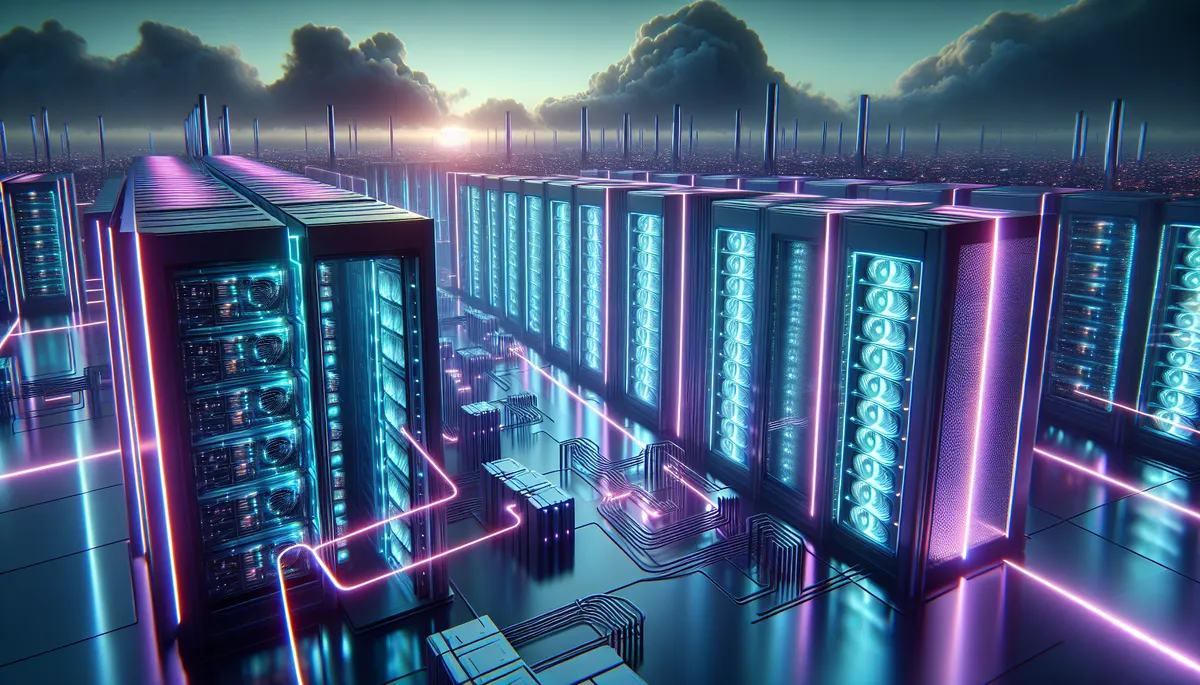
Each A4X Max VM ships with four Nvidia Blackwell Ultra GPUs and two 72-core CPUs. Those VMs run inside liquid-cooled GB300 NVL72 appliances, and at the appliance level the stack delivers 37 terabytes of memory and 130 terabits per second of internal bandwidth — numbers that set the current frontier in AI infrastructure.
The network fabric is equally aggressive. A rail-aligned topology lays dedicated links between GPUs to minimize data hops, and Nvidia ConnectX NICs work alongside Google’s in-house Titanium NICs to coordinate traffic. Google claims the combination delivers 2x training and inference speed compared to prior-generation GPUs.

Why Google — Tinker and Reinforcement-Learning Workloads
Mira Murati’s choice of Google over Microsoft Azure or Amazon Web Services traces directly to Tinker’s architecture. Tinker tunes custom LLMs through reinforcement learning, which forces weights to move between GPUs continuously during training.
Google argues that its Jupiter network is optimized precisely for that RL traffic pattern. The sales pitch here is not just GPU capacity — it is an infrastructure bundle targeting Tinker’s specific bottleneck, with Kubernetes Engine and Spanner database services wrapped in.
Myle Ott, a founding researcher at Thinking Machines, summarized the fit in a TechCrunch interview. “Google Cloud got us running at record speed with the reliability we demand,” Ott said, packaging speed and reliability into a single sentence.
NVIDIA 1GW Vera Rubin — Completing the March 10 Chain
This Google deal does not stand alone. On March 10, 2026, NVIDIA and Thinking Machines Lab unveiled a multi-year strategic partnership, and embedded in that announcement was a commitment of at least one gigawatt of next-generation NVIDIA Vera Rubin systems.
NVIDIA also disclosed a “significant investment” in Thinking Machines alongside the compute deal. The exact figure is undisclosed, but the investment is material equity rather than a simple chip supply agreement. That cemented Thinking Machines as a core partner inside the Nvidia ecosystem.
Jensen Huang’s statement captured the tone. “AI is the most powerful knowledge discovery instrument in human history,” Huang said in the March 10 release. “Thinking Machines has brought together a world-class team to advance the frontier of AI.”
Mira Murati matched that register in the same joint statement. “NVIDIA’s technology is the foundation on which the entire field is built. This partnership accelerates our capacity to build AI that people can shape,” she said.
Vera Rubin deployment is scheduled for early 2027. The Google Cloud GB300 contract serves as a bridge through 2026, giving Thinking Machines a clear runway to shift Tinker paid conversion and model training onto GB300 while it waits for Vera Rubin.
Signal to OpenAI — The Ex-CTO Strikes Back
The Thinking Machines deal carries weight beyond its own line items. On the same April 22 at Cloud Next 2026, Google also unveiled 8th-generation TPUs — TPU 8t for training and TPU 8i for inference, a Gemini Enterprise Agent Platform, and a $750M enterprise AI fund.
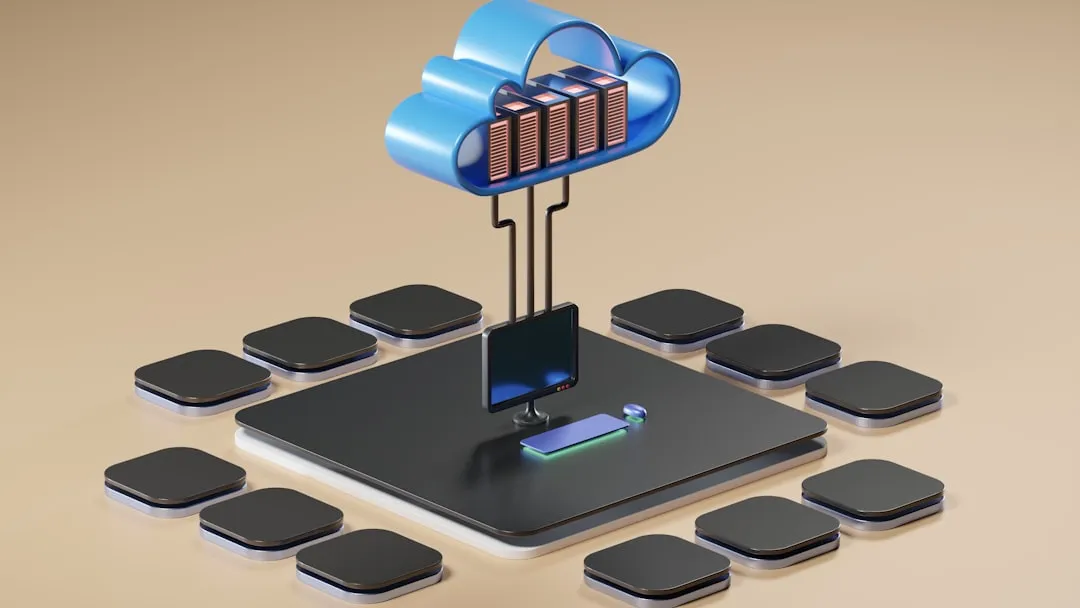
Google running both the Nvidia rail (A4X Max) and its own silicon (TPU 8 series) in a single keynote is an unmistakable dual-stack strategy. The TPU 8t superpod packs 9,600 chips, 121 exaflops of compute, and two petabytes of shared memory.
The strategic tell is that Thinking Machines picked the Nvidia rail within that dual-stack. While OpenAI deepens its reliance on Microsoft Azure, Mira Murati’s startup opted for a Google-plus-Nvidia stack, explicitly refusing to replicate the OpenAI infrastructure template.
The pattern extends beyond Thinking Machines. Anthropic inked a separate Google-Broadcom TPU deal and an Amazon capacity arrangement during the same window. Frontier AI labs are moving past multi-cloud into full multi-silicon strategy, with the second quarter of 2026 marking the inflection point.
What to Watch — Four Checkpoints
The real impact of this contract will play out over the next several quarters. Four specific metrics deserve tracking by investors and practitioners alike.
- GB300 deployment timing — When Thinking Machines starts running A4X Max production workloads will be the first signal. Watch Google Cloud’s quarterly earnings call remarks for the confirmation.
- Tinker paid conversion and pricing — Tinker remains in beta, and the monetization trajectory will either validate or expose the $12B valuation once pricing surfaces.
- Vera Rubin transition window — The 1GW deployment targeted for early 2027 must stay on schedule, and the way Thinking Machines balances Google Cloud with Nvidia direct deployment will define its multi-cloud posture.
- OpenAI’s response move — Whether OpenAI opens a third infrastructure partnership outside Azure, or doubles down on self-built infrastructure like Stargate, will reshape the “frontier lab” landscape.
The takeaway: this is not just a single cloud contract but a signal flare for how AI infrastructure will be redrawn through 2026 and 2027. Whether Mira Murati’s $12B valuation is bravado or a down payment on GB300-plus-Vera-Rubin dual-stack differentiation will depend on the four checkpoints above.
Cerebras Files $25B IPO to Break NVIDIA’s AI Chip Monopoly
$5.6M, 1 Trillion Parameters: DeepSeek V4 Drops Nvidia
Q1. How large is the Thinking Machines Lab × Google Cloud contract?
According to TechCrunch, the contract sits in the single-digit billions of US dollars, with the exact figure undisclosed. It is the first cloud provider deal Thinking Machines Lab has ever signed, and it is structured as non-exclusive.
Q2. What are the core specs of GB300 NVL72 and the A4X Max VM?
Each A4X Max virtual machine contains four Nvidia Blackwell Ultra GPUs and two 72-core CPUs. The liquid-cooled GB300 NVL72 appliance provides 37TB of memory and 130Tbps of internal bandwidth, and Google says the setup runs 2x faster than the prior GPU generation for both training and inference.
Q3. Who is Mira Murati and when did Thinking Machines Lab launch?
Mira Murati is the former OpenAI CTO, and she founded Thinking Machines Lab in February 2025. The lab closed a $2 billion seed round at a $12 billion valuation in mid-2025, with Andreessen Horowitz, Accel, and Nvidia among the investors.
Q4. How does the 1GW NVIDIA Vera Rubin partnership connect to this Google deal?
NVIDIA announced on March 10, 2026, that it will supply Thinking Machines with at least one gigawatt of Vera Rubin systems and has already made a significant equity investment. Vera Rubin deployment is scheduled for early 2027, so the Google Cloud GB300 contract works as a bridge through 2026.
References
- TechCrunch (2026-04-22) — Exclusive report on the single-digit billion dollar Thinking Machines × Google Cloud deal
- TechCrunch (2026-04-22) — Myle Ott founding researcher quote and Kubernetes/Spanner bundle disclosure
- SiliconANGLE (2026-04-22) — A4X Max VM configuration, four Blackwell Ultra GPUs and 72-core CPUs
- SiliconANGLE (2026-04-22) — GB300 NVL72 37TB memory and 130Tbps bandwidth, rail-aligned topology
- NVIDIA Blog (2026-03-10) — 1GW Vera Rubin supply, significant investment, early 2027 deployment
- NVIDIA Blog (2026-03-10) — Jensen Huang and Mira Murati joint partnership statements
- NVIDIA Blog (2026-03-10) — $2B seed round at $12B valuation with Andreessen Horowitz, Accel, Nvidia
- TechCrunch (2026-04-22) — TPU 8t/8i announcement, $750M Gemini Enterprise fund, 121 exaflops superpod
- CNBC (2026-03-10) — Cross-verification on NVIDIA’s significant investment and 1GW supply
Stay Ahead of the Curve
Get the latest insights on AI, tech, and markets — delivered in both Korean and English.

Jugger | Backend Developer
A backend engineer working in enterprise solutions software since June 2021. The hands-on perspective from system design, API implementation, and production operations directly informs this site’s
AI, IT, and cloud infrastructure coverage.
For topics outside direct professional experience—blockchain and macroeconomics—analysis is built on primary-source citations such as SEC filings, whitepapers, institutional research, and government
statistics. Speculation is clearly separated from verified fact, and unverified claims are not published.
AI tools assist with drafting, but every article is reviewed, revised, and verified before publication. Errors are corrected with visible notes when discovered.
Contact: jjunggulee@gmail.com