- Cerebras Systems filed for a Nasdaq IPO on April 17 at a $22–25B valuation, pitching its WSE-3 — an AI chip 57 times larger than NVIDIA’s B200 — as the future of inference computing.
- An OpenAI contract worth $20B+ for 750MW of inference infrastructure and a revenue swing from –$485M to +$87.9M anchor the bull case.
- Global AI chip startup funding hit $8.3B in 2026, with challengers like Fractile (25x faster inference claim) and SambaNova exploiting the structural shift from training to inference — the very domain where GPU architecture is weakest.
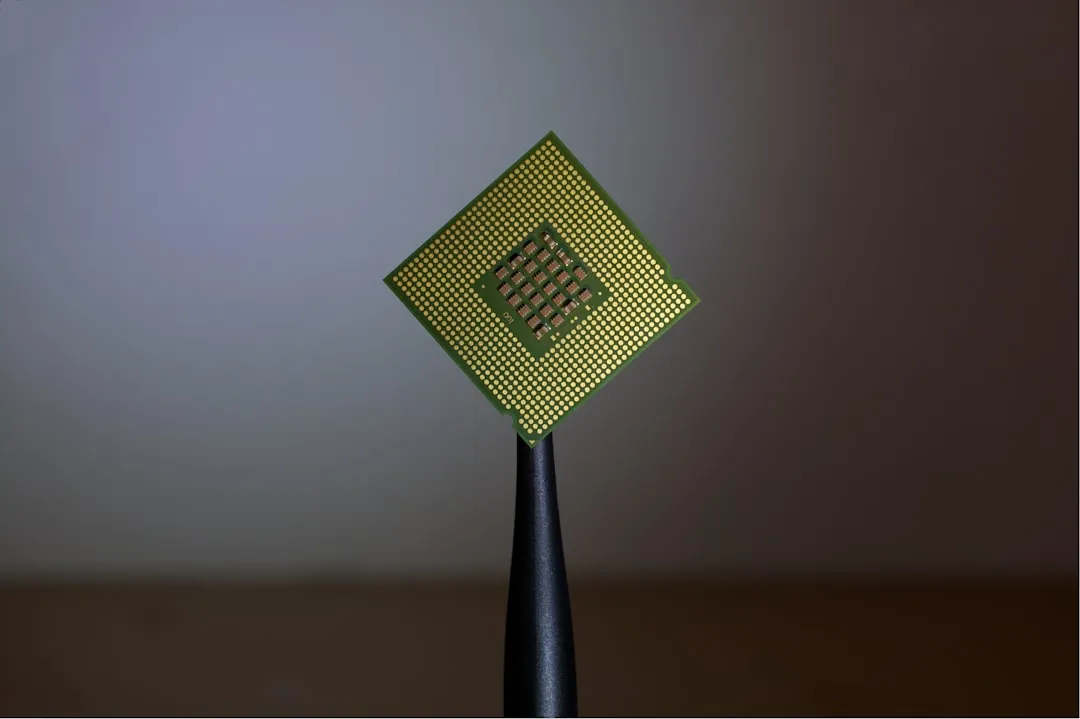
46,225 square millimeters. That is roughly the size of a dinner plate. It is also the die area of Cerebras Systems’ WSE-3 (Wafer-Scale Engine 3), a single AI chip 57 times larger than NVIDIA’s flagship B200 GPU.
On April 17, the company behind that dinner-plate-sized chip filed for a Nasdaq listing under ticker CBRS, targeting a $22–25 billion valuation and roughly $2 billion in proceeds. This is not just another AI chip IPO — it is a formal declaration of war against NVIDIA’s dominance in data-center AI silicon.
The $25 Billion IPO — Cerebras Throws Down the Gauntlet
Cerebras’ Nasdaq filing comes after 18 months of regulatory turbulence. The company first submitted an S-1 in September 2024, but a CFIUS (Committee on Foreign Investment in the United States) review triggered by investor G42 forced a withdrawal.
Morgan Stanley is leading the offering, which targets a $22–25 billion valuation. That range tracks closely with the $23 billion post-money mark set during the company’s February 2026 Series H, when Tiger Global led a $1 billion round with participation from AMD and Fidelity.
In total, Cerebras has raised approximately $2.8 billion across eight funding rounds. The investor roster reads like a who’s who of institutional AI bets, and the IPO now gives public-market investors their first direct access to a pure-play inference chip maker.
A Chip the Size of a Dinner Plate — WSE-3’s Disruptive Architecture
What makes the WSE-3 fundamentally different from conventional GPUs is not just its size. The chip packs 4 trillion transistors and 900,000 AI-optimized cores onto a single silicon wafer — numbers that make standard GPU specifications look quaint by comparison.
The real differentiator, however, is memory bandwidth. The WSE-3 delivers 27 PB/s (petabytes per second) of on-chip memory bandwidth — roughly 200 times the bandwidth of NVIDIA’s NVLink interconnect. Tom’s Hardware estimates that a single WSE-3 provides theoretical performance equivalent to approximately 62 H100 GPUs.

In inference workloads — particularly the token-by-token decode phase of large language models — data must be fetched sequentially from memory. GPUs, designed for massively parallel matrix operations, hit a structural bottleneck here. The WSE-3’s SRAM-based architecture eliminates this bottleneck by keeping all model weights on-chip, avoiding the latency penalties of external memory access.
From a $485 Million Loss to $87.9 Million Profit — The Financial Turnaround
Cerebras’ financial trajectory is among the most dramatic in the AI chip sector. Revenue climbed from $78.7 million in 2023 to $510 million in 2025 — a 6.5x increase in just two years, with 76% year-over-year growth in the most recent period.
More striking than the top-line expansion is the bottom-line swing. In 2024, Cerebras posted a net loss of $485 million. By 2025, that had flipped to a net income of $87.9 million — a nearly $573 million turnaround in a single fiscal year.
The catalyst behind this transformation was a fundamental restructuring of the customer base. Cerebras moved away from its heavy dependence on G42 and secured OpenAI — one of the world’s largest AI infrastructure spenders — as its anchor client. That strategic pivot underpins the entire IPO narrative.
The OpenAI Contract — A $20 Billion Anchor for the IPO Narrative
The OpenAI-Cerebras deal stands as one of the largest single contracts in AI infrastructure history. The agreement covers $20 billion or more in inference infrastructure, starting with a 750MW deployment and including options to expand to 2GW by 2030.
The contractual structure binds the two companies at the equity level. OpenAI can earn up to 33.4 million shares in Cerebras through purchase-milestone warrants — a mechanism that aligns the customer’s growth directly with the supplier’s stock performance.
In March 2026, Cerebras also signed a distributed inference architecture partnership with AWS. Under this arrangement, WSE-3 chips handle the decode phase — the sequential, memory-intensive step — while AWS Trainium chips manage the prefill computation. This hybrid approach lets each chip play to its architectural strengths.
Nvidia Bets $2B on Silicon Photonics to Break AI’s Data Wall
Training to Inference — Why the GPU Monopoly Is Cracking
The simultaneous emergence of Cerebras, Fractile, SambaNova, and a dozen other AI chip challengers is not coincidental. It reflects a structural shift in where the AI industry’s computational demand is concentrated. The center of gravity is moving from model training to inference.
Patrick Schneider-Sikorsky of the NATO Innovation Fund put it bluntly in a CNBC interview: “Inference is dominant. Existing GPU architectures are not designed for it in the ways that matter most.”
The technical logic is straightforward. Training requires dense matrix multiplication across thousands of parallel cores — exactly what GPUs excel at.
Inference, by contrast, is bottlenecked by memory bandwidth, latency, and energy efficiency. LLM token decoding, in particular, involves sequential memory access patterns that expose a fundamental architectural weakness in GPU design.
As global AI inference demand overtakes training demand, the market for non-GPU alternatives is expanding rapidly. Cerebras’ SRAM-based on-chip memory and Fractile’s inference-optimized architecture are purpose-built to exploit this gap.
The $8.3 Billion AI Chip Rebellion — Fractile, SambaNova, and Positron
Cerebras is far from alone. Total global funding for AI chip startups in 2026 has reached $8.3 billion. Cerebras’ $1 billion round leads the pack, followed by MatX ($500M), Ayar Labs ($500M), and Etched ($500M) in what amounts to a coordinated capital assault on NVIDIA’s market position.
Behind the mega-rounds, a second tier of well-funded challengers is taking shape. SambaNova raised $350 million and unveiled its SN50 chip.
Positron closed a $230 million Series B. Axelera and Olix each secured more than $200 million.
The most provocative claim comes from Fractile, a UK-based startup that raised $200 million at a $1 billion valuation. The company asserts its architecture delivers 25 times faster inference than NVIDIA at one-tenth the system cost. The NATO Innovation Fund is among its investors.

The trend extends beyond the United States. European AI chip startups attracted $800 million in 2026, compared to $4.7 billion in the US. In the Netherlands, Euclyd — backed by a former ASML CEO — is in the process of raising €100 million, signaling that the inference chip race has gone transatlantic.
NVIDIA’s $20 Billion Defense — The Groq Acquisition and the CUDA Moat
NVIDIA has not been passive. In December 2025, the company acquired Groq’s inference chip assets for $20 billion and invested $4 billion in photonics companies. Annual R&D spending exceeds $18 billion — more than double the combined funding of every AI chip startup on the planet.
Yet NVIDIA’s most formidable defense has never been hardware. It is the CUDA software ecosystem — the programming framework, libraries, and enterprise integrations that the vast majority of AI developers rely on. Switching costs remain enormous, and the largest AI training operations are deeply embedded in NVIDIA’s stack.
Still, the 80% market share figure faces pressure from multiple directions simultaneously. Cerebras’ OpenAI contract alone represents a significant inference workload migrating away from GPUs.
Fractile’s NATO-backed inference architecture targets defense and sovereignty-sensitive deployments. AWS’ Trainium expansion signals that even NVIDIA’s largest cloud partners are hedging.
$5.6M, 1 Trillion Parameters: DeepSeek V4 Drops Nvidia
The inference war is not about whether NVIDIA will lose its crown entirely. The company’s training dominance is structurally secure for the foreseeable future. The real question is whether the inference market — which is rapidly outgrowing training — will remain a GPU monopoly or fragment into a multi-architecture landscape.
The $8.3 billion bet from investors worldwide suggests the fragmentation has already begun. Two metrics will tell the story over the next 12 months: the Cerebras CBRS ticker’s opening trade and the percentage of OpenAI’s inference workload that shifts to non-GPU silicon.
References
- SiliconANGLE (2026-04-17) — Cerebras files for Nasdaq IPO at $22–25B valuation, $510M revenue
- SiliconANGLE (2026-04-17) — WSE-3 specs: 57x B200 size, 4T transistors, 27 PB/s memory bandwidth
- SiliconANGLE (2026-04-17) — OpenAI $20B+ inference contract, 750MW capacity, 33.4M share warrants
- NerdLevelTech (2026-04-17) — Cerebras $22–25B IPO analysis, CFIUS background, G42 pivot
- NerdLevelTech / Tom’s Hardware (2026-04-17) — WSE-3 theoretical performance equivalent to 62 H100 GPUs
- TechStartups / Dealroom (2026-04-17) — Global AI chip startup funding $8.3B, NVIDIA $20B Groq acquisition
- Sweat-Digital (2026-04-17) — Fractile $200M at $1B valuation, 25x faster inference claim
- CNBC (2026-04-17) — Patrick Schneider-Sikorsky quote on inference dominance
- CNBC (2026-04-17) — European AI chip startups $800M, Euclyd €100M raising
- Cerebras (2026-02) — Series H $1B, Tiger Global, AMD, Fidelity participation
Stay Ahead of the Curve
Get the latest insights on AI, tech, and markets — delivered in both Korean and English.

Jugger | Backend Developer
A backend engineer working in enterprise solutions software since June 2021. The hands-on perspective from system design, API implementation, and production operations directly informs this site’s
AI, IT, and cloud infrastructure coverage.
For topics outside direct professional experience—blockchain and macroeconomics—analysis is built on primary-source citations such as SEC filings, whitepapers, institutional research, and government
statistics. Speculation is clearly separated from verified fact, and unverified claims are not published.
AI tools assist with drafting, but every article is reviewed, revised, and verified before publication. Errors are corrected with visible notes when discovered.
Contact: jjunggulee@gmail.com