- KOSPI closed at a record 6,388.47 on April 21, up 169.38 points (+2.72%), eclipsing the February 26 peak of 6,307.27 and lifting the Korea Exchange’s total market cap to an all-time high of 5,236 trillion won.
- SK Hynix broke above 1.2 million won intraday for the first time, printing as high as 1.22 million won versus the April 20 close of 1,166,000 won, while Samsung Electronics ended 2.1% higher at 219,000 won.
- Foreign investors bought a net 1.75 trillion won, reversing a March cumulative outflow of 35 trillion won ($23.8 billion), as Goldman Sachs lifted its 12-month KOSPI target from 7,000 to 8,000 and JPMorgan circulated a bull case of 8,500.
KOSPI record high Goldman 8000 target SK Hynix 2026 — four data points collided in a single Tuesday session in Seoul. A 169-point gain. A 1.2-million-won tick through on the country’s second-largest stock. A 1.75-trillion-won reversal in foreign flows. And a one-handle upgrade on the Street’s most-watched Korea target. Each data point would have moved the tape on its own. Stacked inside one close, they produced the kind of print that changes how Wall Street desks frame the Korea trade for the rest of 2026.
For U.S. investors used to reading Korea as a cyclical proxy for semiconductors and consumer electronics, the April 21 session was the moment the index finally caught up with the AI-memory earnings reset already reflected in global chip equities. Seoul’s benchmark is now pricing AI-driven memory and battery demand as a multi-quarter earnings regime rather than a one-quarter surprise, and the Street is starting to mark its Korea weight accordingly.

KOSPI’s 2.72% Surge: 5,236 Trillion Won and the Line Etched on the Tape
The KOSPI closed Tuesday at 6,388.47, a gain of 169.38 points, according to Seoul Economic Daily. The session eclipsed the previous closing record of 6,307.27 set on February 26, 2026, clearing it by more than 80 points in a single day. Korea Exchange data pegs the benchmark’s total market capitalization at 5,236 trillion won — itself an all-time high.
The KOSDAQ — Korea’s small-cap counterpart, closer in composition to the Russell 2000 than to the Nasdaq — added 0.36% to close at 1,179.03. That divergence matters. Large-cap leadership in Seoul, not breadth across speculative names, drove the print. The rally’s fuel is concentrated in a handful of balance sheets that report to the same global end markets U.S. hyperscalers are underwriting.
The context is worth spelling out for a Wall Street audience. A 2.72% single-day move on a benchmark this size is not a meme rally. On an S&P 500 with roughly $50 trillion in market cap, the equivalent would be about a 1,400-point Dow day. Seoul produced that on a Tuesday, on earnings expectations, without a Fed decision or a major U.S. data point to amplify it.
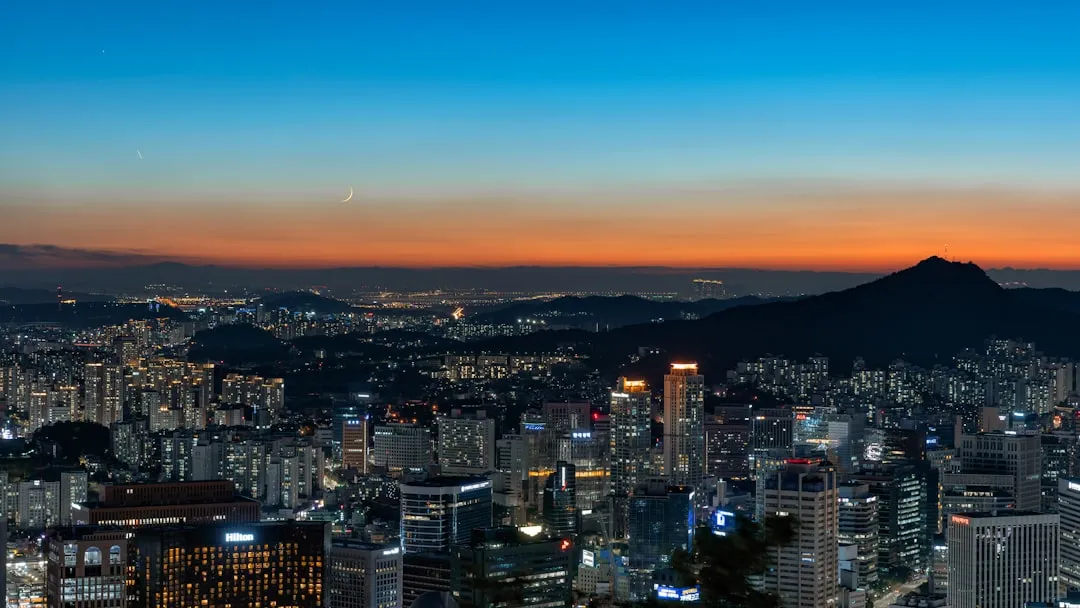
SK Hynix Tops 1.2 Million Won: The Memory-Battery Tandem
SK Hynix broke above 1.2 million won intraday for the first time in the company’s history, printing as high as 1.22 million won before settling back. That follows a Monday close of 1,166,000 won — a move of roughly 3-5% on the day at the intraday peak. The name has been bid on HBM and AI-chip memory demand, and Tuesday’s print is the cleanest public-market signal yet that investors are underwriting a multi-quarter HBM pricing regime rather than a single-order catalyst.
Samsung Electronics, Korea’s largest cap, closed up 2.1% at 219,000 won. The move was smaller in percentage terms but structurally more meaningful: Samsung’s gains pull index weight harder than any other name on the KOSPI. When Hynix and Samsung move together, the benchmark moves; when only one does, the story fades by Wednesday.
The battery complex ran even hotter. LG Energy Solution gained 11%, Samsung SDI surged 19%, and Hyundai Motor added 3.61% on the session. A simultaneous double-digit bid across two battery cell makers and Korea’s largest automaker is unusual — those three names do not typically run on the same catalyst, and a synchronized move is a breadth signal rather than a single-thematic squeeze.
Foreign Flows Flip: From 35 Trillion Won Out to 1.75 Trillion Won In
Foreign investors bought a net 1.75 trillion won of Korean equities on the session, per Seoul Economic Daily. Institutions added another 796.4 billion won. Retail sold 2.36 trillion won on the strength — the mirror image of late-2024 and much of 2025, when retail absorbed foreign selling and institutions stayed sidelined.
That 1.75-trillion-won buy-side print is more consequential when read against March’s tape. According to IANS, foreign investors were net sellers of roughly 35 trillion won — about $23.8 billion — in cumulative Korea equity outflows through March. April’s reversal does not yet recoup that scale, but directionally it maps onto a familiar Wall Street pattern: emerging-market allocators who cut weight into tariff uncertainty re-enter when the earnings-revision curve turns positive.
Breadth confirms the flow shift. Seoul Economic Daily reported 39 stocks hitting 52-week highs in April, versus 25 in March — a 1.56x expansion. That metric matters because a 39-stock print is hard to square with a single-thematic squeeze. It suggests allocators are rebuilding Korea exposure across semis, batteries, autos, and select industrials rather than chasing one basket.
JPMorgan’s Record Profit and the Wall Street Q1 2026 Tape
Goldman at 8,000, JPMorgan Bull at 8,500: The 7-Handle P/E Debate
Goldman Sachs raised its 12-month KOSPI target from 7,000 to 8,000, citing improving semiconductor-sector earnings and a forward P/E of 7.5x as the valuation anchor. That is a one-handle upgrade in a single note — the kind of move Goldman typically reserves for regime shifts, not mechanical rolls. JPMorgan, separately, kept Korea as its “most-preferred market” and floated an 8,500 bull case for investors willing to underwrite a second leg of memory pricing.
Nomura’s team drew a slightly tighter range, pegging a first-half 2026 target band of 7,500 to 8,000. Taken together, the three global banks agree on the direction and roughly on the upper bound. That convergence matters: on Korea, the sell side has historically been split, with U.S. desks more skeptical than Asian regionals. A 7,500-8,500 consensus corridor is unusually tight for Seoul.
Goldman’s underlying thesis leans on a single number. Daishin Securities analyst Lee Kyung-min, quoted in Seoul Economic Daily, summed it up bluntly: “Valuation normalization alone can sustain a KOSPI new-high rally.” Forward P/E at 7.5x sits well below the historical peak near 10x, leaving room for multiple expansion even without a blowout earnings revision — which, as the next section shows, is arriving regardless.
Samsung’s 301 Trillion Won Consensus: The Earnings Season Proof
Samsung Electronics’ consensus 2026 operating profit sits at 301.6 trillion won, according to IANS — an implied +591.8% versus the prior year. That year-over-year figure is extreme because 2025 was the trough; the more useful read for U.S. investors is that 301 trillion won would put Samsung’s operating profit in the same conversation as Microsoft’s or Alphabet’s on a reported basis.
The Q1 print is expected to anchor the narrative. IANS reports Samsung’s Q1 operating profit is forecast to top 50 trillion won on AI-chip demand. A 50-trillion-won quarter would put Samsung’s operating cadence on pace for a number north of the full-year consensus, rather than a back-loaded trajectory.
SK Hynix’s Q1 is set up similarly. Street expectations are clustered around an “earnings surprise” framing, with HBM and DRAM supply characterized as tight by multiple sell-side desks. For U.S. readers, the read-across is immediate: if HBM pricing holds through Q2, global AI-chip customers face a tighter memory cost curve than the Street has modeled, and the input-cost assumptions baked into 2026 hyperscaler capex budgets tighten accordingly.
The April 22 Iran Deadline and the 7-Handle Overheat Risk
The bull case is not without an offset. The current two-week U.S.-Iran ceasefire expires on April 22, with President Trump telling reporters he has “no interest” in extending it. Brent has held near $100 a barrel through the ceasefire window; a renewed escalation would re-price the entire energy complex — and, by second-order effect, put pressure on Asian import-dependent economies including Korea.
The valuation side carries its own tension. Forward P/E at 7.5x reads cheap against a historical peak near 10x, but it reads rich against Korea’s own five-year median closer to 9-10x when adjusted for the structural de-rating that followed the 2022 memory down-cycle. At a 7-handle multiple on top-of-cycle earnings, mechanical mean-reversion risk grows if either oil runs above $100 sustained or earnings revisions roll over.
Kiwoom Securities analyst Han Ji-young, quoted in Seoul Economic Daily, framed the current market tone succinctly: “The market has grown desensitized to war risk, and focus is shifting to the earnings season.” That desensitization is itself a positioning signal. Crowded complacency into a binary headline window — the April 22 ceasefire decision — is the classic setup for a gap move in either direction.
Recession Odds 2026: What Goldman and Moody’s Are Really Pricing
What to Watch: Two Numbers for the Rest of April
The setup going into the last week of April reduces to two numbers for U.S.-based allocators. First, Brent crude: a sustained close above $100 after the ceasefire decision would force a rethink of the Korea bull case, not because Korea owns the upside on oil but because Korea’s trade balance is uniquely sensitive to energy-import costs. Second, Samsung’s Q1 operating profit: a print above 50 trillion won locks in Goldman’s 8,000 target path; a print below drains the near-term premium Seoul is now carrying.
The expert tape has aligned unusually tightly. Yuanta Securities Korea analyst Lee Jae-won told Seoul Economic Daily that “semiconductors and secondary batteries are the core pillars pulling the index higher.” Goldman’s 2026 outlook leans on the same read — “semiconductor-sector earnings improvement” — while flagging the 7.5x forward P/E as structurally cheap relative to the 10x historical peak. Three bulge-bracket houses, one regional broker, and a local sell-side analyst have converged on the same framing within forty-eight hours. That rarely happens in Seoul.
For a Wall Street audience, the simplest way to think about Tuesday’s print is this: Korea has spent two years being the cheapest way to express an AI-memory bull case, and the market has just decided to close that gap. Whether 8,000 is the right number is a separate question. The first question — whether Korea stays a high-priority allocation into Q2 earnings — was answered on April 21.
References
- Seoul Economic Daily (2026-04-21) — KOSPI closes at 6,388.47, up 169.38 points (+2.72%), a fresh all-time high.
- IANS / Seoul stocks report (2026-04-21) — Prior record of 6,307.27 (Feb 26) eclipsed; Korea Exchange total market cap at a record 5,236 trillion won.
- Seoul Economic Daily (2026-04-21) — SK Hynix tops 1.2M won intraday for the first time; 39 stocks hit 52-week highs in April (vs. 25 in March).
- Seoul Economic Daily (2026-04-21) — Samsung Electronics closes 2.1% higher at 219,000 won; LG Energy +11%, Samsung SDI +19%, Hyundai +3.61%.
- Seoul Economic Daily (2026-04-21) — Foreigners +1.75T won, institutions +796.4B won, retail −2.36T won on the session.
- IANS / Seoul stocks report (2026-04-21) — March cumulative foreign outflow of 35 trillion won ($23.8B) reverses in April.
- Seoul Economic Daily (2026-04-21) — Goldman Sachs raises 12-month KOSPI target from 7,000 to 8,000 on semi earnings, 7.5x forward P/E; Nomura H1 target 7,500-8,000.
- IANS / Seoul stocks report (2026-04-21) — JPMorgan maintains Korea as “most-preferred market,” bull case 8,500.
- IANS / Seoul stocks report (2026-04-21) — Samsung Electronics 2026 consensus operating profit 301.6T won (+591.8% YoY); Q1 forecast above 50T won on AI-chip demand.
- IANS / Seoul stocks report (2026-04-21) — April 22 U.S.-Iran two-week ceasefire deadline; oil at $100+ per barrel; Trump signals no interest in extension.
Stay Ahead of the Curve
Get the latest insights on AI, tech, and markets — delivered in both Korean and English.

Jugger | Backend Developer
A backend engineer working in enterprise solutions software since June 2021. The hands-on perspective from system design, API implementation, and production operations directly informs this site’s
AI, IT, and cloud infrastructure coverage.
For topics outside direct professional experience—blockchain and macroeconomics—analysis is built on primary-source citations such as SEC filings, whitepapers, institutional research, and government
statistics. Speculation is clearly separated from verified fact, and unverified claims are not published.
AI tools assist with drafting, but every article is reviewed, revised, and verified before publication. Errors are corrected with visible notes when discovered.
Contact: jjunggulee@gmail.com