Key Takeaways
- Intel has ripped 76% year-to-date in 2026, climbing from $36.90 to $64.94 by April 15, with a one-year return of 216% that puts it near the top of the S&P 500.
- The five-session run into the Q1 print added another 25%, concentrating paper gains ahead of April 23 earnings where consensus calls for $12.3B revenue against guidance midpoint of $12.2B.
- Two structural moves drove the re-rating: the $25B Terafab joint venture with Tesla, SpaceX, and xAI announced April 7, and the $14.2B buyback of Apollo’s 49% stake in Fab 34 on April 1.
- Wall Street is unusually split — the average analyst consensus rating is “Hold” with a 12-month price target of $46.79, implying 29% downside from current levels.
- Options markets price an 11.7% implied move on the April 24 expiry, well above the 8.9% average of the last eight earnings reactions — the largest expected swing since the 2024 foundry spin-off debate.
Intel Q1 Earnings on April 23 lands into the single most controversial chart in US large-cap semiconductors this spring. The stock is up 76% year-to-date and 216% over twelve months, yet the average Wall Street price target sits 29% below spot. That gap is not an analytical oversight — it is a window into how differently investors and sell-side models are reading the same three catalysts.
On April 23, Intel reports Q1 2026 earnings into this exact disagreement. Consensus revenue is $12.3B, the guidance midpoint is $12.2B, and the implied move on the April 24 options expiry is 11.7% — a roughly 30% premium over the eight-quarter historical average of 8.9%. What traders are really pricing is not the print itself but the binary between “turnaround confirmed” and “valuation trap.”

Intel Q1 Earnings in context: anatomy of the three-month +76% rally
Intel began 2026 near $36.90, a level that implied the foundry business was worth roughly zero after subtracting the market value of its Mobileye stake and design-services revenue. By April 15, the stock closed at $64.94, a 76% year-to-date gain. The trailing one-year return of 216% places Intel among the strongest S&P 500 performers, a table historically led by AI-adjacent names like Nvidia and Broadcom.
The final five sessions before the Q1 print account for roughly a third of that year-to-date move. A 25% cumulative gain in one trading week — roughly $80B in added market capitalization — is not a grind higher. It is a positioning event, compressed into days, driven by two specific announcements landing inside the April 1–15 window and by ambient re-pricing of the foundry option.
For US investors, the useful way to frame the move is through the lens of a related coverage of Intel’s Fab 34 buyback, which analyzed the April 1 transaction as a discrete operational signal. The story since that deal has widened from “Intel is re-consolidating its fabs” into “Intel has found paying customers for leading-edge capacity,” and the share-price reaction reflects that broader read.
Terafab $25B: Musk places his first bet on Intel Foundry
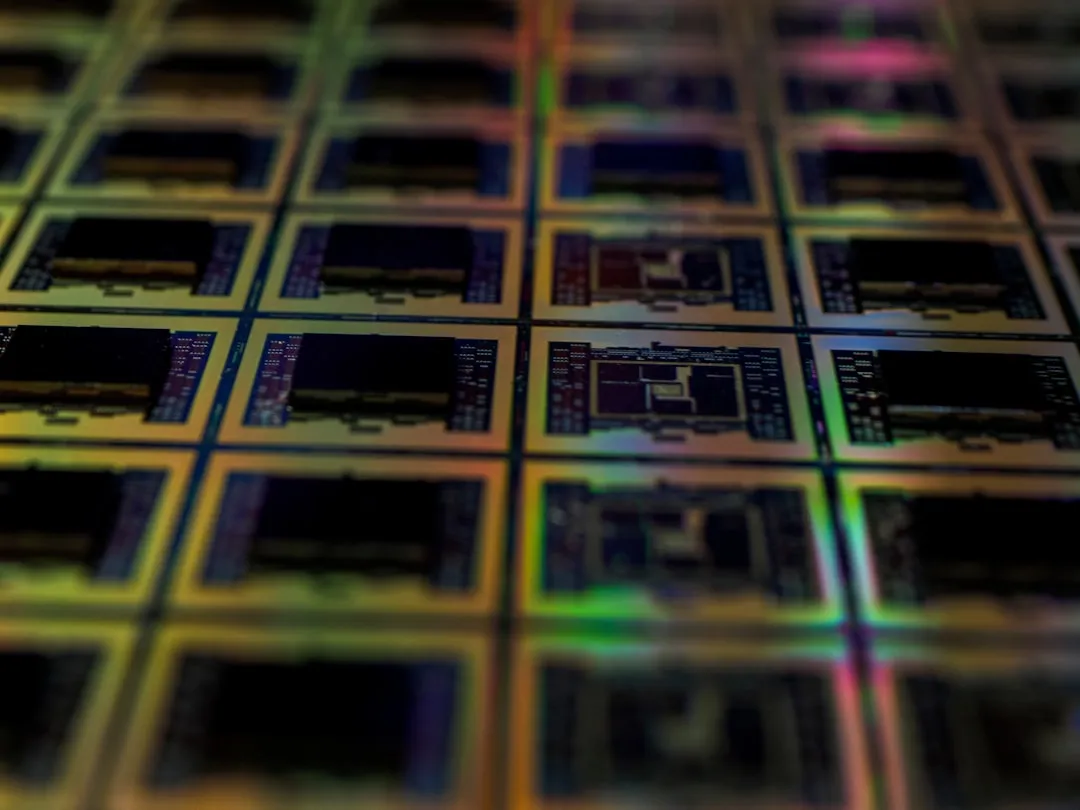
On April 7, Intel announced Terafab, a $25B joint venture to be built in Austin, Texas, with Tesla, SpaceX, and xAI as partners alongside Intel Foundry. The stated mission is to produce up to 1 TW of AI compute capacity annually using Intel’s 18A process. The stock rallied 4% on the announcement day and added another 11% in the following session.
The structural signal is that Intel Foundry now has a committed external-customer consortium that extends beyond Department of Defense programs and legacy Altera FPGA runs. For a foundry that lost roughly $10.3B in operating income during 2025, booking a named 18A anchor-tenant tranche reframes the capex story from “strategic subsidy” toward “order book in progress.”
There is a more specific tell worth flagging. The Terafab announcement arrived less than a week after Intel had already committed $14.2B to buy back the Fab 34 minority stake. Layering a $25B external venture on top of a $14.2B internal re-consolidation within the same quarter is a capital-allocation pattern markets typically read as “the operator sees demand the balance sheet needs to meet,” not as empire-building.
Why this JV matters more than a typical supply deal
Terafab binds three high-visibility AI buyers (Tesla, SpaceX, xAI) into 18A capacity. The $25B scale and the 1 TW compute target turn a nominally “greenfield” fab into a named order-book event, which is the single reframing that justifies a multiple expansion on Intel Foundry rather than a discount.
$14.2B Fab 34 buyback: reversing the 2024 divestiture at a premium
Announced on April 1, Intel agreed to buy back Apollo Global Management’s 49% stake in Fab 34, the Leixlip, Ireland leading-edge facility, for $14.2B. Apollo had acquired that stake in June 2024 for $11.2B, meaning Intel is paying a $3B premium to reverse a divestiture it executed less than two years earlier. The stock closed up 9% on announcement day.
The operational rationale is straightforward: Fab 34 is the anchor site for 18A high-volume manufacturing, and full ownership removes a minority partner whose consent rights could complicate capacity allocation to external foundry customers. The financial tension is the mirror image — Intel is layering a $14.2B cash-plus-financing outflow on top of ongoing foundry losses and negative trailing free cash flow.
For investors, the right question is whether the $3B premium is a strategic mistake or a disclosure. If Intel is willing to pay more than it sold for in 2024, the implied message is that 18A customer commitments have grown faster than the divestiture assumed. The Terafab JV announced six days later is consistent with that read; whether Q1’s capex guidance language is also consistent is one of the earnings-call tells to watch.

18A ramp and Panther Lake: what a “+7% monthly yield” actually means
Intel’s 18A process entered high-volume manufacturing in October 2025 and has been improving yields at roughly a 7% month-over-month pace, with the internal target for commercially viable yields set for year-end 2026. Panther Lake, the first 18A-based consumer chip, was publicly unveiled at CES 2026 as the lead SKU for the new node.
A 7% monthly yield improvement is not marketing shorthand — compounded over a year, it implies roughly a two-and-a-half-fold increase in sellable die per wafer. That is the operational bridge between “18A exists” and “18A is profitable,” and it is the single internal metric most likely to move the stock when Intel discusses it on the call without releasing the number itself.
Intel Foundry’s external revenue reached $222M in Q4 2025, a new quarterly high for the segment. The Custom ASIC business, which bundles design services with 18A wafer commitments, grew more than 50% during 2025 and crossed a $1B-plus annualized run rate.
These line items translate 18A into the foundry P&L, and their trajectory is the more reliable read on structural progress than the headline yield percentage alone. The broader foundry capacity picture also has a supply-side backdrop similar to what TSMC’s pricing trajectory through 2029 implies, meaning 18A’s ramp is arriving into a market where customers already pay up for leading-edge capacity.
Analogy — the yield curve inside the fab. Think of 18A yield like compound interest: a 7% monthly improvement, compounded twelve times, is the difference between a fab that barely breaks even and one that meaningfully contributes to gross margin. That compounding math is why Intel’s tone on the call matters more than the specific Q1 number.
Q1 guidance $11.7–$12.7B: reading “server demand exceeding supply”
Intel’s Q1 2026 revenue guidance is a range of $11.7B to $12.7B with a midpoint of $12.2B, below the $12.7B delivered in Q1 2025 — a year-over-year decline at the midpoint. Gross margin guidance sits near 34.5%, down from 37.9% in Q4 2025, and the quarter is expected to print close to breakeven on earnings.
The complication is that Intel has explicitly flagged server CPU supply constraints as a gating factor. A demand-above-capacity condition is bullish on the demand side but directly compresses the Q1 print, which is why the guidance looks soft relative to the 76% share-price move. For analysts, the key disclosure to watch is whether the Q2 commentary cites capacity unlocks as a recovery lever.
Gross margin is the other dial. The four-point compression from Q4 to Q1 reflects 18A ramp costs and Foundry loss absorption, both of which are structural rather than cyclical. If management frames 34.5% as the trough, the narrative stays intact; if it is described as a new baseline, the valuation math gets much harder to defend at current levels.

Wall Street split: $46.79 target vs. $64.94 spot
The average analyst consensus rating on Intel is “Hold” with a 12-month price target of $46.79 — a 29% discount to the current $64.94 level. That is an unusual configuration. Normally, a 76% year-to-date rally would drag targets higher as analysts update their models; here, the gap implies the sell side is treating the rally as momentum-driven rather than fundamentals-driven.
There is a counterweight buried in the execution record. Intel has beaten EPS consensus in three of the last four quarters, a hit rate high enough that the sell-side is clearly underpricing near-term EPS even as it holds long-term targets below spot. The split between “beats on the quarter” and “below on the target” is what the April 24 implied move of 11.7% — against an 8.9% historical average — is monetizing.
For active managers, the tactical framing is that the earnings print is less about EPS and more about whether management provides a data point that lets analysts raise their targets without looking like they are chasing price. 18A customer wins, Foundry revenue trajectory, and 14A order-book color are the three specific disclosures that could meaningfully close the gap between $46.79 and $64.94.
Risk checklist: foundry losses, valuation, and 14A execution
Intel Foundry’s 2025 operating loss was approximately $10.3B, and trailing twelve-month free cash flow is negative at roughly -$1.5B. Even with 18A ramping and Terafab signed, the cash-burn profile is not a one-quarter fix. Watching how the Q1 call frames Foundry losses against the new capacity commitments is the single clearest read on whether management is re-pacing capex or accelerating it.
The valuation is demanding. Forward P/E sits in a 126–135 range against a market capitalization of roughly $344B, which is the kind of multiple typically assigned to companies with visible near-term earnings acceleration. Whether Intel clears that bar depends on how fast 18A turns into margin, and that is a 2027 question rather than a Q1 2026 question.
The 14A node introduces a second execution layer. Risk production is scheduled for 2027 with the first deployment of High-NA EUV tooling, and Intel has publicly dropped its previous “blank check” capex posture in favor of a “customer-commitment gated” approach. That discipline is healthy for the balance sheet but raises the bar on customer announcements — Q1 is the first earnings print under that explicit policy.
Three metrics to monitor on April 23
- Q1 gross margin vs. the 34.5% guide — a beat signals a trough; an inline print leaves valuation exposed.
- Foundry external revenue trajectory — Q4 printed $222M; Q1 above $250M would ratify the Custom ASIC run-rate.
- Any 14A or 18A customer announcement language on the call — this is what moves the $46.79 target toward the $64.94 spot, not EPS itself.
References
- TIKR (via Fool.com analysis), “Intel stock has surged 76% in 2026 — can the Terafab deal make it last?” — 2026-04-15 — https://www.tikr.com/blog/intel-stock-has-surged-76-in-2026-can-the-terafab-deal-make-it-last
- Yahoo Finance, “Intel surges into Q1 earnings report” — 2026-04-17 — https://finance.yahoo.com/markets/stocks/articles/intel-surges-q1-earnings-report-191222838.html
- TIKR, Terafab $25B JV announcement coverage — 2026-04-07 — https://www.tikr.com/blog/intel-stock-has-surged-76-in-2026-can-the-terafab-deal-make-it-last
- TIKR, Apollo Fab 34 49% stake buyback — 2026-04-01 — https://www.tikr.com/blog/intel-stock-has-surged-76-in-2026-can-the-terafab-deal-make-it-last
- Motley Fool, “Is Intel Stock a Buy Ahead of Earnings?” — 2026-04-17 — https://www.fool.com/investing/2026/04/17/is-intel-stock-a-buy-ahead-of-earnings/
- Techi.com, Intel stock analysis and 18A ramp notes — 2026-04-17 — https://www.techi.com/intel-stock/
- Yahoo Finance, options implied-move and analyst consensus data — 2026-04-17 — https://finance.yahoo.com/markets/stocks/articles/intel-surges-q1-earnings-report-191222838.html
- 24/7 Wall St., Lip-Bu Tan one-year review — 2026-03-17 — https://247wallst.com/investing/2026/03/17/intels-new-ceo-has-completed-his-first-year-heres-where-things-stand/
- Motley Fool (Daniel Sparks), forward P/E and market-cap framing — 2026-04-17 — https://www.fool.com/investing/2026/04/17/is-intel-stock-a-buy-ahead-of-earnings/
- Techi.com, 14A risk-production and High-NA EUV commentary — 2026-04-17 — https://www.techi.com/intel-stock/
Stay Ahead of the Curve
Get the latest insights on AI, tech, and markets — delivered in both Korean and English.
Explore More Posts
Jugger | Backend Developer
A backend engineer working in enterprise solutions software since June 2021. The hands-on perspective from system design, API implementation, and production operations directly informs this site’s
AI, IT, and cloud infrastructure coverage.
For topics outside direct professional experience—blockchain and macroeconomics—analysis is built on primary-source citations such as SEC filings, whitepapers, institutional research, and government
statistics. Speculation is clearly separated from verified fact, and unverified claims are not published.
AI tools assist with drafting, but every article is reviewed, revised, and verified before publication. Errors are corrected with visible notes when discovered.
Contact: jjunggulee@gmail.com