- TSMC is raising prices 5–10% on advanced nodes below 5nm starting in 2026, with four consecutive years of hikes planned through 2029. A single 2nm wafer now costs over $30,000.
- Nvidia hiked AI GPU prices 10–15% and gaming GPUs 5–10%. The RTX 5090 could surge from $2,000 to $5,000 as HBM3E memory costs jumped 20%.
- U.S. tariffs (10% minimum) compounding TSMC’s own hikes are pushing chip prices up 15–20% combined — reversing a six-decade trend of falling semiconductor costs.
$30,000 for a single silicon wafer. That is the new price tag for TSMC’s 2nm process node — a 50% leap from the roughly $20,000 it charges for 3nm wafers. The era of cheaper, smaller, faster chips is over.
For six decades, Moore’s Law delivered a reliable promise: as transistors shrank, chip prices fell. That trajectory has now reversed. TSMC’s four-year price hike plan, U.S. tariffs on Taiwanese chips, and an insatiable AI-driven demand for high-bandwidth memory are converging into a structural shift that will reshape chip prices across every product category — from iPhones to AI data centers.
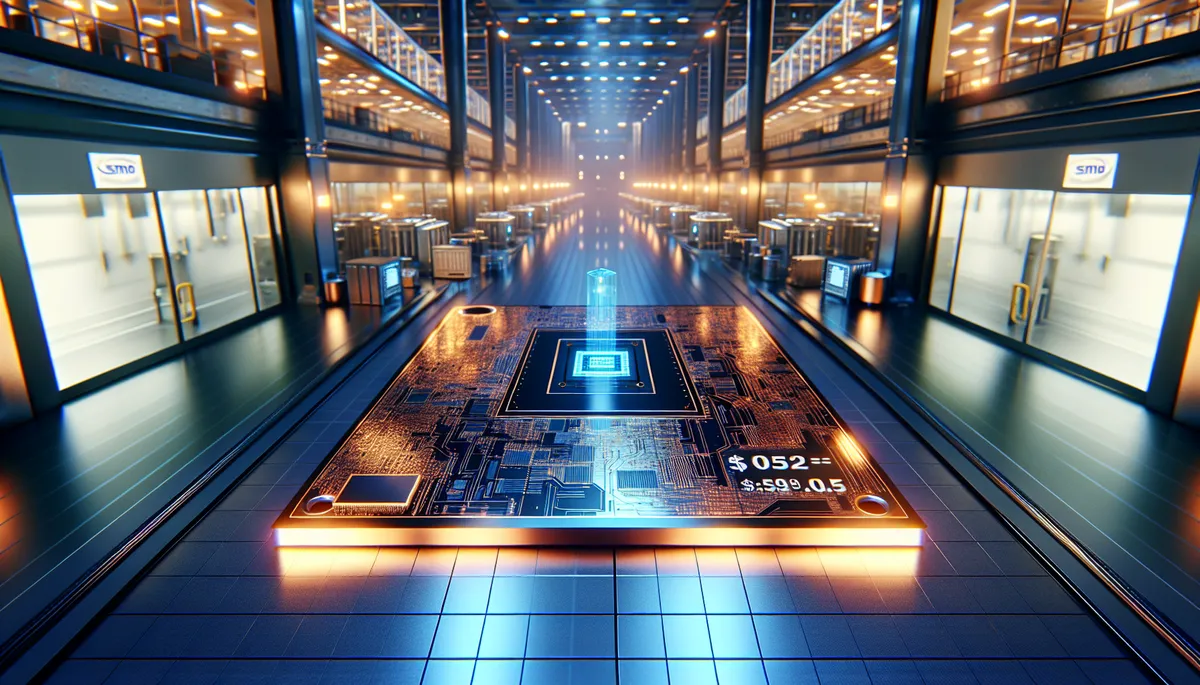
TSMC Declares the End of Cheap Chips
Starting in 2026, TSMC is raising prices 5–10% on all advanced process nodes below 5nm. The key here is that this is not a one-time adjustment — it is a four-year consecutive plan stretching through 2029.
The increases are tiered by application. Smartphone chips face a 5% hike, CPUs around 7%, and AI and high-performance computing (HPC) chips up to 10%. The steepest markup targets the segment with the most explosive demand growth: artificial intelligence.
Behind the numbers lies TSMC’s massive U.S. investment burden. The company has poured more than $65 billion into its Arizona fabs, but production costs in the United States run 5–20% higher than in Taiwan. AMD CEO Lisa Su has publicly acknowledged this gap, stating that “chips produced at TSMC’s Arizona fabs cost 5–20% more than those manufactured in Taiwan.”
The $30,000 Wafer: Cost Structure of the 2nm Era
A single 3nm wafer costs approximately $20,000. Move to 2nm, and the price jumps past $30,000 — a more than 50% increase for one generational step forward. The old dynamic, where shrinking transistors translated to cheaper per-unit costs, has flipped entirely.
The largest consumer of these expensive wafers is Apple. As TSMC’s biggest customer — accounting for 24% of total revenue — Apple has secured more than 50% of initial 2nm production capacity for its upcoming A20 and A20 Pro chipsets. Every dollar added to wafer costs flows directly into Apple’s bill of materials.
Samsung faces its own exposure. If the company’s in-house 2nm Exynos 2600 processor encounters delays, the Galaxy S26 would need to rely on TSMC foundry production, absorbing the full impact of the chip price increases. Neither of the world’s two largest smartphone makers can escape the new cost reality.

Tariff War Pours Fuel on Chip Inflation
TSMC’s price increases arrive at the worst possible moment. The Trump administration has imposed tariffs of at least 10% — and in some cases exceeding 100% — on global imports. These levies apply directly to semiconductors manufactured in Taiwan.
With a 10% tariff layered on top, spot market chip prices are projected to surge 8–12%. In short, TSMC’s own 5–10% hikes and the 10% tariff are compounding, not additive in isolation. The combined effect could push the real cost of cutting-edge Taiwanese chips up by 15–20%.
A countervailing force is emerging, however. In January 2026, the U.S. and Taiwan reached a trade agreement under which Taiwanese chip companies will invest $250 billion in semiconductor fabrication plants on American soil. Over time, a higher share of domestic production could reduce tariff exposure — but it introduces the structural cost premium of manufacturing in the U.S., where fab operations run 5–20% more expensive than in Taiwan.
GPU Prices Explode: The $5,000 RTX 5090 Era
The semiconductor price surge is hitting the GPU market hardest. Nvidia raised prices on its AI accelerators — the H200 and B200 — by 10–15%, while gaming GPUs climbed 5–10%. The company had little choice: memory costs and tariffs left no margin to absorb.
The most alarming number belongs to the RTX 5090. Originally priced at $2,000, Nvidia’s flagship consumer graphics card could reach $5,000 by year-end, according to TrendForce projections. A single graphics card at the price of a used car — that is the new baseline for high-end PC gaming in 2026.
The core driver is HBM3E memory — the high-bandwidth memory essential for AI workloads. HBM3E supply prices have risen approximately 20%, and VRAM now accounts for more than 80% of the total bill of materials (BOM) on high-end GPUs. When the single most expensive component jumps 20%, the finished product cannot hold its price.
AMD offered no relief. The company began its own phased price increases in January 2026, one month before Nvidia followed in February. Both companies face the same structural squeeze: HBM3E cost inflation and tariff headwinds that leave no room for margin compression.
For consumers, the competitive alternative has effectively disappeared.
$14.2B Intel Buyback: Paying $3B Extra to Reclaim Fab 34
From iPhones to Galaxies: Consumer Electronics Feel the Impact
The ripple effects extend far beyond GPUs. Apple is TSMC’s largest customer, representing 24% of the foundry’s total revenue. When TSMC raises chip prices, the production costs for iPhones, iPads, and Macs rise in lockstep — and those increases will inevitably reach the consumer.
Prices for smartphones, televisions, and personal computers are projected to climb steadily through 2029. An IEEE Spectrum analysis found that tariff-driven electronics price increases disproportionately burden lower-income consumers, widening the digital affordability gap.
This is not a temporary supply shock. The convergence of wafer price hikes, tariffs, and memory cost inflation means that the forces driving up finished-product prices are structural, not cyclical. Devices shipping in the second half of 2026 will be the first to fully reflect this new cost environment.
Supply Chain Overhaul: The U.S.-Europe Dual Production Model
Companies are fundamentally restructuring their supply chains in response to tariffs and geopolitical risk. Analog Devices and GlobalFoundries have adopted a split-production strategy across the U.S. and Europe, simultaneously qualifying for subsidies under the American CHIPS Act and the European Chips Act. The shift from efficiency-optimized single-source models to multi-region risk-management frameworks is well underway.
Nvidia is also accelerating the relocation of supply chain operations to the U.S. to offset tariff losses. Why this matters: the dual-production model disperses geopolitical risk but raises aggregate manufacturing costs. Running fabs in both the U.S. and Europe is inherently more expensive than concentrating production in Asia.
The subsidy math illustrates the paradox. CHIPS Act funding and European semiconductor subsidies exist to make domestic production viable, but they are not permanent entitlements. Once the incentive periods expire, companies will face the full cost differential — estimated at 5–20% above Asian production costs. Risk diversification comes at a structural price premium.
$66.6B Record: Foxconn AI Servers Overtake the iPhone
After Moore’s Law: What the Structural Shift Means
Three forces — AI demand, tariffs, and advanced node cost escalation — are exerting simultaneous upward pressure on chip prices. Not one of these factors is likely to ease in the near term. The six-decade trend of falling semiconductor costs has structurally reversed.
TSMC’s four-year hike plan, the escalation of U.S. trade policy, and the HBM3E memory shortage are not independent variables. They amplify each other in a feedback loop: TSMC raises prices to recover Arizona fab costs, tariffs add friction on top, and AI demand bids up memory prices. The result is a compounding cost spiral with no single point of relief.
As TSMC’s consecutive increases stretch through 2029, the trajectory of tariff policy will determine how the scenario unfolds. If the U.S.-Taiwan $250 billion investment agreement proceeds on schedule, tariff exposure may gradually diminish — but the structural cost premium of American fabrication (5–20% above Taiwan) becomes a permanent variable in the equation.
The takeaway: this is a paradigm shift, not a supply blip. Investors should track TSMC’s quarterly wafer pricing and Nvidia’s GPU margin trends. Consumers should prepare for higher launch prices on iPhones, Galaxy devices, and PCs starting in the second half of 2026.
The world where chips got cheaper every year is behind us — and both businesses and individuals need to recalibrate accordingly.
References
- TrendForce (2025-09-05) — TSMC announces 5–10% price hike on sub-5nm advanced nodes, four-year plan confirmed
- Analytics Insight (2025-11-03) — TSMC tiered pricing: smartphones 5%, CPUs 7%, AI/HPC chips up to 10%
- WCCFTech (2025-11-10) — 3nm wafer at ~$20,000, 2nm wafer exceeding $30,000
- Tom’s Hardware (2025-09-10) — TSMC Arizona fabs: $65B+ investment, U.S. production cost premium
- TechSpot (2026-01-15) — AMD CEO Lisa Su: Arizona fab production costs 5–20% higher than Taiwan
- PhoneArena (2025-10-01) — Apple as TSMC’s largest customer (24% of revenue), securing 50%+ of initial 2nm capacity
- TechTarget (2026-04-01) — Trump tariffs: minimum 10%, up to 100%+ on global imports
- Sourceability (2026-03-15) — 10% tariff on Taiwanese chips projected to push spot prices up 8–12%
- WCCFTech (2026-02-10) — Nvidia AI GPU price hike of 10–15%, gaming GPUs up 5–10%
- TrendForce (2026-01-05) — RTX 5090 projected to reach $5,000, AMD and Nvidia Q1 synchronized hikes
Stay Ahead of the Curve
Get the latest insights on AI, tech, and markets — delivered in both Korean and English.

Jugger | Backend Developer
A backend engineer working in enterprise solutions software since June 2021. The hands-on perspective from system design, API implementation, and production operations directly informs this site’s
AI, IT, and cloud infrastructure coverage.
For topics outside direct professional experience—blockchain and macroeconomics—analysis is built on primary-source citations such as SEC filings, whitepapers, institutional research, and government
statistics. Speculation is clearly separated from verified fact, and unverified claims are not published.
AI tools assist with drafting, but every article is reviewed, revised, and verified before publication. Errors are corrected with visible notes when discovered.
Contact: jjunggulee@gmail.com