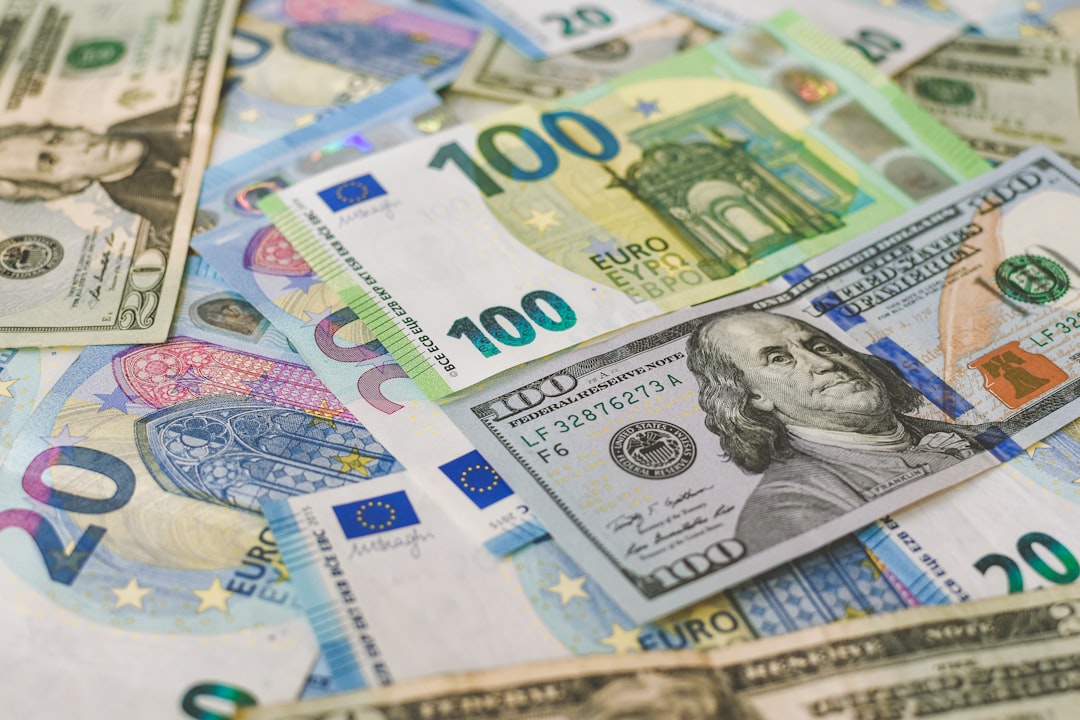
What does it mean when the world’s most powerful reserve currency quietly loses its footing? The US dollar index, which hovered near 99.5 in November 2025, is projected by Bloomberg consensus to slide toward 94.5 by the fourth quarter of 2026 — a move that would reprice virtually every asset class on the planet. This 5% decline trajectory represents one of the most significant macro narratives of the year, with Deutsche Bank’s forex strategy team corroborating the outlook. For currency traders, macro investors, and anyone holding non-US assets, this is not a peripheral data point — it is the defining variable of the year.
Understanding US Dollar Weakness Projections for 2026
The structural case for dollar depreciation is built on a convergence of monetary, fiscal, and cyclical forces that are simultaneously pulling in the same direction. The Federal Reserve’s rate-cutting cycle, which began in late 2024, is expected to accelerate meaningfully through the first half of 2026, with momentum tapering off in the second half as policymakers assess the cumulative impact of easing. This asymmetric pace — front-loaded cuts followed by a plateau — historically creates a window of peak currency vulnerability, as markets price in the full easing cycle before the Fed itself completes it. The projected reduction of nearly 75 basis points from the November 2025 level represents a meaningful shift in the monetary policy stance that reinforces broader dollar headwinds.
Beyond mere technicality, this projection signals a broad reassessment of US asset attractiveness relative to the rest of the world. The consensus outlook is reinforced by PwC’s 2026 Economic Outlook, which notes that global monetary policy is expected to maintain an accommodative stance throughout the year. When the Federal Reserve eases while other major central banks remain relatively less aggressive, the traditional yield advantage that has underpinned dollar demand for years begins to erode in a very tangible, quantifiable way.
Interest Rate Differentials Driving Currency Movements
The mechanics of US-EU interest rate differential compression are central to understanding why the dollar faces sustained headwinds. The Federal funds rate is projected to fall from 4.00% in November 2025 to approximately 3.26% by the fourth quarter of 2026 — a reduction that outpaces the easing trajectories of several other major economies. When the yield premium that investors earn for holding dollar-denominated assets shrinks relative to euro or yen alternatives, the incentive to park capital in the US diminishes, and foreign exchange flows gradually realign. This is not speculative — it is the textbook carry-trade dynamic working in reverse.
Adding a political dimension to the monetary arithmetic, the Trump administration has openly favored a weaker dollar as a tool for export competitiveness, a stance that reduces the likelihood of any coordinated policy intervention to defend currency strength. This represents a meaningful shift from previous administrations. The combination of a Fed on a clear easing path, narrowing rate differentials with the eurozone, and a White House that views currency depreciation as economically beneficial creates a policy environment that is permissive of — and arguably actively conducive to — sustained dollar softness through 2026.
Emerging Market Currency Opportunities in a Weaker Dollar Environment
The most direct beneficiary of a sustained dollar downtrend is the universe of emerging market currencies, and the 2025 performance data already offers a compelling preview of this dynamic in action. Non-US equity markets outperformed their American counterparts by 13.9 percentage points on a dollar basis in 2025 — and even stripping out the currency tailwind, they still led by 6.6 percentage points in local currency terms. That gap tells a two-part story: first, that the underlying fundamentals of non-US markets were genuinely improving; and second, that currency depreciation is acting as a powerful amplifier for investors holding international exposure. As the dollar weakens, capital flow patterns tend to rotate toward non-US assets in a self-reinforcing cycle, with portfolio managers benchmarked to global indices beginning to underweight dollar assets and institutional allocators increasing emerging market exposure to capture both currency and equity upside.
While a global growth slowdown presents a countervailing risk — weaker global demand can compress commodity prices and hurt EM export revenues — the net effect in a dollar depreciation scenario has historically been positive for emerging market currencies with strong current account positions, manageable debt loads, and commodity export profiles. The opportunity set is not uniform across the EM universe, but the directional tailwind from a falling dollar is broad-based.
Economic Growth and Inflation Factors Reshaping Dollar Dynamics
Beyond monetary policy mechanics, the moderating trajectory of US economic growth is undermining one of the most powerful structural arguments for dollar strength — the “US exceptionalism” trade that dominated markets from 2022 through mid-2025. The post-pandemic spending surge that turbocharged US GDP growth and drove disproportionate corporate earnings outperformance is visibly fading, with analysts pointing to a slowdown in the employment-income-consumption chain as households exhaust excess savings and tighten discretionary budgets. When the engine of US growth sputters relative to peers, the premium embedded in dollar-denominated assets becomes harder to justify.
Trade policy uncertainty under the current administration introduces an additional layer of complexity that cuts both ways for the dollar. On one hand, tariff escalation can initially boost the currency by reducing import volumes and narrowing the current account deficit. On the other hand, trade policy-driven inflation complicates the Fed’s easing path and can spook foreign investors who hold US Treasuries and equities. That second-order effect — the erosion of confidence in US policy predictability — represents the more durable dollar negative. The net result is a macro backdrop in which the traditional pillars of dollar strength — superior growth, a hawkish Fed, and predictable policy — are all simultaneously under pressure.
Risk Factors and Counterarguments Every Investor Must Weigh
The bear case for the dollar in 2026 is well-constructed, but dismissing the risk of short-term currency strength reversals would be analytically negligent. Risk-off episodes — whether triggered by a geopolitical shock, a credit event in an overleveraged emerging market, or a sharper-than-expected US recession — historically drive reflexive dollar buying as global investors retreat to the safety of the world’s deepest and most liquid market. The dollar’s entrenched reserve currency status, which currently accounts for nearly 60% of global foreign exchange reserves, is not a variable that shifts on a quarterly basis; it is a structural anchor that provides a floor under dollar demand even in adverse scenarios.
The continued dominance of the US tech sector and the enormous capital requirements of the AI infrastructure buildout represent a sector-specific dollar support mechanism that is easy to underestimate in macro models focused solely on rate differentials. Massive inflows into US-listed AI companies — from semiconductor manufacturers to hyperscale cloud providers — require foreign investors to acquire dollars, providing a persistent bid that partially offsets the bearish monetary dynamics. The intellectually honest framing for 2026, therefore, is not a one-directional dollar collapse, but rather a sustained downward trend punctuated by sharp recoveries — a volatile drift lower that rewards disciplined, hedged positioning over tactical bets on any single monthly move. International payments through SWIFT will remain dominated by dollar transactions, further supporting the currency even amid weakness.
The dollar’s 2026 trajectory ultimately functions as the master variable of global macro: get the dollar call right, and the relative performance of emerging market currencies, commodities, and international equities largely takes care of itself — get it wrong, and no amount of bottom-up stock-picking will save a portfolio from the wrong side of a $7.5 trillion daily FX market.
References
- Investing.com – Deutsche Bank Forex Strategy Report (2025-12-31) — Deutsche Bank projects US dollar weakness by end of 2026 on trade-weighted basis
- PwC Economic Outlook 2026 (2025-11-30) — Bloomberg consensus forecasts US dollar index declining from 99.5 (November 2025) to 94.5 by Q4 2026
- PwC Economic Outlook 2026 – Federal Reserve Rate Projections (2025-11-30) — US Federal Reserve expected to reduce benchmark interest rate from 4.00% (November 2025) to 3.26% by Q4 2026
- Chosun Ilbo – De-dollarization trend analysis (2025-12-08) — Non-US stock markets outperformed US markets in 2025 by 13.9 percentage points on dollar basis and 6.6 percentage points on local currency basis
- HK Business – Dollar Status Analysis (2025-12-23) — Dollar comprises nearly 60% of global foreign exchange reserves
- PwC Economic Outlook 2026 – Monetary Policy Stance (2025-11-30) — US Federal Reserve’s interest rate cuts expected to be concentrated in H1 2026 with pace moderating in H2 2026
Stay Ahead of the Curve
Get the latest insights on AI, tech, and markets — delivered in both Korean and English.

Jugger | Backend Developer
A backend engineer working in enterprise solutions software since June 2021. The hands-on perspective from system design, API implementation, and production operations directly informs this site’s
AI, IT, and cloud infrastructure coverage.
For topics outside direct professional experience—blockchain and macroeconomics—analysis is built on primary-source citations such as SEC filings, whitepapers, institutional research, and government
statistics. Speculation is clearly separated from verified fact, and unverified claims are not published.
AI tools assist with drafting, but every article is reviewed, revised, and verified before publication. Errors are corrected with visible notes when discovered.
Contact: jjunggulee@gmail.com