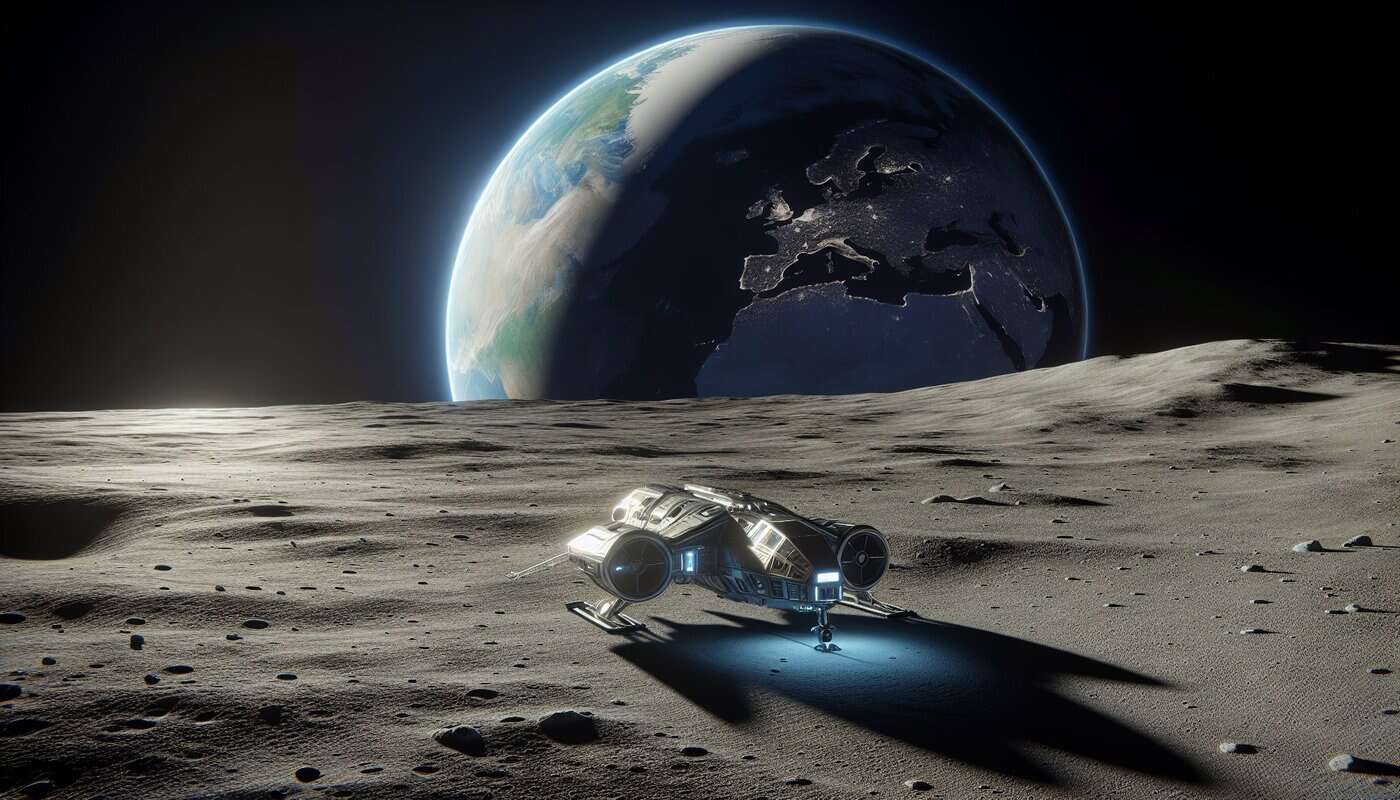
- NASA’s OIG confirmed SpaceX’s Starship HLS is at least 2 years behind its original Artemis III schedule, with further slippage expected — forcing NASA to officially downgrade Artemis III from a lunar landing to a low-Earth orbit docking test on Feb 27, 2026
- The first crewed Moon landing is now officially Artemis IV, targeting early 2028 — contingent on Starship completing undemonstrated cryogenic propellant transfer (requiring 10+ tanker launches and 200+ days of pre-positioning) and achieving stable Earth orbit, neither of which has occurred across 11 total test flights
- Blue Origin’s Blue Moon lander is at least 8 months behind schedule, and no rescue plan exists for astronauts stranded on the lunar surface — the OIG explicitly noted that an elevator failure would leave the crew with no alternate method to re-enter the lander
Ten tanker launches. More than 200 days of fuel pre-positioning in orbit. A crewed vehicle that has never achieved stable Earth orbit across 11 test flights. These are the engineering prerequisites standing between Starship and the Moon — and as of March 2026, not a single one has been demonstrated.
NASA’s Office of Inspector General made it official on March 11: SpaceX’s Human Landing System is at least two years behind schedule, with the agency quietly rewriting the entire Artemis mission sequence just two weeks earlier. On February 27, 2026, NASA formally downgraded Artemis III from a crewed lunar landing to a low-Earth orbit (LEO) rendezvous and docking test — a mission profile so reduced it barely resembles the moon program it was sold as.
How Starship’s Cascading Failures Forced NASA’s Biggest Artemis Pivot

The OIG’s March 11 report did not single out one failure point — it described a program-wide pattern of compounding delays. SpaceX has flown Starship 11 times since 2023, and while each iteration has pushed the vehicle further through its flight profile, none of the missions achieved stable Earth orbit, the minimum threshold required before any on-orbit refueling test can even begin. The most recent setback arrived on November 21, 2025, when a booster sustained damage during ground testing, pushing the Starship V3 Flight 12 schedule from Q1 2026 into early April 2026.
That single event compressed the already-thin margin between SpaceX’s test campaign and NASA’s operational requirements. NASA’s February 27 revision reflects a deliberate triage decision: rather than hold Artemis III hostage to an undefined Starship readiness date, the agency restructured the mission into a LEO rendezvous and docking exercise — preserving crew flight experience and hardware qualification without betting the entire program timeline on an unproven lunar descent system.
Why Cryogenic Refueling Remains the Unsolved Core of the Starship Architecture
The engineering challenge at the center of Starship’s lunar mission is not propulsion or heat shielding — it is cryogenic propellant transfer (the process of moving super-chilled liquid oxygen and methane between spacecraft in orbit, where fluid dynamics behave in fundamentally unpredictable ways under microgravity). NASA’s own OIG data describes a minimum of 10 tanker launches and more than 200 days of fuel pre-positioning before a single crewed lunar descent can even be attempted. That is not a one-time cost; it must be replicated for every mission.
As of March 2026, SpaceX has not publicly demonstrated any element of this refueling chain in flight. The company’s internal test roadmap includes depot-filling demonstrations, but the schedule for those milestones has consistently slipped in parallel with the broader Starship program. Until a fully fueled Starship upper stage achieves stable orbit and completes a propellant transfer test, the 2028 Artemis IV lunar landing remains contingent on technology that does not yet exist in operational form.
$BA -3%: Boeing’s Wiring Flaw Hits 737 MAX Deliveries — Is the Turnaround Already Cracking?
Blue Origin’s Blue Moon Is in the Race — But Also Running Late
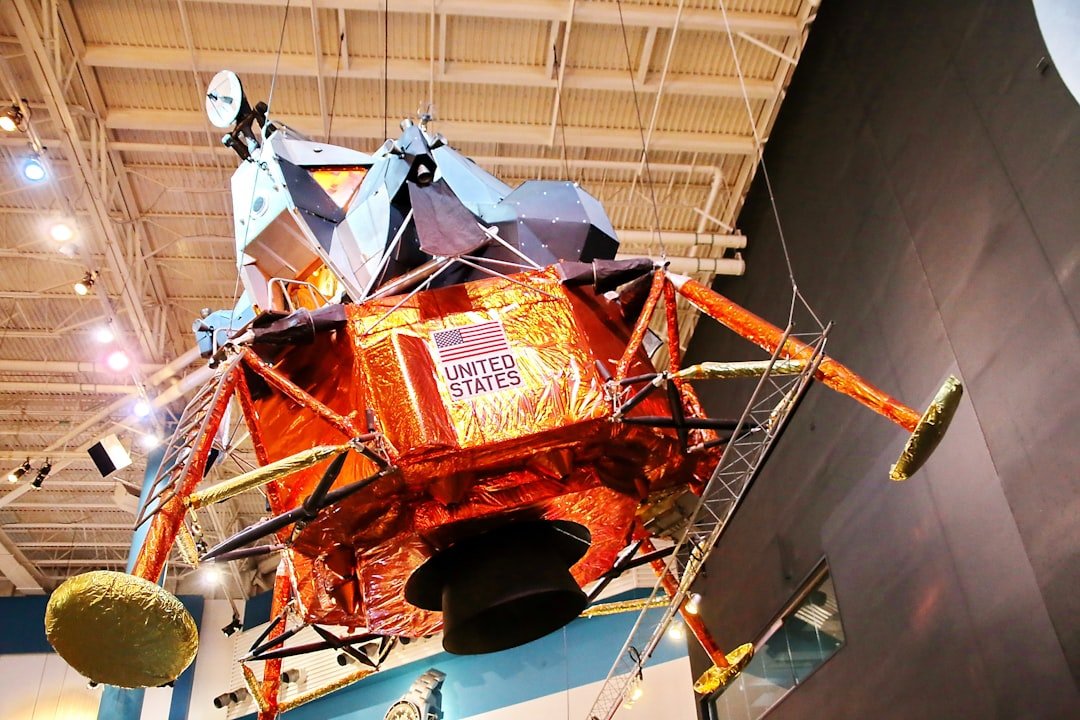
Jeff Bezos’s Blue Origin entered the lunar lander competition as an alternative to Starship, and the competitive framing still holds — but the OIG’s March 11 findings applied pressure to both contractors simultaneously. Blue Moon is at least 8 months behind its own schedule, a figure that puts the lander’s readiness timeline in tension with the revised Artemis sequencing. The revised Artemis III structure introduces an implicit competition dynamic: NASA’s plan is to dock the Orion capsule with whichever Human Landing System vehicle — Starship or Blue Moon — is actually ready.
In practical terms, the first lander to demonstrate flight-proven capability gets the Artemis IV lunar landing slot. If Blue Moon continues to drift and Starship’s refueling challenges push Flight 12 results into late 2026, NASA’s ability to sequence a fully qualified lander for Artemis IV’s early 2028 window narrows to a margin that leaves almost no room for further anomalies.
The Safety Gaps NASA Has Not Yet Solved
Beyond schedule and propulsion engineering, the OIG’s March 2026 report surfaced a safety deficit that receives far less public attention: there is currently no rescue plan for astronauts stranded on the lunar surface during an emergency. This is not a planning gap that will be filled by bureaucratic process — it reflects a genuine architectural challenge in how lunar surface operations are designed. The OIG specifically identified Starship’s elevator system as a single point of failure with no redundancy.
If that mechanism malfunctions on the lunar surface, the crew has no other documented method to return from the surface into the vehicle for ascent. The report invoked the Space Shuttle program as a precedent for how initial safety estimates can diverge catastrophically from reality — early Shuttle assessments put crew loss probability at roughly 1-in-100; the actual rate across the program’s history was closer to 1-in-10.
Artemis II and the Long Road to 2028 — What the Next 24 Months Actually Look Like
Before any lunar landing discussion becomes concrete, NASA must first execute Artemis II — the crewed lunar flyby mission with no surface component. Following hydrogen leak repairs at Kennedy Space Center, the launch is targeting no earlier than April 1, 2026. A successful Artemis II mission would validate the SLS/Orion system with humans aboard for the first time and provide critical flight data for the downstream Artemis III and IV planning.
NASA Administrator Jared Isaacman has signaled that additional Artemis architecture updates are possible, while holding the stated goal of annual lunar landing cadence post-2028 as the long-term benchmark. The SLS and Orion configuration has been frozen — no further upgrades are currently planned — a deliberate decision to preserve lessons learned and reduce the risk of introducing new variables into an already complex system.
The two scenarios that determine whether 2028 holds as the first crewed landing year are fairly well-defined by the existing facts. If Starship achieves stable orbit after Flight 12 in April 2026 and initiates a credible propellant transfer demonstration by late 2026, the refueling campaign has a plausible path to readiness by mid-2027, keeping Artemis IV’s early 2028 window viable. Conversely, if Flight 12 produces another anomaly requiring vehicle redesign, or if the propellant transfer tests surface new technical barriers, the early 2028 window collapses and Artemis IV slides toward late 2028 or beyond.
For anyone tracking the commercial space sector or NASA’s broader deep-space strategy, three metrics over the next six months will set the trajectory for the entire decade: Artemis II’s April 2026 launch outcome, Starship Flight 12’s orbital performance, and the first public signals from either SpaceX or Blue Origin on the substance of their acceleration plans. If Artemis II slips again or Flight 12 fails to achieve orbit, the 2028 lunar landing should be treated as an aspirational date rather than a program baseline.
References
- SpaceNews / NASA OIG Report (2026-03-11) — SpaceX Starship HLS at least 2 years behind original Artemis III schedule; additional delays expected
- SpaceNews (2026-03-09) — NASA revised Artemis III on Feb 27 2026: downgraded to LEO rendezvous test in 2027, lunar landing moved to Artemis IV (early 2028)
- SpaceNews / NASA OIG (2026-03-11) — Blue Origin Blue Moon lander at least 8 months behind schedule per OIG
- Futurism / NASA OIG (2026-03-14) — Starship requires minimum 10 tanker launches and 200+ days of pre-positioning to fuel lunar mission
- SpaceNews (2026-03-09) — Starship V3 Flight 12 slipped to early April 2026 after booster damage on Nov 21 2025
- Universe Space Tech (2026-03-03) — SpaceX has conducted 11 total Starship test flights since 2023; none achieved stable orbit
- Spaceflight Now (2026-03-14) — Artemis II targeting launch NET April 1, 2026 following hydrogen leak repairs at KSC
- Futurism / NASA OIG (2026-03-14) — OIG: no rescue plan exists for astronauts stranded on lunar surface; elevator failure leaves no alternate re-entry method
Stay Ahead of the Curve
Get the latest insights on AI, tech, and markets — delivered in both Korean and English.

Jugger | Backend Developer
A backend engineer working in enterprise solutions software since June 2021. The hands-on perspective from system design, API implementation, and production operations directly informs this site’s
AI, IT, and cloud infrastructure coverage.
For topics outside direct professional experience—blockchain and macroeconomics—analysis is built on primary-source citations such as SEC filings, whitepapers, institutional research, and government
statistics. Speculation is clearly separated from verified fact, and unverified claims are not published.
AI tools assist with drafting, but every article is reviewed, revised, and verified before publication. Errors are corrected with visible notes when discovered.
Contact: jjunggulee@gmail.com