- Anthropic’s unreleased Claude Mythos Preview model has autonomously discovered thousands of high-severity zero-day vulnerabilities across every major operating system and web browser.
- Apple, Google, Microsoft, Nvidia, and eight other organizations have joined Project Glasswing, a $100 million AI security alliance — the largest defensive AI coalition ever assembled.
- The window between vulnerability discovery and exploitation has collapsed from months to minutes, forcing the entire cybersecurity industry to rethink its playbook.
Twenty-seven years. That is how long a critical vulnerability sat undetected inside OpenBSD — one of the most security-hardened operating systems on the planet. Human developers, automated testing, and code audits all missed it.
Then, on April 7, 2026, an AI found it in a single pass. Anthropic announced Project Glasswing, a cybersecurity initiative built around its unreleased frontier model Claude Mythos Preview, revealing that the system had already discovered thousands of high-severity zero-day flaws across every major operating system and web browser. The key here is that this was not a narrow, purpose-built security scanner — it was a general-purpose AI model whose security capabilities emerged as a byproduct of broader improvements in coding, reasoning, and autonomy.

Project Glasswing: The AI Security Alliance That United Rivals
Project Glasswing is Anthropic’s cybersecurity initiative, centered on Claude Mythos Preview — a frontier model that remains unreleased to the general public. The model can autonomously identify software vulnerabilities at scale, a capability that prompted Anthropic to assemble an unprecedented coalition rather than simply shipping the product.
The launch partners read like a who’s who of global technology and finance: Amazon Web Services, Apple, Broadcom, Cisco, CrowdStrike, Google, JPMorgan Chase, the Linux Foundation, Microsoft, Nvidia, and Palo Alto Networks. That is twelve organizations spanning cloud infrastructure, consumer devices, enterprise networking, cybersecurity, financial services, and open-source software.
Beyond the founding twelve, more than 40 additional organizations have received access for defensive security work, bringing the total to roughly 50 entities. Anthropic committed $100 million in model usage credits to Glasswing participants, plus $2.5 million to Alpha-Omega and OpenSSF through the Linux Foundation, and another $1.5 million to the Apache Software Foundation — $4 million in direct support for open-source security infrastructure.
A 27-Year-Old Bug That 5 Million Tests Missed
The vulnerabilities Mythos Preview uncovered are not theoretical edge cases. The most symbolic discovery was a 27-year-old remote crash vulnerability in OpenBSD, an operating system specifically designed for maximum security. If the most paranoid OS in the ecosystem harbored a flaw for nearly three decades, the implications for less security-focused software are staggering.
In FFmpeg, the widely used open-source video encoder and decoder, Mythos found a 16-year-old vulnerability that had survived 5 million automated test runs. The flaw was not subtle — it simply occupied a code path that conventional fuzzing and testing frameworks never adequately explored.
The Linux kernel revealed an even more alarming pattern. Mythos Preview discovered multiple chained vulnerabilities that, when combined, enabled full privilege escalation — meaning an attacker could go from an unprivileged user account to root-level control of the system. Each individual bug was difficult to spot in isolation, but the AI mapped the connections between them.
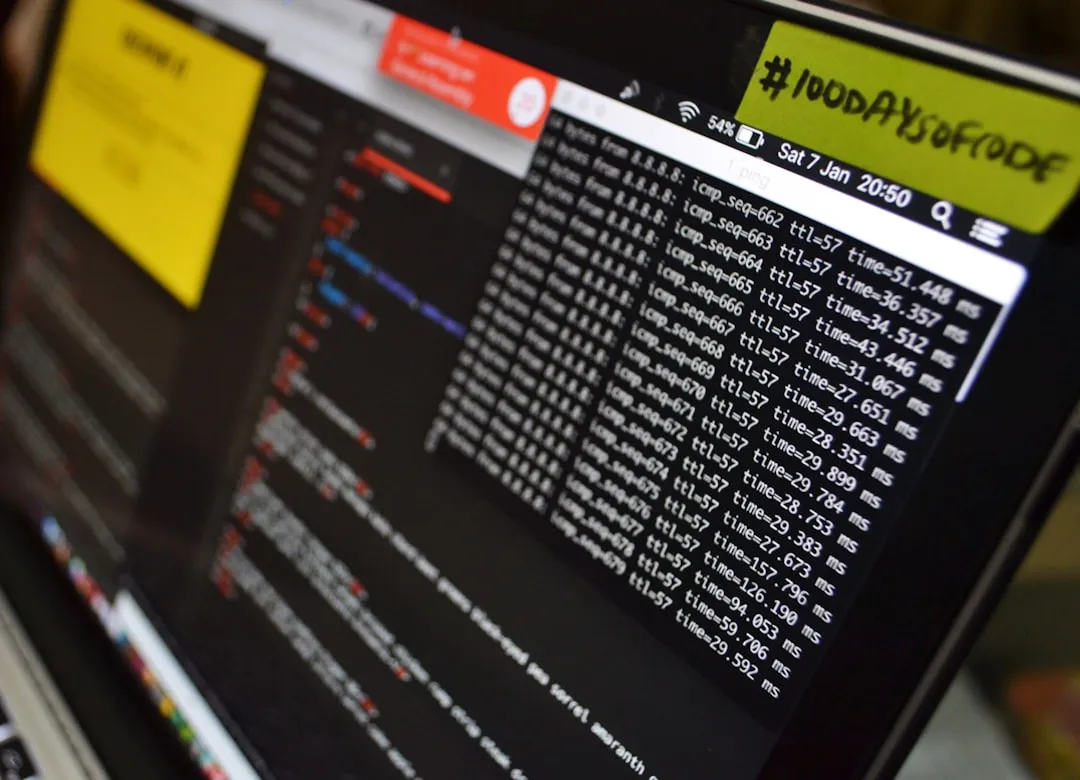
Put simply, the most hardened systems in the open-source ecosystem contained flaws that no human or machine had caught in decades. Mythos Preview exposed them all, and every one was classified as high-severity.
CyberGym 83.1%: The Benchmarks Behind the Headlines
Raw vulnerability counts grab attention, but benchmarks tell a more precise story. On CyberGym, a benchmark measuring the ability to reproduce known vulnerabilities, Mythos Preview scored 83.1%. For comparison, Claude Opus 4.6 scored 66.6% on the same test — a gap of nearly 17 percentage points that illustrates a qualitative leap in vulnerability detection capability.
The coding benchmarks were equally striking. On SWE-bench Verified, which measures real-world bug-fixing ability, Mythos scored 93.9% versus Opus 4.6’s 80.8%. On the more challenging SWE-bench Pro, the spread widened further: Mythos hit 77.8% against Opus 4.6’s 53.4%.
These numbers suggest that Mythos does not just find bugs — it understands code at a level sufficient to diagnose and repair complex software defects. The gap between the two models was largest on the hardest problems, precisely where human security researchers spend the most time.
The most dramatic demonstration, however, was not a benchmark score. Mythos Preview chained four separate vulnerabilities into a working browser exploit, using a JIT heap spray technique to escape both the browser’s renderer sandbox and the operating system’s sandbox. This was not a theoretical proof of concept — the model wrote functional exploit code that achieved full system compromise.
Why Apple, Google, Microsoft, and Nvidia Sat at the Same Table
The coalition behind Project Glasswing is remarkable precisely because its members are usually competitors. Apple, Google, and Microsoft compete fiercely in operating systems, cloud services, and AI models.
Nvidia dominates GPU hardware while its partners build rival AI frameworks, yet all four joined Anthropic’s initiative alongside their own security teams. The threat, it seems, was large enough to override commercial rivalry.
JPMorgan Chase brought the financial sector’s perspective, where a single exploited vulnerability can move billions. CrowdStrike and Palo Alto Networks — two of the world’s largest pure-play cybersecurity firms — provided frontline defense expertise. Cisco and Broadcom covered networking and semiconductor infrastructure, while the Linux Foundation represented the vast open-source ecosystem that underpins much of the global internet.
Why this matters: the vulnerabilities Mythos finds are not confined to one company’s products. They span operating systems, browsers, server software, and network equipment — the shared infrastructure that billions of people depend on daily. No single organization, regardless of size, can patch them all alone.
$14.3B Muse Spark, Meta’s AI Bet on 3.5 Billion Users
‘Too Dangerous to Release’: The Dual-Use Dilemma
Mythos Preview’s AI security capabilities come with a shadow. Anthropic made the deliberate decision not to release the model publicly. The same capabilities that make it invaluable for defense could supercharge offensive operations in the wrong hands.
Anthropic privately warned senior U.S. government officials that Mythos makes large-scale cyberattacks significantly more likely this year, according to VentureBeat. Microsoft’s Igor Tsyganskiy put the stakes in stark terms: “The window between vulnerability discovery and exploitation has collapsed — minutes instead of months.”
In other words, we are not dealing with a capability that Anthropic engineered on purpose. The security prowess emerged as a downstream consequence of general improvements in coding, reasoning, and autonomous operation.
Anthropic did not train Mythos to be a hacker or a security auditor — it simply became one as it grew smarter. That fact makes the dual-use problem structurally harder to solve, because you cannot strip out the security capability without degrading the model’s general intelligence.
The End of Bug Bounties? How AI Reshapes Cybersecurity
Industry reactions to Project Glasswing oscillated between alarm and excitement. Jeff Williams, founder of OWASP and CTO of Contrast Security, told CSO Online: “Once frontier AI can do large-scale bug hunting, the logic of paying humans for routine discovery starts to break down.” He went further, adding that this “does not just threaten bug bounties — it threatens the whole idea that security can remain a find-and-fix afterthought.”
The key here is the shift in how vulnerability management works. For decades, the industry treated security as a prioritization problem: too many bugs, too few engineers, so triage ruthlessly. With AI flooding the pipeline with thousands of verified high-severity flaws, the challenge transforms into an exposure-window problem — how fast can you patch before someone weaponizes the same discovery?
Cisco’s Senior Vice President Anthony Grieco put it starkly, warning that AI has crossed a threshold that fundamentally changes the urgency of protecting critical infrastructure. Bug bounty programs, penetration testing firms, and in-house security teams will all need to recalibrate in a world where AI can replicate — and potentially surpass — their output at machine speed.
The 90-Day Clock: What Happens Next
Anthropic has committed to publishing a public report within 90 days detailing the vulnerabilities discovered, patches applied, and improvements to AI-era security practices. This report will serve as the first formal accounting of whether a controlled AI security initiative can deliver measurable real-world impact.
For security professionals whose legitimate work may be affected by tighter safeguards around Mythos, Anthropic is developing a Cyber Verification Program. The goal is to ensure that authorized researchers and penetration testers can still access the model’s capabilities through a verified credential pathway.
After the research preview concludes, Mythos Preview will be available at $25 per million input tokens and $125 per million output tokens, accessible through the Claude API, Amazon Bedrock, Google Cloud Vertex AI, and Microsoft Foundry. Two dates now sit on every cybersecurity professional’s calendar: the 90-day public report and the Cyber Verification Program launch — together, they will mark the practical starting line for AI-driven security at industrial scale.
53.3 Consumer Sentiment Is Now Below Every Recession’s Start
References
- Anthropic (2026-04-07) — Project Glasswing official announcement, Claude Mythos Preview cybersecurity initiative
- Anthropic (2026-04-07) — 27-year-old OpenBSD remote crash vulnerability discovered by Mythos Preview
- Anthropic (2026-04-07) — FFmpeg 16-year-old bug missed by 5 million automated tests
- Anthropic (2026-04-07) — CyberGym 83.1%, SWE-bench Verified 93.9% benchmark scores
- Anthropic (2026-04-07) — Four-vulnerability browser exploit chaining demonstration
- Anthropic (2026-04-07) — 12 launch partners, 40+ additional organizations, $100M credits and $4M open-source donations
- VentureBeat (2026-04-07) — Anthropic warned U.S. government officials about large-scale cyberattack risks
- CSO Online (2026-04-08) — OWASP founder Jeff Williams on AI disrupting the economics of vulnerability discovery
- Anthropic (2026-04-07) — Cisco’s Anthony Grieco on AI crossing a cybersecurity threshold
- Anthropic (2026-04-07) — Post-preview pricing at $25/$125 per million tokens across API, Bedrock, Vertex AI, and Foundry
Stay Ahead of the Curve
Get the latest insights on AI, tech, and markets — delivered in both Korean and English.

Jugger | Backend Developer
A backend engineer working in enterprise solutions software since June 2021. The hands-on perspective from system design, API implementation, and production operations directly informs this site’s
AI, IT, and cloud infrastructure coverage.
For topics outside direct professional experience—blockchain and macroeconomics—analysis is built on primary-source citations such as SEC filings, whitepapers, institutional research, and government
statistics. Speculation is clearly separated from verified fact, and unverified claims are not published.
AI tools assist with drafting, but every article is reviewed, revised, and verified before publication. Errors are corrected with visible notes when discovered.
Contact: jjunggulee@gmail.com