- The Trump administration signed a Section 232 executive order imposing up to 100% tariffs on patented pharmaceuticals — large firms face July 31 enforcement, smaller ones September 29
- The Tax Foundation estimates up to $23 billion in additional costs on $225 billion in drug imports, while Health Affairs projects a 30% average price increase for finished medications
- 17 major drugmakers secured MFN exemptions, but rare-disease specialists and R&D investment (venture funding down 70%) face a direct hit
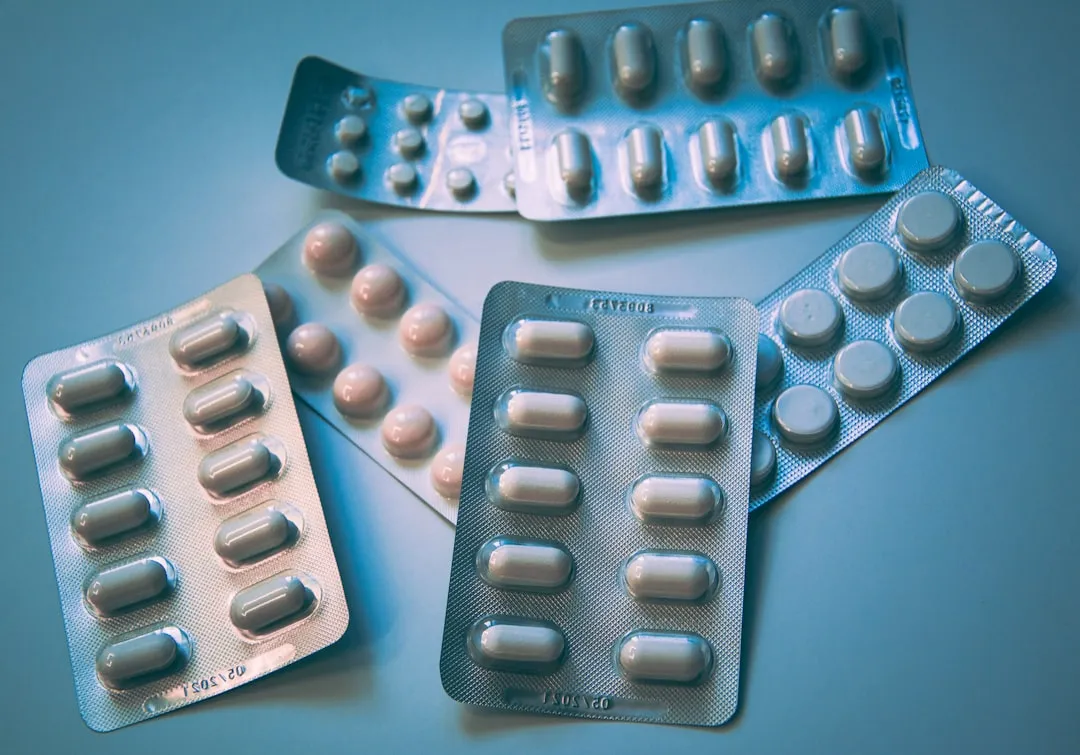
$225 billion. That is how much the United States spends on imported pharmaceuticals each year. On April 2, President Trump signed an executive order slapping tariffs of up to 100% on every patented drug crossing American borders.
Health Affairs Scholar estimates that full enforcement could raise finished-drug prices by roughly 30%. The key here is that this is not a conventional trade maneuver — it is a structural intervention that rewires the cost architecture of American healthcare.
What Changes Under the 100% Pharma Tariff
The legal foundation is Section 232 of the Trade Expansion Act of 1962, a national-security authority that allows the president to impose tariffs without congressional approval. The target is patented pharmaceutical products and their active pharmaceutical ingredients (APIs), the chemical compounds that give drugs their therapeutic effect.
Enforcement follows a staggered timeline. Large pharmaceutical companies face a 120-day grace period, with tariffs activating on July 31, 2026. Smaller firms get 180 days, pushing their deadline to September 29, 2026.
Generic drugs and biosimilars are exempt — for now. The administration has scheduled a reassessment in one year, leaving the door open for future expansion of the pharma tariff to the broader drug supply chain.
The distinction matters for investors and patients alike. Patented drugs represent the highest-value, highest-margin segment of the pharmaceutical import market, and it is precisely this segment that faces the steepest tariff exposure under the new regime.

From 0% to 100%: The Five-Tier Tariff Structure
The order is not a blunt instrument. It establishes a five-tier structure that rewards compliance and punishes inaction, creating a strategic incentive matrix for every drugmaker selling into the U.S. market.
At the favorable end, companies that sign Most-Favored-Nation (MFN) pricing agreements — committing to sell drugs in the U.S. at the lowest price they offer in any developed country — qualify for a 0% tariff. Those that submit Commerce Department-approved plans to relocate production to American soil receive a reduced rate of 20%.
Country-specific rates apply in between. The United Kingdom gets a preferential 10% rate. The European Union, Japan, South Korea, and Switzerland face 15%.
Any company that refuses to negotiate, relocate, or match pricing bears the full weight of the tariff. Seventeen major drugmakers have already secured MFN agreements, effectively shielding themselves from the top rate.
In short, the biggest players have found the exit — but the exit has an expiration date. The MFN exemption sunsets on January 20, 2029, the final day of the current presidential term, leaving the next administration to decide whether the deal survives.
The $225 Billion Market Takes a Direct Hit
The Tax Foundation calculates that tariff application across the full import base would generate between $19.7 billion and $23 billion in additional costs. That bill does not vanish — it flows downstream to consumers in the form of higher drug prices.
PhRMA, the industry’s primary trade group, argues that two-thirds of medications consumed in the United States are already manufactured domestically. Put simply, the remaining third — the import-dependent segment — sits squarely in the tariff’s crosshairs.
The deeper vulnerability lies in the supply chain for active pharmaceutical ingredients. Even domestically manufactured drugs rely on imported APIs as their core chemical building blocks. When those inputs face tariffs, the cost increase cascades through the entire production chain, raising prices for drugs that never crossed a border as finished products.
Why this matters: the pharma tariff does not only affect imported medications. Through the API channel, it has the structural reach to inflate the cost base of domestic production as well, broadening the impact far beyond what the headline rate suggests.
30% Price Increase: The Cost Patients Will Bear
Health Affairs Scholar estimates that full tariff enforcement could push average finished-drug prices up by approximately one-third. The burden does not distribute evenly — it concentrates on the patients least equipped to absorb it.
The administration’s stated goal is to bring drug prices down by forcing MFN pricing agreements. The irony is that the enforcement mechanism — a tariff — achieves the opposite in the short term, raising costs precisely for the patients it claims to protect while the negotiation window remains open.
Rare-disease treatments face an acute vulnerability. Companies like Ono Pharmaceutical, Kyowa Kirin, and Biocon produce specialized therapies for small patient populations, but they lack the scale to relocate manufacturing to the United States. Unlike the 17 major firms with MFN agreements, these smaller operators have no viable pathway to reduce their tariff exposure.
Uninsured patients and those enrolled in high-deductible health plans stand to absorb the largest share of the pharma tariff cost. When drug prices rise, these populations experience a direct reduction in access to the medications they depend on.
53.3 Consumer Sentiment Is Now Below Every Recession’s Start
The Pharma Dilemma: Relocate or Pay
Some global drugmakers have chosen compliance. Johnson & Johnson, Merck, and Novo Nordisk have announced investments in U.S. manufacturing facilities, signaling a willingness to accept the administration’s terms in exchange for continued market access.
The industry’s collective voice tells a different story. PhRMA CEO Stephen Ubl warned that “every tariff dollar can’t be invested in communities,” adding that billions of dollars in previously announced investments are now under threat. The takeaway: tariff revenue and private investment exist in a zero-sum relationship within the pharmaceutical sector.
The administration frames the equation differently. U.S. Trade Representative Jamieson Greer argued that trading partners must “pay their fair share for innovative products, so Americans aren’t funding R&D alone.” From this perspective, the pharma tariff corrects a structural imbalance where American consumers effectively subsidize global drug pricing.
RBC Capital Markets analyst Trung Huynh called the policy a “cooperation-rewarding structure” that removes investor uncertainty for compliant firms. He simultaneously warned, however, that a future administration reversal could trigger up to $400 billion in stranded costs — investments made under assumptions that no longer hold.
The R&D Freeze: Drug Pipelines Going Cold
The longer-term damage may not be measured in drug prices but in the drugs that never get developed. ITIF (Information Technology and Innovation Foundation) reports that venture capital funding for small-molecule drug research has fallen approximately 70% since 2021.
Clinical pipelines are contracting in parallel. New drug clinical trial initiations have declined by 25%, while studies exploring new uses for existing medications — so-called indication expansion trials — have dropped by 30% to 45%. Tariff-related cost pressure on pharmaceutical R&D budgets threatens to accelerate this contraction.
In other words, the pharma tariff creates a dual shock for patients: higher prices in the near term and fewer breakthrough treatments in the years ahead. As tariff costs consume R&D budgets, reversing this contraction becomes progressively harder.
100K Jobs Gone, $120B Refund Rush: Trump Tariffs at One Year
Investor Checklist: Winners and Losers in the Pharma Tariff Era
The clearest beneficiaries are pharmaceutical companies with high domestic manufacturing exposure. Contract development and manufacturing organizations (CDMOs) — firms that produce drugs on behalf of other companies — also stand to gain as demand for U.S.-based production capacity rises. Biosimilar manufacturers sit in a particularly favorable position, since generics and biosimilars are exempt from the tariff entirely.
On the losing side, brand-name drug companies with heavy import dependence and small-cap rare-disease specialists face the steepest exposure. These firms cannot realistically relocate production, leaving them to absorb the full tariff burden or pass it directly to patients and insurers.
The policy also reshapes competitive dynamics within the sector. Companies that move quickly to secure MFN agreements or invest in domestic facilities gain a structural cost advantage over slower-moving rivals, potentially redrawing market share lines across the industry.
RBC sees the policy’s cooperation-rewarding structure as a net positive for investor clarity among compliant firms. Two dates should be on every healthcare investor’s calendar: July 31, when enforcement begins for large companies, and January 20, 2029, when the MFN exemption sunsets and the next administration inherits the decision.
References
- White House Fact Sheet (2026-04-02) — Section 232 executive order imposing 100% tariffs on patented pharmaceuticals
- Crowell & Moring (2026-04-02) — Implementation timeline: 120-day and 180-day grace periods, generic and biosimilar exemptions
- Advisory.com (2026-04-06) — Five-tier tariff structure from MFN 0% to non-compliant 100%
- ITIF (2026-04-03) — 17 major firms secured MFN exemptions; rare-disease companies unable to relocate
- Tax Foundation (2026-04-02) — $225 billion in U.S. pharmaceutical imports, $19.7-23 billion in estimated additional costs
- Health Affairs Scholar via Advisory.com (2026-04-06) — Estimated 30% average price increase under full tariff enforcement
- ITIF (2026-04-03) — Small-molecule R&D venture funding down ~70%, clinical trial starts down 25%
- Advisory.com (2026-04-06) — J&J, Merck, Novo Nordisk U.S. manufacturing investments; PhRMA CEO quote
- Advisory.com (2026-04-06) — USTR Jamieson Greer on fair-share R&D burden
- Advisory.com (2026-04-06) — RBC analyst Trung Huynh: $400 billion stranded-cost risk
Stay Ahead of the Curve
Get the latest insights on AI, tech, and markets — delivered in both Korean and English.

Jugger | Backend Developer
A backend engineer working in enterprise solutions software since June 2021. The hands-on perspective from system design, API implementation, and production operations directly informs this site’s
AI, IT, and cloud infrastructure coverage.
For topics outside direct professional experience—blockchain and macroeconomics—analysis is built on primary-source citations such as SEC filings, whitepapers, institutional research, and government
statistics. Speculation is clearly separated from verified fact, and unverified claims are not published.
AI tools assist with drafting, but every article is reviewed, revised, and verified before publication. Errors are corrected with visible notes when discovered.
Contact: jjunggulee@gmail.com