
- Nvidia’s Groq 3 LPX rack — 256 LPUs, liquid-cooled, paired with Vera Rubin NVL72 — claims 35x throughput over Blackwell NVL72 on a 1-trillion-parameter model, with volume production already running at Samsung and Q3 2026 shipments confirmed
- Samsung scores a dual-supplier role: foundry for Groq 3 LPX logic and HBM4 memory inside Vera Rubin — the most consequential fab win for Samsung’s struggling foundry division in years
- Nvidia’s technology deal with Groq was valued at $17–$20B; OpenAI is expected to absorb 3GW of dedicated inference capacity, and a China-compatible variant is expected as early as May 2026
Picture an AI data center where every GPU rack is bottlenecked not by training compute, but by the speed at which a model can generate the next token — the “decode” phase that determines whether an agentic AI assistant feels instant or glacial. That is the exact gap Nvidia used as its opening argument at GTC 2026, and the answer it brought to the stage was the Groq 3 LPX. Built on LPU (Language Processing Unit, a chip architecture purpose-built for low-latency sequential decode rather than parallel matrix math) technology acquired through a $17–$20B deal, and manufactured by Samsung, the new rack system is Nvidia’s most aggressive move yet into the inference market it has long treated as a secondary concern.
The numbers Jensen Huang put on screen were designed to make the audience uncomfortable about anything they currently run. A 35x throughput improvement over the Blackwell NVL72 on a 1-trillion-parameter GPT-class model is an Nvidia internal claim — no third-party validation has been published — but even discounted heavily, it signals a structural shift in how the company is positioning its hardware stack. Inference, not training, is the new battleground, and Nvidia just showed up with a purpose-built weapon.
Inside the Groq 3 LPX: What 256 LPUs and Vera Rubin Actually Look Like Together
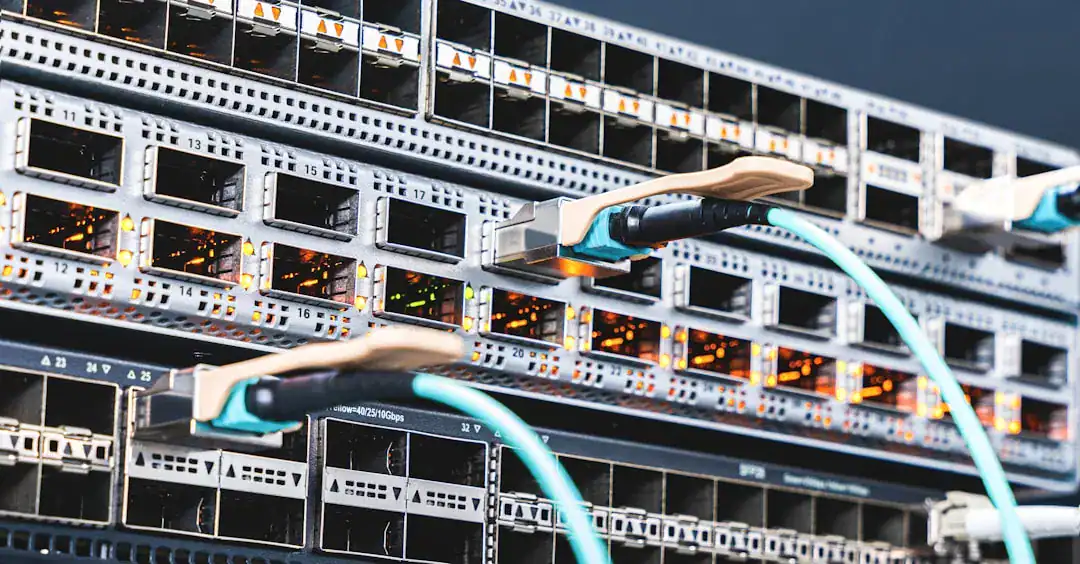
The Groq 3 LPX rack is not a standalone product — it is a deliberate extension of Nvidia’s Vera Rubin platform. The rack houses 256 Groq 3 LPUs, uses liquid cooling to manage the thermal load, and connects to the Vera Rubin NVL72 (a system combining 36 Vera CPUs and 72 Rubin GPUs) via Spectrum-X Ethernet (Nvidia’s high-bandwidth, low-latency networking fabric designed to minimize inter-node communication delays). The architecture separates the workload cleanly: Vera Rubin handles training and prefill, Groq 3 LPX handles decode-heavy inference — the two halves of a modern large language model serving pipeline.
The 35x throughput claim sits at the center of Nvidia’s marketing narrative, and it deserves a clear-eyed read. The benchmark is on a 1-trillion-parameter GPT model — a scale that only a handful of organizations actually run — and the comparison baseline is the Blackwell NVL72 doing inference work it was not specifically optimized for. That context matters: the real-world delta for sub-100B parameter models, which dominate current enterprise deployments, will be meaningfully different. Still, for hyperscalers and frontier AI labs running models at that scale, the architecture makes a credible case for specialized inference silicon sitting alongside GPU clusters rather than replacing them.
Volume production at Samsung is already underway, with Q3 2026 as the confirmed ship target announced by Jensen Huang personally during the GTC keynote. That timeline aligns with the broader Vera Rubin platform launch window, meaning early adopters will be building out combined training-inference pods simultaneously — a capital expenditure cycle that benefits Nvidia on both ends of the stack.
Samsung’s Dual-Supplier Win: Foundry Logic and HBM4 in One Platform
Jensen Huang’s confirmation of Samsung as the manufacturer for Groq 3 LPX is more consequential for the Korean chipmaker than any single contract figure can capture. Samsung’s foundry division has spent the past two years watching TSMC deepen its grip on Apple, AMD, and Qualcomm’s most advanced nodes. Landing volume production of Nvidia’s highest-profile new chip architecture — with shipments beginning in Q3 2026 — is the kind of reference win that resets the competitive conversation for enterprise customers evaluating second-source strategies.
The memory side is equally significant. Samsung’s HBM4 (High Bandwidth Memory generation 4, the latest standard for stacking DRAM dies to maximize bandwidth for AI workloads) is confirmed as the memory architecture inside Vera Rubin, where Nvidia labeled it the “industry’s fastest AI memory.” That means Samsung is not just a logic foundry for this platform — it is the memory supplier as well, a dual role that creates deep supply chain interdependence with Nvidia’s next-generation architecture. For a foundry business that has been under intense pressure to close the process technology gap with TSMC, being embedded in both the logic and memory layers of Nvidia’s flagship AI platform is a structural stabilizer.
The risk for Samsung is concentration. If Nvidia’s Groq 3 ramp hits yield or supply chain friction — a real possibility for any new node at volume — the foundry’s reputation gets caught in the crossfire. But the calculus clearly tilted toward accepting that risk, and for good reason: being Nvidia’s second-largest chip manufacturing partner heading into a $1 trillion revenue cycle is not a position Samsung could afford to walk away from.
The $17–$20B Groq Deal: What Nvidia Actually Acquired and What It Didn’t
The deal structure matters as much as the dollar figure. Nvidia did not acquire Groq outright — it licensed the LPU intellectual property and hired key engineers, most notably co-founder Jonathan Ross, in a transaction valued somewhere in the $17–$20B range (CNBC and Reuters reporting conflict on the exact figure, which is why Nvidia has not disclosed a single number publicly). The playbook is recognizable: it mirrors the Mellanox integration, where Nvidia absorbed networking IP and talent without taking on a full corporate acquisition’s regulatory and organizational complexity.
The LPU architecture’s core advantage is its SRAM-heavy design (SRAM, Static Random Access Memory, is faster and more expensive than DRAM; an SRAM-heavy chip keeps model weights closer to compute, slashing the memory-bandwidth bottleneck that throttles token generation speed). For agentic AI workflows — where a model is not just answering a single question but executing multi-step plans, calling APIs, verifying outputs, and looping back — low-latency decode is not a nice-to-have. It is the difference between an assistant that feels autonomous and one that feels like a chatbot with extra steps.
Jonathan Ross’s presence inside Nvidia is a cultural and technical signal worth watching. Ross co-founded Groq after leaving Google Brain, where he was a lead architect on the original TPU (Tensor Processing Unit, Google’s custom AI chip). His trajectory — from Google’s inference silicon to Groq’s LPU to Nvidia’s inference division — maps the exact technical lineage that Nvidia is now trying to own. Retaining that depth of expertise in-house, rather than letting it migrate to a competitor or spawn another startup, was likely as important to the deal rationale as the IP itself.
OpenAI, China Variant, and the Path to Nvidia’s $1 Trillion Revenue Target

OpenAI is expected to be the largest single customer for the Groq 3 ecosystem, with Wccftech reporting an allocation of 3GW of dedicated inference capacity — a figure that has not been confirmed by OpenAI directly but aligns with the scale of the Stargate infrastructure buildout that OpenAI, SoftBank, and Oracle announced earlier in 2026. If that allocation holds, it would make Groq 3 LPX the backbone of ChatGPT’s serving infrastructure at a moment when OpenAI is pushing hard into real-time, multi-turn agentic products that are acutely sensitive to token latency.
The China angle is equally important and considerably more geopolitically complex. Reuters reported that Nvidia is preparing a China-compatible Groq variant — explicitly described as not a downgraded version, distinguishing it from the H20 and L20 chips that were hobbled by export control compliance. If available by May 2026 as reported, it would represent Nvidia threading a regulatory needle: delivering competitive inference performance to Chinese hyperscalers without crossing the export thresholds that triggered previous rounds of Commerce Department scrutiny. How Commerce responds to that product design will be one of the more consequential regulatory decisions of the year for anyone tracking AI hardware supply chains.
Against that backdrop, Nvidia’s stated target of $1 trillion in revenue through 2027 — up from the $500B figure that was itself considered aggressive when it was first floated — becomes legible as a math problem rather than a boast. Blackwell supplies the training revenue base; Vera Rubin extends it into next-generation training; Groq 3 LPX adds an entirely new inference revenue stream that previously went to stand-alone inference providers. The company is compressing three separate hardware product cycles into a single platform sale to the same set of hyperscaler customers.
What the Groq 3 LPX Means for the AI Chip Wars: CUDA, TPUs, and the Inference Frontier
The inference market in March 2026 looks nothing like it did when Nvidia’s training dominance was first established. Google’s TPUs — designed by Broadcom — are deployed at scale across Google Cloud and have been the primary competitive alternative for inference workloads. D-Matrix and a cluster of better-funded Chinese in-house chip programs are all targeting the same decode-efficiency gap that Groq’s LPU was originally built to address. Nvidia entering this space directly, rather than letting partners fill it, changes the competitive calculus for every one of those players.
The CUDA (Compute Unified Device Architecture, Nvidia’s proprietary parallel computing platform that has become the default software environment for AI development) moat argument has always been strongest in training, where the ecosystem of frameworks, libraries, and pre-trained models creates switching costs that are genuinely difficult to overcome. Inference is structurally different: the model is already trained, the weights are fixed, and what matters is throughput per watt and latency per token. A developer deploying a quantized model for real-time inference does not need the full CUDA ecosystem — they need a fast, efficient runtime. That lower switching cost is why Google TPUs have found traction in inference even without CUDA compatibility.
Nvidia’s answer with Groq 3 LPX is to make the inference product so tightly coupled to the Vera Rubin training platform — via Spectrum-X networking and shared orchestration software — that the switching cost argument re-emerges at the system level even if it has weakened at the chip level. If a hyperscaler is already running Vera Rubin for training, the marginal cost of adding Groq 3 LPX racks for inference becomes much lower than sourcing a competing inference solution and building separate integration plumbing. That bundling logic is Nvidia’s real competitive weapon here, not the throughput benchmark.
The scenario where Nvidia’s inference play succeeds most cleanly requires two conditions to hold: first, that agentic AI workloads continue to scale — driving demand for low-latency inference at trillion-parameter model sizes — and second, that the China-compatible variant clears regulatory review without triggering a broader export restriction tightening. If either condition fails — if model efficiency gains reduce the premium on specialized inference silicon, or if Commerce clamps down on the China variant — the $1 trillion revenue path gets meaningfully narrower. The scenario where Groq 3 underperforms is not a technology failure but a market structure one: if enterprises standardize on smaller, more efficient models that run efficiently on standard GPUs, the LPU’s SRAM-heavy architecture optimized for massive models becomes a premium niche rather than a mass market.
Watch three specific data points over the next two quarters: Q3 2026 Groq 3 LPX shipment volumes as reported in Nvidia’s earnings commentary, the Commerce Department’s ruling on the China-compatible variant’s export classification, and whether OpenAI formally confirms the 3GW inference capacity allocation in any public filing or earnings call. If all three resolve favorably, Nvidia will have done something structurally unprecedented — converted a $17–$20B technology licensing bet into a full-stack monopoly spanning both ends of the AI compute cycle. If even one stalls, the inference market stays genuinely contested, and Google, d-Matrix, and China’s in-house programs get another 12 months to close the gap that Groq 3 is designed to permanently foreclose.
References
- CRN (2026-03-16) — Groq 3 LPX rack packs 256 Groq 3 LPUs; liquid-cooled; connects via Spectrum-X Ethernet to Vera Rubin NVL72 (36 Vera CPUs + 72 Rubin GPUs)
- CRN (2026-03-16) — 35x throughput improvement over Blackwell NVL72 on 1-trillion-parameter GPT model (Nvidia internal claim)
- CNBC (2026-03-17) — Groq 3 LPX in volume production at Samsung; Q3 2026 ship target confirmed by Jensen Huang at GTC keynote
- CNBC / Reuters (2026-03-13) — Nvidia’s Groq technology deal valued at ~$17–$20B; co-founder Jonathan Ross hired by Nvidia
- Gizmodo (2026-03-16) — Nvidia targets $1 trillion in revenue through 2027 from Blackwell + Vera Rubin — up 200% from $500B prior GTC guidance
- Reuters (2026-03-17) — Nvidia preparing China-compatible Groq chip variant (not downgraded); expected available May 2026
- Wccftech (2026-03-15) — OpenAI expected to allocate 3GW of dedicated inference capacity for Nvidia-Groq chips
- Wccftech (2026-03-15) — Samsung’s HBM4 confirmed as memory inside Vera Rubin — named ‘industry’s fastest AI memory’
Stay Ahead of the Curve
Get the latest insights on AI, tech, and markets — delivered in both Korean and English.

Jugger | Backend Developer
A backend engineer working in enterprise solutions software since June 2021. The hands-on perspective from system design, API implementation, and production operations directly informs this site’s
AI, IT, and cloud infrastructure coverage.
For topics outside direct professional experience—blockchain and macroeconomics—analysis is built on primary-source citations such as SEC filings, whitepapers, institutional research, and government
statistics. Speculation is clearly separated from verified fact, and unverified claims are not published.
AI tools assist with drafting, but every article is reviewed, revised, and verified before publication. Errors are corrected with visible notes when discovered.
Contact: jjunggulee@gmail.com