
The US national average electricity price climbed more than 6% over the past year, and the culprit is no mystery—hyperscaler AI data center power consumption has ballooned at a pace that legacy grid infrastructure was simply never designed to absorb. In 2025, US net electricity generation hit a record 4,430 TWh, the highest figure in EIA records dating all the way back to 1949, yet that milestone barely kept pace with surging demand. Now, in March 2026, the White House has drawn a hard line: the companies responsible for this consumption spike must fund the power infrastructure themselves, or face a policy reckoning. The resulting race to lock up nuclear reactors, build on-site gas turbines, and deploy next-generation liquid cooling is no longer a distant capex line item—it is the defining infrastructure battle of this decade.
The White House Mandate That Changed Everything: Big Tech Must Power Its Own Future
On March 4, 2026, seven of the most powerful technology companies on the planet—Amazon, Google, Microsoft, Meta, Oracle, xAI, and OpenAI—formally signed a White House pledge committing to self-supply all power consumed by their data center operations. The political context matters: President Trump’s State of the Union address on February 24, 2026 was unambiguous, ordering Big Tech to build its own power plants rather than leaning on shared utility grids and driving up residential electricity bills. The message from 1600 Pennsylvania Avenue was direct—the cost of the AI revolution must not land on the household electricity bill.
This pledge is not merely symbolic. US utilities requested $31 billion in rate increases in 2025, a figure more than double the 2024 level, according to the nonprofit PowerLines—with data center hotspots in Virginia, Texas, Utah, and North Carolina identified as primary pressure points. The EIA projects US electricity demand will reach 4,267 billion kWh in 2026, up from the 2024 record of 4,110 billion kWh, marking the first four consecutive years of demand growth since 2007. Against that backdrop, the White House pledge effectively transfers a massive infrastructure financing burden from ratepayers to corporate balance sheets, fundamentally rewiring the economics of data center development.
Nuclear SMR Investment 2026: How Amazon and Google Are Betting on Atoms
Of all the energy strategies now in motion, nuclear carries the most long-term structural weight. Amazon moved earliest and most aggressively, signing three nuclear energy agreements totaling more than $500 million in 2025 to secure reactor development specifically for AWS data center campuses. These commitments spanned a portfolio of advanced reactor partnerships, positioning AWS to eventually draw on baseload nuclear power rather than competing on the spot market for renewable intermittency. Google, meanwhile, announced the restart of the Duane Arnold nuclear plant in Iowa as part of its White House pledge commitments—a concrete signal that dormant nuclear capacity is being reconsidered as a viable near-term asset rather than a costly liability.
Google’s energy efficiency credentials give its nuclear bet additional credibility. The company operates with a trailing twelve-month Power Usage Effectiveness (PUE) of 1.09, compared to an industry average of 1.56—meaning Google extracts dramatically more compute per watt consumed. Over the past decade, the company added 22 GW of clean energy capacity to global grids. The pivot toward advanced nuclear, including small modular reactors and geothermal, is therefore not a panic move but a calculated extension of a decade-long energy strategy. Microsoft, for its part, pledged publicly on January 11, 2026 that data center electricity costs would not be passed on to residential customers, while its ongoing nuclear partnerships—forged in earlier years—continue to progress through licensing and site-selection phases.
Liquid Cooling CAPEX and the Race to Manage Thermal Density at Scale
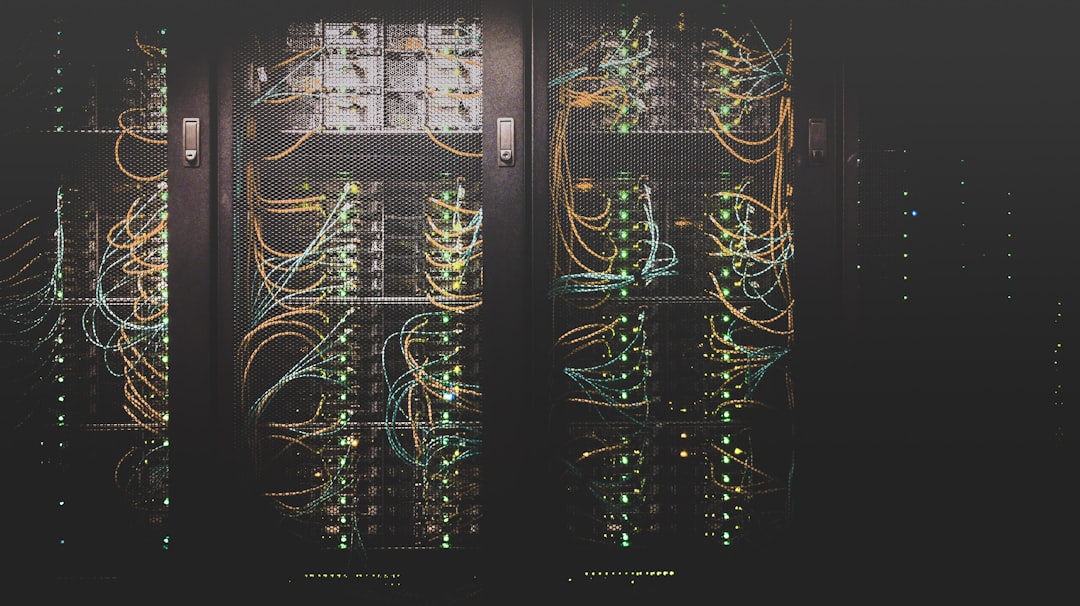
Nuclear solves the supply equation, but the thermal management problem inside the rack is equally urgent. As GPU clusters running frontier AI models push power densities well beyond what traditional air cooling can handle, the industry has reached an inflection point where liquid cooling infrastructure is no longer optional engineering—it is a prerequisite for deployment. Boyd Corporation announced on February 18, 2026 that it is doubling its AI data center liquid cooling manufacturing capacity, ramping production of coolant distribution units (CDUs), direct-to-chip cold plates, and in-rack manifolds. The expansion reflects a supply chain that is genuinely struggling to keep pace with the speed of hyperscaler build-outs.
The macroeconomic backdrop for this thermal infrastructure spending is staggering. Global data center power demand is projected to grow 50% by 2027 and an extraordinary 165% by 2030, driven overwhelmingly by AI workload acceleration, according to IEN’s March 2026 analysis. Utility companies are responding by dramatically expanding their own capital programs to serve this demand. The scale of utility CAPEX mobilization reflects how deeply data center load growth has penetrated long-range infrastructure planning. DTE Energy raised its 2026–2030 capital plan by 20% to $36.5 billion, up from a prior $30 billion plan, driven explicitly by data center load growth in its service territory. Southern Company elevated its multi-year capital plan to $81 billion, one of the largest utility capex programs in US history, while PPL Corporation increased its own plan by 15% to $23 billion, citing accelerating industrial and data center demand as primary drivers.
These are not incremental adjustments—these are fundamental re-ratings of what it costs to build and maintain a grid capable of serving the AI era. When three major utilities collectively mobilize over $140 billion in capital within a single planning cycle, it underscores that the liquid cooling and power delivery build-out is not a niche hardware story but a macroeconomic event reshaping US industrial infrastructure from the transmission tower down to the server chip.
On-Site Power Plants: When Data Centers Become Their Own Utilities
Perhaps the most structurally significant shift now visible in development pipelines is the normalization of on-site power generation as a core data center design requirement. According to a February 2026 report by Cleanview, approximately 30% of all planned US data center capacity now incorporates dedicated on-site power generation—and a striking 90% of that capacity was added to development pipelines during 2025 alone. In other words, the concept went from fringe to mainstream in roughly twelve months. This is not speculative capacity; these are permitted projects with identified sites and contracted construction timelines.
The clearest evidence of this paradigm shift arrived on March 9, 2026, when Babcock & Wilcox was awarded a $2.4 billion contract to deliver 1.2 GW of natural gas-fired generation capacity for Applied Digital’s AI data center campuses. A 1.2 GW commitment is not a backup generator—it is a mid-sized power plant, the kind that historically served entire metropolitan submarkets. The scale signals that hyperscale AI campuses are effectively becoming self-contained industrial energy districts, bypassing the interconnection queue delays and regulatory friction that have historically plagued utility-scale renewable projects. For developers and infrastructure investors, the applied lesson is that the fastest path to getting AI compute online in 2026 is to bring the power plant with you.
Reading the US Power Demand Outlook: AI as a Once-in-a-Generation Grid Event
The EIA’s forward demand projections frame the current moment with unusual historical clarity. US electricity demand is forecast at 4,267 billion kWh for 2026, extending what will be the first four-year consecutive growth streak since 2007—a streak driven not by population growth or manufacturing re-shoring, but overwhelmingly by AI compute. The 2025 generation record of 4,430 TWh, up 2.8% year-over-year, was itself preceded by the 2024 record of 4,110 billion kWh in demand. The EIA data tells a compound story: the US grid is being asked to do more, faster, than at any point in the post-war era.
At the utility level, the load concentration effect is equally dramatic. At one major US utility, data center load accounted for 18% of total industrial load in 2025—a share projected to double by 2030. That single statistic illustrates why utility boards are approving billion-dollar capex plans that would have seemed politically untenable just three years ago. The rate increase requests filed in 2025 totaling $31 billion are a direct consequence of this load concentration, and they explain the political logic behind the White House mandate with precise economic clarity. When AI infrastructure begins structurally distorting residential utility bills, it stops being a technology story and becomes an energy policy emergency—which is exactly where we are in March 2026.
The convergence of nuclear restarts, on-site gas generation, liquid cooling scale-up, and utility capex expansion is not a collection of parallel trends—it is a single, integrated response to the reality that AI energy infrastructure has outrun the assumptions baked into every grid modernization plan written before 2023. The hyperscalers that move fastest to lock in diversified, long-duration power supply—whether through SMR contracts, on-campus generation, or thermally superior facility design—will hold a structural cost advantage that compounds with every new model generation, making energy sovereignty the most durable moat in the AI infrastructure arms race.
References
- Chain Store Age / White House CNBC statement (2026-02-25) — Amazon signed 3 nuclear energy agreements totaling $500M+ in 2025 for AWS data center power
- POWER Magazine (2026-03-05) — Google announced restart of Duane Arnold nuclear plant in Iowa as part of White House pledge commitments
- POWER Magazine (2026-03-05) — Google trailing twelve-month PUE: 1.09 vs. industry average of 1.56; added 22 GW to global grids over past decade
- POWER Magazine (2026-03-09) — Babcock & Wilcox awarded $2.4B contract for 1.2 GW gas-fired capacity for Applied Digital AI data centers
- Prism News / EIA (2026-03-10) — US net electricity generation reached 4,430 TWh in 2025, highest in EIA records since 1949
- Utility Dive (2026-02-17) — DTE Energy 2026–2030 capital plan: $36.5B, up 20% from $30B prior plan, driven by data center demand
- Business Insider / Cleanview report (2026-02-25) — ~30% of all planned US data center capacity includes on-site power plants; 90% of that was added in 2025
- Business Insider / PowerLines nonprofit (2026-02-25) — US utilities requested $31B in rate increases in 2025, more than double 2024 levels
Stay Ahead of the Curve
Get the latest insights on AI, tech, and markets — delivered in both Korean and English.

Jugger | Backend Developer
A backend engineer working in enterprise solutions software since June 2021. The hands-on perspective from system design, API implementation, and production operations directly informs this site’s
AI, IT, and cloud infrastructure coverage.
For topics outside direct professional experience—blockchain and macroeconomics—analysis is built on primary-source citations such as SEC filings, whitepapers, institutional research, and government
statistics. Speculation is clearly separated from verified fact, and unverified claims are not published.
AI tools assist with drafting, but every article is reviewed, revised, and verified before publication. Errors are corrected with visible notes when discovered.
Contact: jjunggulee@gmail.com