
- Brent crude reached $103.14/barrel on March 13 — a 36%+ surge since the Iran conflict began February 28 — after briefly spiking to $119, the highest level since mid-2022
- The IEA’s record 400-million-barrel SPR release (agreed March 12) has so far only partially offset the supply shock: Goldman models just 254 million barrels of actual releases hitting the market
- US pump prices climbed 51 cents in a single week to $3.45/gallon by March 9, with Iran’s new Supreme Leader vowing the strait stays closed — keeping the $100+ price floor structurally intact until diplomacy shifts
Fifty-one cents. That is how much the average American paid extra per gallon at the gas pump in just seven days ending March 9, 2026. Behind that number sits a 21-mile-wide chokepoint — the Strait of Hormuz — that carries roughly one-fifth of the world’s oil and LNG supply, and which Iran has now effectively sealed shut in retaliation for the U.S.-led military campaign that began February 28.
Brent crude briefly spiked to $119 per barrel around March 10 before settling at $103.14 on March 13 — still the highest sustained price level since mid-2022. The speed of the move rattled traders most: U.S. oil futures posted their largest weekly percentage gain in at least two decades in a single session on March 6. This is not a supply hiccup — it is a structural rewiring of the global energy market happening in real time.
The Hormuz Shutdown That No Oil Model Had Fully Priced In

The strait’s strategic significance has been discussed in energy security circles for decades, but the February 28 outbreak of hostilities compressed a theoretical worst-case into a live market event within days. Citigroup estimates the disruption has effectively removed 7 to 11 million barrels per day (MMbpd) from accessible global supply — a range so wide that it reflects genuine uncertainty about exactly how many tankers are still threading through under Iranian navy supervision. Barclays puts Gulf country production shut-ins at more than 10 MMbpd, a figure that aligns with the upper band of Citi’s estimate and underscores that this is not a partial interruption.
The strait handles approximately 20% of global oil and LNG (liquefied natural gas, natural gas chilled to liquid form for transport) flows. No pipeline network, no rerouting option via the Cape of Good Hope, and no existing spare production capacity can absorb a double-digit MMbpd gap on a timeline that matters for March or April delivery contracts. The market understood this instantly — hence the 36% price surge in under two weeks from the conflict’s start date.
What changed on March 13 was the political confirmation of what traders had feared but hoped was temporary. Iran’s newly installed Supreme Leader Mojtaba Khamenei publicly declared that Hormuz will remain closed as leverage against the United States and Israel. Tehran also issued a directive requiring all vessels seeking Hormuz transit to coordinate with the Iranian navy, and separately offered free passage to any nation that formally expels U.S. or Israeli ambassadors. That last move is not just sabre-rattling — it is an attempt to fracture the Western coalition and create a two-tier global shipping lane, a geopolitical structure the energy market has never had to price before.
Brent $101 and Climbing: Hormuz Closure Rewrites Oil Markets
Wall Street Scrambles to Reprice: Barclays, Goldman, and the $100 Floor
Bank research desks have been in continuous revision mode since late February. Barclays raised its 2026 Brent base-case forecast to $85 per barrel but attached an explicit warning: if the disruption extends four to six weeks from the conflict’s start date, a sustained $100 level becomes the working assumption rather than a tail risk. That four-to-six-week window started counting down February 28, which means the Barclays trigger point arrives in late March to early April — a timeline that is now uncomfortably close.
Goldman Sachs moved its Q2 Brent forecast up by $10 to $76 per barrel and lifted Q4 targets for Brent and WTI (West Texas Intermediate, the U.S. benchmark crude) to $71 and $67, respectively, as a base case. The bank’s analysts flagged that a sustained Hormuz blockage of five additional weeks beyond the initial disruption would push prices to $100 — a threshold Brent has already momentarily breached. Goldman’s base scenario assumes Hormuz flows begin recovering around March 21, which means the bank is essentially betting on an imminent, partial diplomatic de-escalation. If that assumption proves wrong, Goldman’s own models push the market well above current spot prices.
The gap between where Brent is trading today ($103.14 on March 13) and Goldman’s base-case targets reveals a market that is currently pricing a significantly worse outcome than the bank’s central scenario. That divergence is itself a signal: either the street’s models are behind the geopolitical reality, or the market is pricing a risk premium that will unwind sharply the moment any credible de-escalation signal emerges. Both interpretations matter for how traders are positioning right now.
The IEA’s 400-Million-Barrel Release: Largest in History, Still Not Enough?
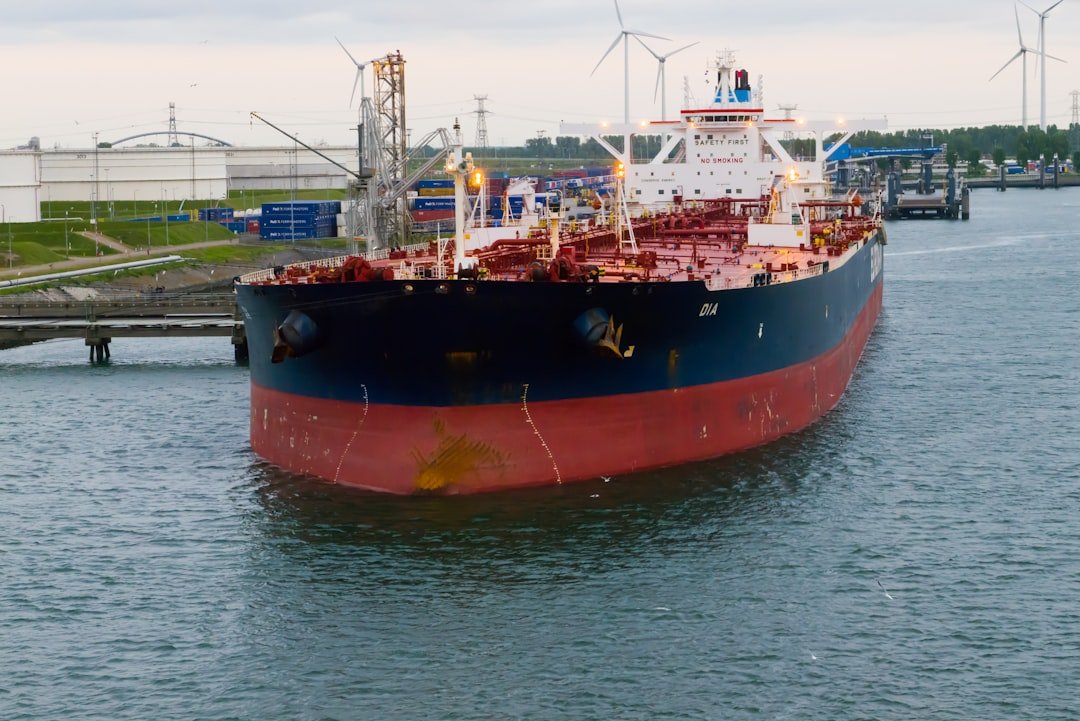
On March 12, the International Energy Agency (IEA — the Paris-based intergovernmental body that coordinates energy policy among major consuming nations) announced a record 400-million-barrel release from member countries’ Strategic Petroleum Reserves (SPR — government-held emergency stockpiles designed precisely for supply disruptions of this magnitude). The United States, as the largest SPR holder, is contributing the bulk of that volume. In headline terms, 400 million barrels sounds enormous — it is larger than any prior coordinated IEA release, dwarfing the 180 million barrels deployed during the 2022 Russia-Ukraine supply shock.
Goldman Sachs, however, modeled the practical reality more carefully. The bank estimates that only 254 million barrels of actual SPR releases will reach the market within a timeframe relevant to near-term price action, supplemented by approximately 31 million barrels of Russian crude inventory draws. Combined, that cuts the projected inventory deficit by roughly half — meaningful support, but not a solution that eliminates the supply gap. The difference between the announced 400 million and the modeled 254 million reflects logistical constraints: terminals, tanker availability, and the time required to move crude from storage caverns to refineries.
There is also a strategic ceiling on SPR policy. The U.S. reserve was already drawn down significantly during 2022–2023 and has been in partial replenishment mode. Deploying the full U.S. tranche into a prolonged disruption scenario raises questions about what buffer remains if a second shock — a hurricane season, a separate geopolitical event — materializes later in 2026. Goldman’s base case, which assumes Hormuz recovery begins around March 21, is the condition under which the full 400-million-barrel announcement may prove to be deterrent posturing rather than a volume that actually needs to be fully executed.
American Consumers at the Pump: A 51-Cent Week That Could Get Worse
For the average American driver, the Hormuz crisis translated into the most abrupt fuel price surge in years. GasBuddy data showed the U.S. national average gasoline price reaching $3.45 per gallon by March 9, representing a 51-cent increase in a single week. Patrick De Haan, GasBuddy’s head of petroleum analysis, characterized it as “one of the fastest surge rates in years” — a description that carries weight given the volatility seen during 2021–2022 supply chain disruptions and the 2022 Russia-Ukraine shock.
The transmission mechanism from Brent crude to the retail pump is not instantaneous — refiners, distributors, and station operators all sit between the futures market and the forecourt. This means that even if Brent were to stabilize at current levels, pump prices would likely continue drifting higher through mid-to-late March as the current crude cost works through the supply chain. If Brent pushes back toward $119 — the intraday high already seen on March 10 — the retail price trajectory becomes materially steeper.
The Trump administration is weighing a Jones Act waiver (the Jones Act requires goods shipped between U.S. ports to use U.S.-flagged vessels — a waiver allows foreign ships to move domestic cargo, theoretically easing bottlenecks in energy and agricultural supply logistics) as a pressure-relief measure. Whether that waiver would materially affect gasoline prices at the national level depends on whether the binding constraint is domestic shipping capacity or upstream crude availability — and right now, it is clearly the latter. A Jones Act waiver addresses the logistics layer, not the Hormuz layer.
New Supreme Leader, Same Closed Strait: Iran’s Leverage Play
Mojtaba Khamenei’s ascent to the position of Supreme Leader following the military conflict’s opening phase has introduced a figure whose public posture is considerably more confrontational than the ambiguous signals Tehran typically deploys in early crisis phases. His March 13 declaration that Hormuz will remain closed as leverage against the United States and Israel removes the ambiguity that short-sellers of crude had been tentatively pricing in. The conditional offer of free passage to nations that expel U.S. and Israeli ambassadors is equally significant: it transforms the strait from a bilateral U.S.-Iran standoff into a multilateral diplomatic instrument designed to peel off energy-dependent nations — particularly in Asia and parts of Europe — from the Western coalition.
Several major Asian crude importers — who collectively account for a substantial share of Hormuz-transiting volume — now face a structurally uncomfortable choice between supply security and diplomatic alignment. If even one or two mid-tier nations accept Tehran’s terms, the two-tier transit system becomes operational, and the West’s ability to maintain a unified pressure front erodes. That scenario would not necessarily collapse crude prices — Iranian-approved traffic would still face insurance, banking, and sanctions complications — but it would fragment the geopolitical framing that has so far kept the market narrative clean.
Iran’s underlying leverage is simple arithmetic: at 7 to 11 MMbpd removed from global supply, every week the strait stays shut costs the global economy more than any sanctions regime costs Tehran in the short run. The new leadership appears to have calculated that this asymmetry is its strongest negotiating card, and the March 13 statements suggest no intention of cashing it in cheaply or quickly.
What Comes Next: Three Scenarios and the Facts That Trigger Each
The path from here depends almost entirely on one variable: how long Hormuz stays functionally closed. Scenario one — partial recovery by late March — is Goldman’s base case and requires Hormuz flows to begin resuming around March 21, consistent with either a back-channel agreement or a unilateral Iranian decision to allow select cargoes through under navy escort. If this condition is met and the IEA’s 254-million-barrel effective release hits the market concurrently, Brent could retrace toward the $85–$95 range. This scenario also requires the Barclays four-to-six-week trigger (late March to early April) to arrive without a full blockage — if partial flows resume before that deadline, the bank’s $100 base-case upgrade may not activate.
Scenario two — prolonged closure through April — activates if the new Supreme Leader’s stance holds firm past the Goldman recovery assumption date. Under this path, the Barclays $100 base case becomes the working floor, not a warning. The IEA would likely need to execute closer to the full 400-million-barrel commitment rather than the modeled 254 million, and U.S. SPR adequacy for the remainder of 2026 enters the conversation. Pump prices in the $4.00–$4.50 range become plausible as the crude cost works through the domestic supply chain.
Scenario three — escalation beyond the strait — requires a material expansion of the conflict to Gulf production infrastructure, pipeline networks, or additional regional actors. This is the scenario in which price discovery itself becomes unstable and the structural ceiling becomes genuinely undefined. The condition for this path is an exchange that targets Saudi, UAE, or Iraqi production assets directly — something that has not occurred as of March 13 but which Iran’s navy directive and the two-tier transit offer keep structurally alive as a threat. No credible de-escalation framework has been publicly confirmed between the parties.
For anyone tracking energy markets, two dates now function as hard checkpoints. March 21 — Goldman’s assumed Hormuz recovery date — is the first test of whether the bank’s base case survives contact with reality. If tanker traffic data shows no meaningful resumption by that date, Goldman’s own models migrate toward the $100-risk scenario it flagged. Late March to early April is the Barclays trigger window: a confirmed blockage through that period flips their $100 level from a warning into a base case. Brent at $103 is already above both banks’ central forecasts — the market is not waiting for the models to catch up.
The deeper unresolved tension is one that neither an SPR release nor a Jones Act waiver can address: the new Iranian leadership has made the strait’s closure a political identity statement, not merely a tactical pressure tool. That distinction matters enormously for how quickly any de-escalation can actually be operationalized, even if diplomatic back-channels are quietly active. Watch tanker AIS (automatic identification system) tracking data for Hormuz transit volume as the single most reliable leading indicator — any uptick before March 21 would be the most bullish signal crude markets have seen in weeks.
References
- Reuters (2026-03-13) — Brent crude settled at $103.14/barrel on March 13, 2026, up 2.67% on the day
- Reuters (2026-03-12) — Brent and WTI briefly topped $119/barrel on ~March 10 — highest since mid-2022
- Reuters / Goldman Sachs note (2026-03-12) — Brent prices gained more than 36% since the Iran conflict began on February 28, 2026
- Reuters / Barclays research note (2026-03-13) — Gulf country production shut-ins climbed to more than 10 MMbpd (Barclays)
- Reuters / Marine News Magazine (2026-03-12) — IEA released record 400 million barrels from strategic stockpiles on March 12, 2026
- GasBuddy via CBS News (2026-03-10) — US national avg gasoline price rose to $3.45/gallon as of March 9 — up 51 cents in one week
- World Oil / Bloomberg (2026-03-06) — Citigroup estimates Hormuz disruption could remove 7–11 MMbpd from global supply
- World Oil / Bloomberg (2026-03-06) — US oil futures gained more than 11% in a single session on March 6 — largest weekly % gain in at least two decades
Stay Ahead of the Curve
Get the latest insights on AI, tech, and markets — delivered in both Korean and English.

Jugger | Backend Developer
A backend engineer working in enterprise solutions software since June 2021. The hands-on perspective from system design, API implementation, and production operations directly informs this site’s
AI, IT, and cloud infrastructure coverage.
For topics outside direct professional experience—blockchain and macroeconomics—analysis is built on primary-source citations such as SEC filings, whitepapers, institutional research, and government
statistics. Speculation is clearly separated from verified fact, and unverified claims are not published.
AI tools assist with drafting, but every article is reviewed, revised, and verified before publication. Errors are corrected with visible notes when discovered.
Contact: jjunggulee@gmail.com