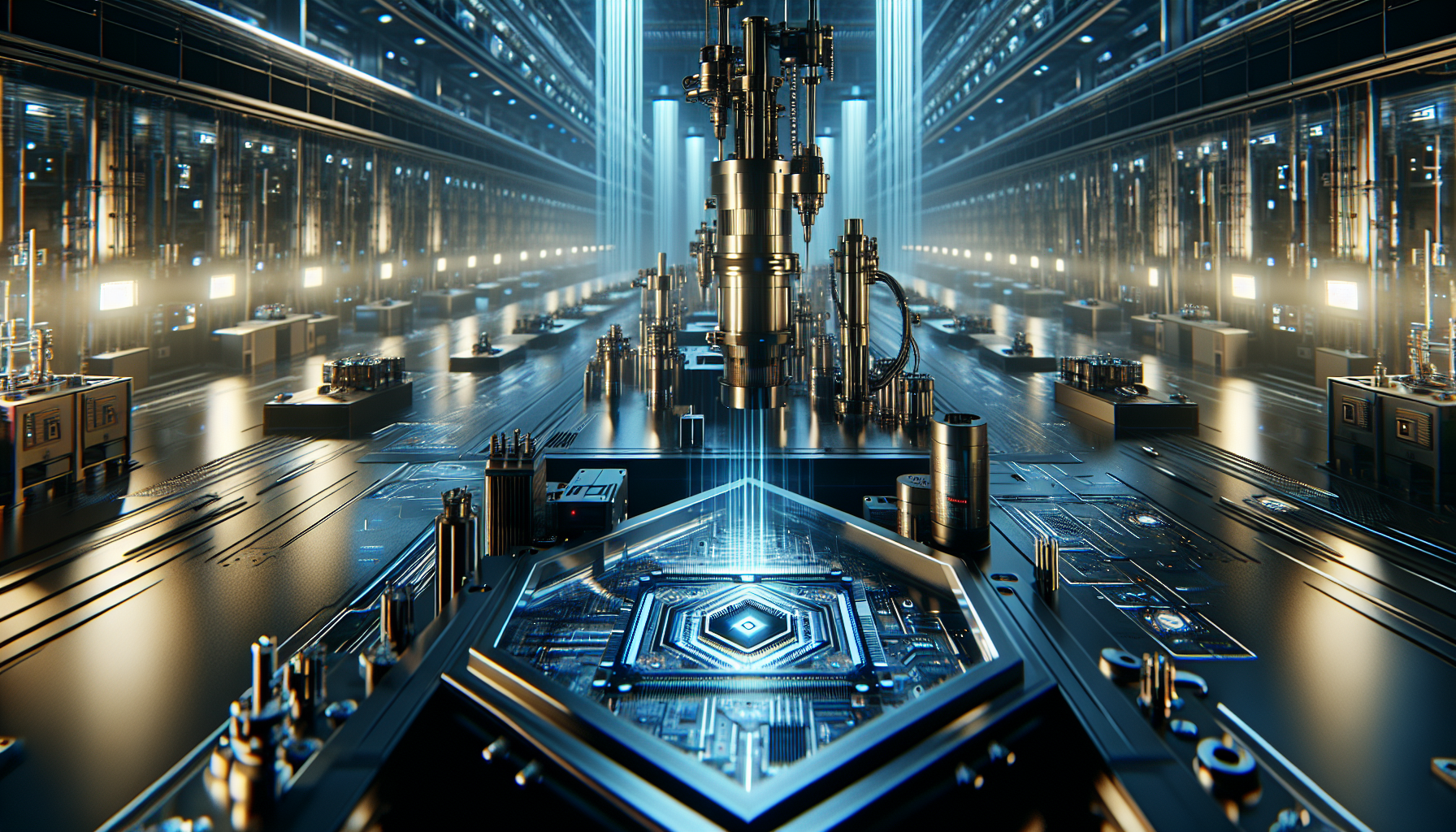
There is exactly one company on earth that can sell you the machine required to manufacture the most advanced semiconductors in existence — and in 2026, that fact alone is reshaping the entire geopolitical order of technology. ASML EUV lithography systems sit at the absolute center of the global chip supply chain, functioning less like industrial equipment and more like a sovereign chokepoint. With a market capitalization of $560 billion and shares that have already surged over 30% this year, ASML is no longer merely a Dutch precision engineering company — it is the single most strategically consequential manufacturer in the world economy, and every major power from Washington to Beijing is acutely aware of it.
The Machine That Nobody Else Can Build
To understand why ASML commands such an extraordinary position, you have to grapple with the sheer engineering complexity embedded in a single EUV system. Each machine incorporates 100,000 discrete components sourced from approximately 5,000 suppliers across dozens of countries, with ASML serving as the master system integrator — the one entity capable of assembling this global ecosystem into a coherent, functioning instrument. No competitor has been able to replicate this network, not because the underlying physics are secret, but because the supplier relationships, manufacturing tolerances, and institutional knowledge have been accumulated over decades and are effectively impossible to reconstruct on a compressed timeline. The next-generation High-NA EUV platform pushes the frontier even further, with each unit priced at approximately $400 million — roughly double current-generation systems — representing the most expensive pieces of commercial manufacturing equipment ever produced.
Yet the economics justify the sticker price: High-NA EUV eliminates multiple complex intermediate manufacturing steps that chipmakers currently rely on, which means total cost-per-transistor can actually fall even as the machine itself costs more. In February 2026, ASML announced a breakthrough in its light source technology, pushing output power to 1,000 watts and enabling up to 50% greater wafer throughput by decade’s end — a productivity leap that will define the competitive landscape for AI chip production well into the 2030s.
Export Controls and the Fracturing of the Global Chip Supply Chain
Since 2020, successive U.S. administrations — working in close coordination with Dutch authorities — have systematically prevented ASML from shipping EUV equipment to Chinese customers. The policy has been bipartisan in its execution and unambiguous in its intent: deny Beijing access to the lithography technology required to manufacture chips below the 7-nanometer threshold, effectively capping China’s domestic semiconductor capability at a generation behind the global frontier. The strategic calculus is straightforward — whoever controls sub-5-nanometer chip production controls the hardware substrate for artificial intelligence, autonomous systems, and next-generation military electronics. The company currently forecasts that China will represent approximately 20% of total revenue in 2026, a meaningful decline from the elevated share seen in prior years when Chinese customers were aggressively stockpiling older DUV systems ahead of anticipated restrictions.
The near-term revenue compression is the price ASML pays for operating at the nexus of great-power competition — but the market has largely priced in this headwind, given that structural demand for advanced chip equipment from TSMC, Intel, and Samsung in non-restricted markets continues to accelerate. The geopolitical discount, in other words, is more than offset by the AI infrastructure buildout premium.
Beijing’s Five-Year Gambit: Building a Domestic EUV Alternative
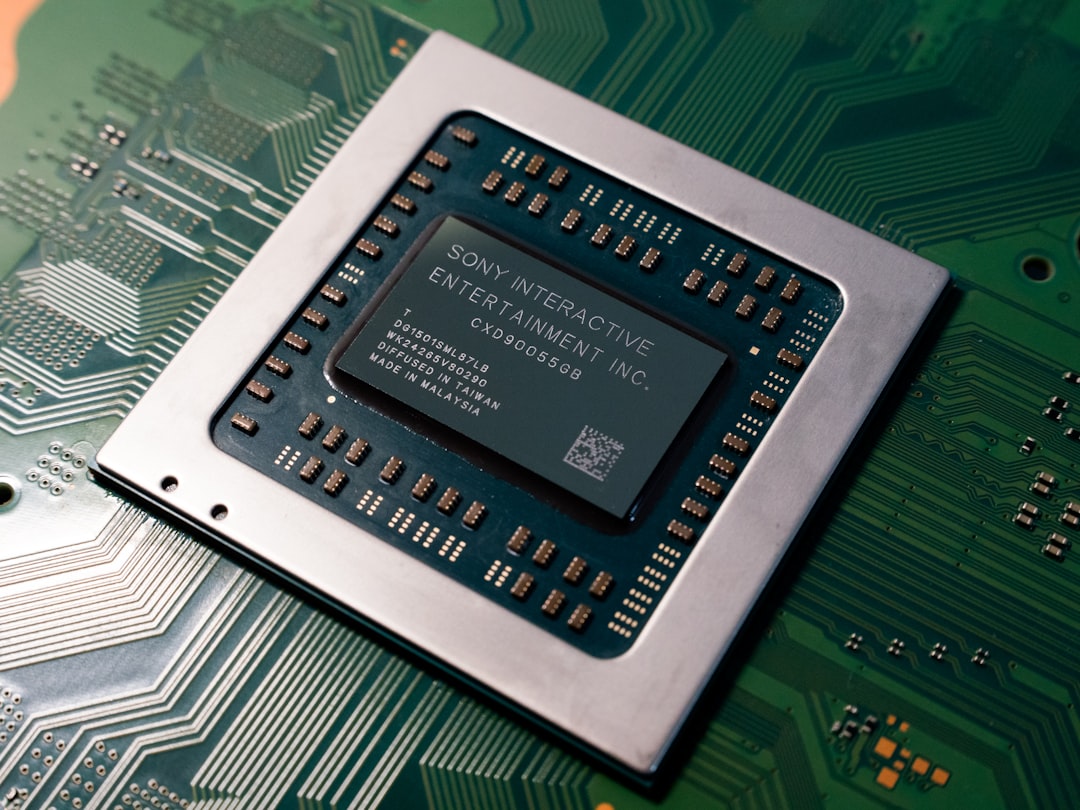
China has not passively accepted its exclusion from the advanced lithography market. In early 2026, senior executives from leading Chinese semiconductor firms — including leaders from Naura Technology, YMTC, and Empyrean Technology — publicly coalesced around a coordinated national initiative tied to the 2026-2030 Five-Year Plan. The stated ambition is unambiguous: develop domestically capable lithography systems that can circumvent the technological bottlenecks created by export restrictions, specifically targeting three interlocking chokepoints of EDA software, EUV machinery, and advanced silicon wafer production. It is, by any measure, one of the most technically audacious industrial policy objectives in modern history.
The challenge is not one of financial capital — China can deploy essentially unlimited state resources — but of irreducible technical complexity. The EUV light source alone, the component ASML has identified as its deepest competitive moat, requires mastery of plasma physics, precision optics, and laser engineering at tolerances that took ASML and its global supplier base the better part of two decades to achieve. Chinese engineers are working against that accumulated knowledge base with a compressed timeline and without access to the international supplier network that underpins ASML’s systems. The initiative represents a serious long-term commitment, but independent analysts broadly expect the 2026-2030 window to produce incremental progress rather than commercial parity with current-generation Western systems.
American Challengers Enter the Arena — and ASML Accelerates Its Moat
The competitive threat to ASML’s dominance is not emerging exclusively from China. Two U.S.-based startups, Substrate and xLight, have each raised hundreds of millions of dollars to develop alternative EUV-capable platforms, with xLight notably receiving active support from the Trump administration’s industrial policy framework. The strategic rationale from Washington’s perspective is clear: a world in which the most critical semiconductor manufacturing technology is produced by a single foreign company — even a close ally — represents a supply chain vulnerability that American policymakers are increasingly uncomfortable with. Funding domestic alternatives is both a hedge against geopolitical disruption and a mechanism for maintaining competitive pressure on the incumbent.
ASML’s strategic response to these challengers has been to double down on precisely the component most difficult to replicate: the light source. The February 2026 advancement to 1,000-watt output power is not merely an incremental improvement — it is a deliberate widening of the technical distance between ASML’s current capabilities and any system a startup could plausibly bring to market in the near term. The market appears to agree with this calculus. ASML trades at roughly 40 times forward earnings, a significant premium to the semiconductor sector broadly and nearly double the valuation multiple assigned to Nvidia at approximately 22 times — a valuation that reflects investor conviction that the moat is durable, not just wide.
The High-NA Technology Roadmap and the AI Chip Equipment Supercycle
ASML’s High-NA EUV machines have already processed 500,000 wafers in testing environments, a milestone the company has highlighted as evidence of genuine technical readiness for high-volume manufacturing deployment. Full integration into customer production lines — at TSMC, Intel, and other leading-edge fabs — is expected to require another two to three years, a timeline that reflects the conservative ramp protocols these customers apply to any new process technology. ASML has set an internal target of achieving 90% operational availability for High-NA systems by the end of 2026, a metric that will be closely scrutinized by chipmakers planning their next-generation production investments.
Beyond EUV itself, CEO Christophe Fouquet — who assumed the role in 2024 — and newly appointed CTO Pieters are executing a deliberate strategy to expand ASML’s addressable market into advanced chip packaging for AI accelerators, larger chip form factors, and next-generation scanner architectures. The AI infrastructure supercycle has fundamentally altered the demand curve for leading-edge chip equipment: hyperscalers are spending at a pace that consistently exceeds analyst estimates, and every incremental NVIDIA GPU cluster, every new custom silicon program at Google or Amazon, ultimately traces its production requirements back to the EUV equipment that etches its transistors. ASML’s $560 billion valuation is, in a meaningful sense, a discounted claim on that entire upstream value chain.
What ASML’s Chokepoint Means for TSMC, Intel, and the Broader Supply Chain
For Taiwan Semiconductor Manufacturing and Intel, ASML’s technology roadmap is not an external variable — it is the primary constraint around which their own multi-decade capital investment programs are organized. TSMC’s ability to maintain its process node leadership and Intel’s ambition to recapture leading-edge manufacturing competitiveness are both directly contingent on High-NA EUV deployment at scale. The machine’s capacity to collapse multiple patterning steps into single exposures is particularly consequential for Intel, which has historically struggled with the yield penalties associated with complex multi-patterning schemes at advanced nodes. High-NA EUV is not just a faster tool — it is a simplification of the manufacturing process itself, with compounding benefits for defect density and yield.
The asymmetric geography of this supply chain creates a distinct category of strategic risk that Western chipmakers are only beginning to fully internalize. ASML’s revenue concentration in Western fabs does not simply represent a lost customer — it represents a concentration of future growth in an already heavily utilized ecosystem that must now absorb both its own expansion and the demand that previously flowed to Chinese capacity. Sub-5-nanometer chip production remains fundamentally EUV-constrained, meaning the throughput improvements ASML delivers in 2026 and beyond are not merely competitive advantages for individual customers — they are the primary mechanism by which the global chip supply can scale to meet the extraordinary appetite of the AI era.
The deepest insight embedded in ASML’s current position may be this: in a world where every major economy has decided that semiconductor sovereignty is a national security imperative, the one company that makes national semiconductor ambitions physically possible has become, paradoxically, the most irreplaceable actor in a supply chain that every nation is simultaneously trying to build around.
References
- Reuters (2026-03-05) — ASML is the world’s sole commercial supplier of extreme ultraviolet (EUV) lithography machines
- Reuters / China Daily (2026-03-05) — ASML’s EUV equipment contains 100,000 components supplied by 5,000 different suppliers, with ASML serving as the system integrator
- AD HOC NEWS (2026-02-27) — ASML’s next-generation High-NA EUV lithography machines cost approximately $400 million each, double the cost of current EUV generation systems
- Reuters / AD HOC NEWS (2026-02-23) — ASML’s EUV light source advancement enables up to 50% more chip production by decade’s end through doubled power output to 1000W
- Reuters / China Daily (2026-03-06) — Chinese semiconductor executives called for coordinated national effort to develop operational lithography systems during the 2026-2030 Five-Year Plan period
- Reuters (2026-02-23) — U.S. startups Substrate and xLight have raised hundreds of millions in funding to develop EUV alternatives, with xLight receiving Trump administration government support
- Reuters (2026-02-26) — ASML’s next-generation High-NA EUV machines have processed 500,000 wafers, demonstrating technical readiness for high-volume production
- Reuters / AD HOC NEWS (2026-02-27) — Full integration of High-NA EUV technology into customer manufacturing lines is expected to take 2-3 years, with ASML targeting 90% operational availability by end of 2026
- AD HOC NEWS (2026-02-27) — ASML forecasts China sales to decline to approximately 20% of total revenue in 2026, down from elevated levels in prior year due to U.S. export restrictions
- Reuters (2026-03-02) — ASML’s $560 billion market cap company trades at approximately 40 times forward earnings, compared to Nvidia at about 22 times; shares gained over 30% in 2026
- Reuters (2026-02-23) — U.S. governments of both parties have worked with Dutch leaders to prevent ASML EUV machines from being shipped to China since 2020
Stay Ahead of the Curve
Get the latest insights on AI, tech, and markets — delivered in both Korean and English.

Jugger | Backend Developer
A backend engineer working in enterprise solutions software since June 2021. The hands-on perspective from system design, API implementation, and production operations directly informs this site’s
AI, IT, and cloud infrastructure coverage.
For topics outside direct professional experience—blockchain and macroeconomics—analysis is built on primary-source citations such as SEC filings, whitepapers, institutional research, and government
statistics. Speculation is clearly separated from verified fact, and unverified claims are not published.
AI tools assist with drafting, but every article is reviewed, revised, and verified before publication. Errors are corrected with visible notes when discovered.
Contact: jjunggulee@gmail.com