- Artemis II flew within 4,070 miles of the lunar surface on April 6, reaching a maximum distance of 252,760 miles from Earth and breaking Apollo 13’s 1970 record by 4,105 miles.
- This is the first crewed mission beyond Earth orbit since Apollo 17 in 1972, a gap of more than 53 years.
- Four astronauts aboard the Orion spacecraft “Integrity” are conducting a 10-day mission that includes 30 lunar science targets and critical life-support validation for future Moon landings.
252,760 miles. That is now the farthest any human has traveled from Earth. NASA’s Artemis II crew reached that mark on April 6 while flying behind the far side of the Moon aboard the Orion spacecraft, christened “Integrity.”
For 53 years, no astronaut left Earth orbit. The last crew to do so was Apollo 17 in December 1972. What ended that silence was a 322-foot, roughly 11-million-pound rocket called SLS and a crew of four who rode it toward the Moon.
Today’s Milestone: 4,070 Miles Above the Lunar Surface
At 7:02 p.m. EDT on April 6, Orion passed within 4,070 miles of the Moon’s surface, the closest point of its lunar flyby. Five minutes later, at 7:07 p.m., the spacecraft reached 252,760 miles from Earth, setting a new record for the greatest distance any human has traveled from the planet.
The previous record belonged to Apollo 13, which reached 248,655 miles in 1970. Artemis II surpassed that mark by 4,105 miles.
The key here is that this distance is not just a number for the record books. It is operational proof that Orion’s life-support systems and navigation computers function correctly in deep space, the region beyond Earth orbit where no rapid abort to the ground is possible.
Between 6:44 p.m. and 7:25 p.m. EDT, the crew spent roughly 40 minutes behind the Moon with zero contact with Earth. During this communications blackout, Orion had to navigate autonomously.
Every system on board, from thermal regulation to oxygen recycling, had to operate without any ground-based intervention, real-time troubleshooting, or uplinked software patches. It was the ultimate stress test for autonomous deep-space operations.
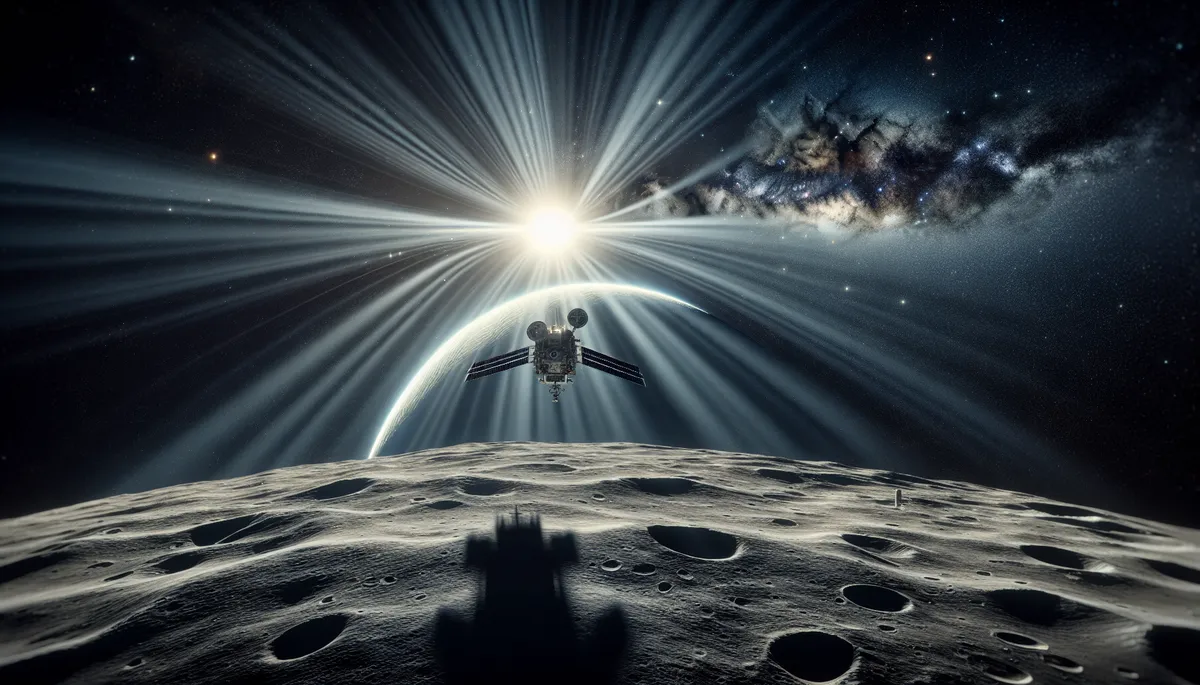
Mission Timeline: Ten Days From Launch to Splashdown
SLS lifted off from Launch Pad 39B at Kennedy Space Center at 6:35 p.m. EDT on April 1. Forty-nine minutes after launch, the upper stage fired to place Orion into a high elliptical orbit roughly 46,000 miles above Earth. The crew spent approximately 24 hours in this orbit running comprehensive system checks before committing to the lunar trajectory.
On April 2, the service module engine fired for 5 minutes and 50 seconds in a maneuver called the translunar injection burn, or TLI. That burn pushed Orion out of Earth orbit entirely, making it the first crewed spacecraft to leave Earth’s gravitational neighborhood since Apollo 17 in 1972. In short, TLI was the point of no return that separated a routine orbital flight from a deep-space mission.
The full mission spans roughly 10 days, with splashdown planned in the Pacific Ocean off the coast of San Diego. Every phase of the flight, from launch through TLI, lunar flyby, and ocean recovery, is designed to rehearse the procedures that will be used on Artemis III, the mission intended to land astronauts on the Moon’s surface.
SLS and Orion: What a 322-Foot Rocket Carried to the Moon
The Space Launch System stands 322 feet tall and weighs approximately 11 million pounds at liftoff, making it the most powerful crewed launch vehicle since the Saturn V that carried Apollo astronauts in the 1960s and 1970s. Orion’s service module was built by the European Space Agency, and all four solar array wings deployed successfully after launch.
Put simply, the United States built the rocket and the crew capsule while Europe provided the propulsion and power systems. After liftoff, Orion entered a high elliptical orbit about 46,000 miles above Earth and spent roughly 24 hours running system diagnostics before the crew committed to the journey to the Moon.
Four CubeSats, small satellites contributed by Argentina, Germany, South Korea, and Saudi Arabia, were deployed from the SLS Orion stage adapter. These payloads turn Artemis II into more than a NASA-only project. They make it a genuinely international collaboration, with scientific contributions from four different continents riding on a single American rocket.
$100B Wiped: Google’s TurboQuant Cuts AI Memory Cost 6x
30 Science Targets on the Far Side: Starting With Orientale Basin
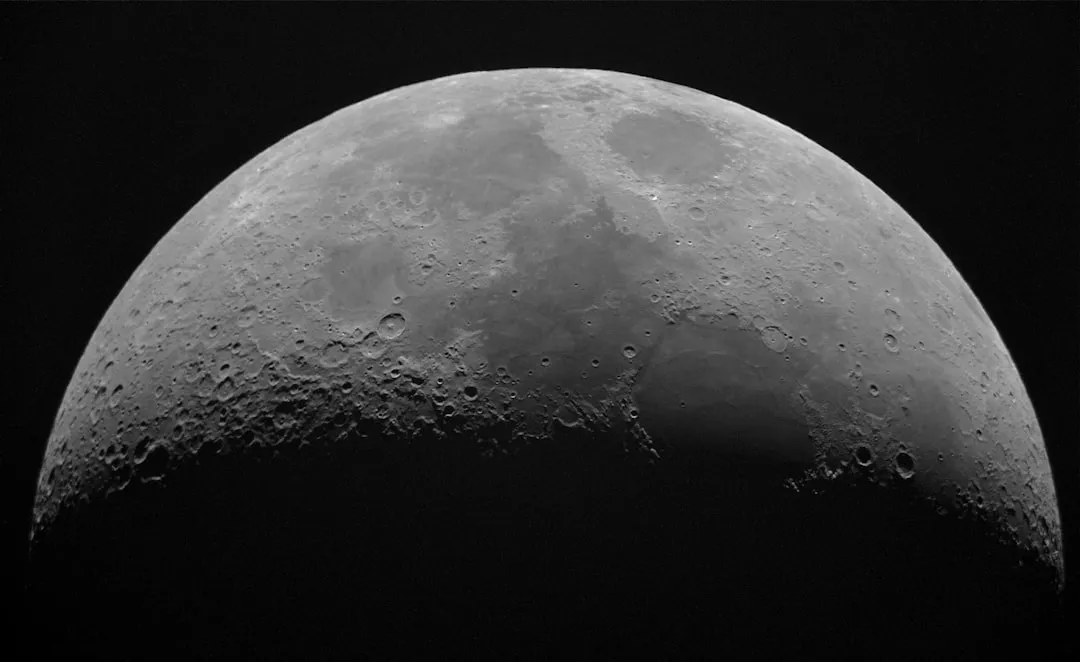
During the flyby, the Artemis II crew is tasked with photographing and visually observing 30 science targets on and around the Moon. The top priority is the Orientale Basin, a massive impact crater roughly 600 miles in diameter and approximately 3.8 billion years old. It sits at the boundary between the Moon’s near side and far side, and its multi-ring structure has never been observed from this close by human eyes.
The second major target is the Hertzsprung Basin, a crater roughly 400 miles across located on the far side. Hertzsprung’s surface shows significant degradation from subsequent impacts, making it a valuable site for studying how billions of years of bombardment have weathered the lunar terrain. Why this matters: far-side weathering data cannot be gathered from Earth-based telescopes or near-side orbiters with the same level of detail.
All observations are being conducted under partial illumination, with sunlight hitting the surface at an oblique angle. The resulting shadows enhance the three-dimensional relief of craters and ridges, ideal conditions for producing high-resolution topographic maps. This data will directly inform candidate landing site selection for Artemis III’s crewed surface mission.
Four Astronauts: The First Humans Near the Moon in 53 Years
The Artemis II crew consists of Commander Reid Wiseman, Pilot Victor Glover, and Mission Specialist Christina Koch, all NASA astronauts, along with Canadian Space Agency astronaut Jeremy Hansen. Hansen becomes the first non-American astronaut to fly in the vicinity of the Moon, a milestone for international human spaceflight.
On Flight Day 5, April 5, the crew completed a demonstration of the Orion Crew Survival System spacesuit. The session included leak checks, seat ingress simulations, and mobility assessments, all critical procedures for emergency preparedness during deep-space travel. This is a mandatory gate that must be passed before Artemis III can send astronauts to perform extravehicular activity on the lunar surface.
NASA Administrator Jared Isaacman called the launch “a defining moment for our nation and for all who believe in exploration.” Mission management team chair John Honeycutt added, “It really doesn’t get much better than this. This is making history.” Both statements underscore that Artemis II carries weight far beyond a technical test flight, serving as a national and international statement of intent.
From Apollo to Artemis: What Changed in 53 Years
Apollo 17 in December 1972 was the last time humans flew to the Moon. After the Cold War ended, NASA’s budget was redirected toward the Space Shuttle and the International Space Station, and political will to fund lunar missions disappeared with it. The technology was never the bottleneck; politics and budget priorities created the 53-year gap.
The Artemis program took a phased approach. Artemis I, an uncrewed test flight in 2022, validated the basic performance of the Orion spacecraft and SLS rocket. Artemis II in 2026 is now conducting the first crewed operation of Orion’s life-support systems in deep space, and the data from this mission feeds directly into Artemis III, which aims to land astronauts on the lunar surface.
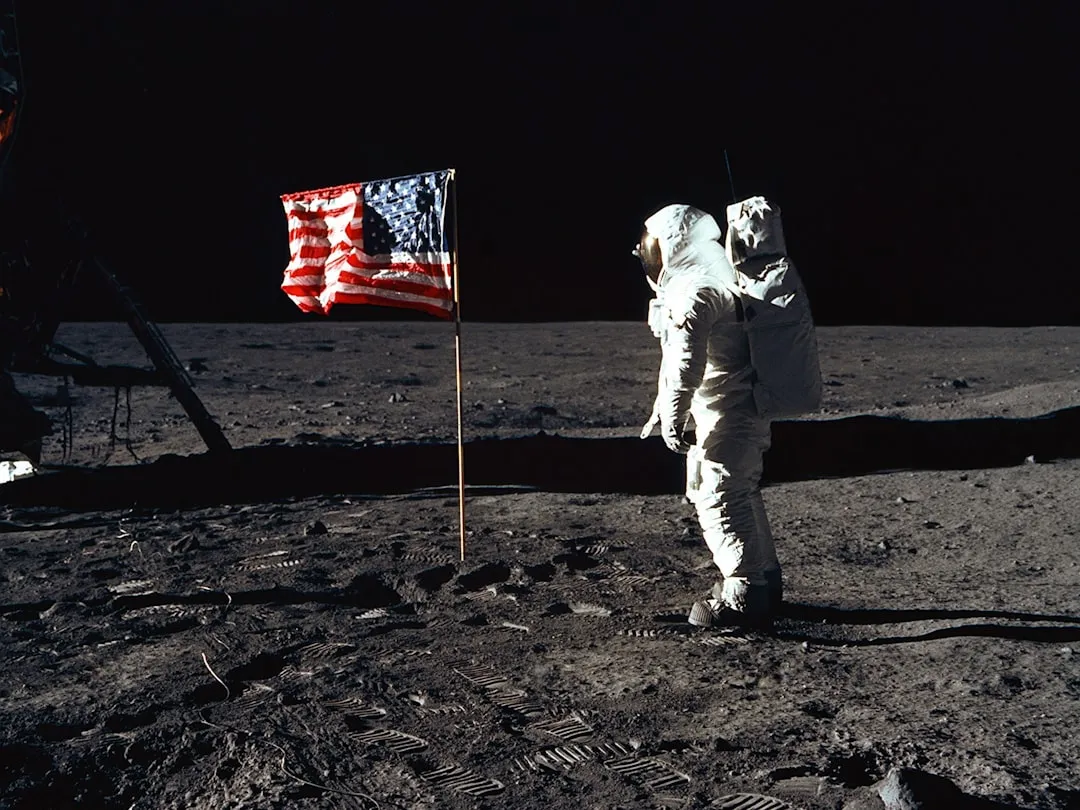
Dr. Lori Glaze of NASA declared that “for the first time since Apollo 17 in 1972, humans have departed Earth orbit.” The takeaway: in 1972, two astronauts walked on the Moon. In 2026, four astronauts are validating the technologies needed for sustained human presence near the Moon, a fundamentally different objective that reflects the shift from flags-and-footprints exploration to long-duration infrastructure building.
Investment Signal: Why Defense and Aerospace Stocks Are Responding
The successful technical validation of Artemis II sends a signal through the entire aerospace value chain. Boeing and Northrop Grumman are the prime contractors for SLS, while Lockheed Martin built the Orion spacecraft. As the Artemis program extends to missions III and IV, the contract backlogs for these defense firms grow in direct proportion.
Global startup investment hit $297 billion in Q1 2026, a record high according to Crunchbase data. Space technology’s share of that total has been climbing, and the successful completion of Artemis II’s technical milestones strengthens investor confidence in the commercial viability of lunar and cislunar ventures.
If Artemis III’s crewed lunar landing succeeds, it opens a new market for lunar resource extraction and surface base construction. The life-support and deep-space navigation technologies that Artemis II is validating right now are the prerequisite for that market to exist. For investors, two indicators deserve close tracking: the formal schedule announcement for Artemis III and the status of SLS contract renewals with Boeing and Northrop Grumman.
References
- NASA (2026-04-01) – Artemis II launch at 6:35 PM EDT from Kennedy Space Center Pad 39B
- NASA (2026-04-01) – CubeSat deployment from four nations (Argentina, Germany, South Korea, Saudi Arabia) and NASA Administrator Isaacman statement
- NASA (2026-04-02) – TLI burn of 5 minutes 50 seconds, first Earth orbit departure since Apollo 17 (1972)
- NASA (2026-04-02) – Dr. Lori Glaze statement on first human departure from Earth orbit since 1972
- NASA Flight Day 5 (2026-04-05) – Closest lunar approach at 4,070 miles, maximum Earth distance of 252,760 miles, breaking Apollo 13 record of 248,655 miles
- NASA Flight Day 5 (2026-04-05) – 30 science targets including Orientale Basin (600 miles, 3.8 billion years old) and Hertzsprung Basin (400 miles)
- NASA Flight Day 5 (2026-04-05) – 40-minute communications blackout (6:44-7:25 PM EDT) and spacesuit demonstration
- Space.com (2026-04-05) – SLS height of 322 feet, weight of approximately 11 million pounds, John Honeycutt statement
- Benzinga (2026-04-06) – Q1 2026 global startup investment record of $297 billion
Stay Ahead of the Curve
Get the latest insights on AI, tech, and markets — delivered in both Korean and English.

Jugger | Backend Developer
A backend engineer working in enterprise solutions software since June 2021. The hands-on perspective from system design, API implementation, and production operations directly informs this site’s
AI, IT, and cloud infrastructure coverage.
For topics outside direct professional experience—blockchain and macroeconomics—analysis is built on primary-source citations such as SEC filings, whitepapers, institutional research, and government
statistics. Speculation is clearly separated from verified fact, and unverified claims are not published.
AI tools assist with drafting, but every article is reviewed, revised, and verified before publication. Errors are corrected with visible notes when discovered.
Contact: jjunggulee@gmail.com