Key Takeaways
AI world models are systems that build an internal model of how the physical world works — space, time, physics, causality, and object permanence. Unlike large language models (LLMs), which predict the next word, world models predict the next state of a scene, learning from video, images, and sensor data rather than text. Google DeepMind’s Genie 3 (real-time, 720p at 24 frames per second) and Fei-Fei Li’s Marble are the flagship 2026 examples. Used to train robots, self-driving cars, and game worlds, they are now widely called AI’s next frontier.
- LLMs predict the next word; world models predict the next state — learning physics from video and sensors, not text
- Google DeepMind Genie 3 (Aug 2025): text-to-environment at 720p and 24 fps, with roughly one minute of spatial memory
- World Labs’ Marble (Nov 2025): editable, downloadable 3D worlds from text and photos, viewable on Vision Pro and Quest 3
- MIT Technology Review named world models a 2026 breakthrough technology — a stepping stone toward robotics and AGI
AI world models are the phrase Silicon Valley can’t stop saying in 2026. The reason shows up in a simple test. Ask ChatGPT what happens when you push a cup off the edge of a table, and it will tell you the cup falls and may shatter. Yet the model has never once seen a cup fall — it has only read the sentence, millions of times.
That gap, between knowing-in-words and knowing-in-experience, is what world models set out to close. This guide explains what world models are, how they differ from large language models (LLMs), and how they actually work — from Google DeepMind’s Genie 3 to Fei-Fei Li’s Marble, and on to robots, self-driving cars, and games. By the end, the label “AI’s next frontier” should make sense.

What Is a World Model — and How It Differs From an LLM
A world model is an AI that carries an internal representation of how the world behaves. It simulates physical principles — gravity, inertia, collisions, and the persistence of objects — on its own. Where a large language model learns the statistical structure of language, a world model learns the statistical structure of space and time.
The decisive difference is what each one predicts. An LLM guesses the next word in a sentence; a world model guesses the next state of a scene. That changes the training data, too: not text, but video, images, sensor streams, and physics simulations. From millions of clips, a world model learns object permanence — that a ball rolling behind a desk still exists even when it leaves the frame.
Put simply, a world model tries to give AI lived intuition instead of read-about knowledge. For systems that must move through real space — robots, self-driving cars, drones — that distinction is everything.
Humans do this without thinking. Glance at a table and you instantly know that nudging the mug will tip it over, because you already hold a model of how the scene will respond. World models are the attempt to transplant that mental model into a machine.
How They Work — Rolling the Next State in Latent Space
The idea of carrying a model of the world in your head is old. In 1943, the Scottish psychologist Kenneth Craik argued in The Nature of Explanation that the mind runs a small-scale model of reality to anticipate events. In the early 1990s, the reinforcement-learning researcher Richard Sutton turned that into an algorithm with Dyna, letting an agent plan inside a learned model of its environment. Today’s boom is a decades-old concept finally meeting the compute and data to make it work.
The modern blueprint arrived in 2018, when David Ha and Jürgen Schmidhuber published their paper on world models. Their design compressed each scene with an encoder (a VAE, a neural network that squeezes images into compact number vectors), tracked change over time with a recurrent network (RNN), and let a small controller rehearse actions inside a compressed latent space they nicknamed a dream. Crucially, the agent learned inside the model’s own imagination rather than in the real world itself.
Today’s systems scale that idea enormously. Google DeepMind’s Genie 3 works auto-regressively — generating the screen one frame at a time while recomputing the user’s action history several times a second. From a text prompt alone, it produces 720p environments at 24 frames per second and holds a user’s changes consistent for several minutes. It even accepts “promptable world events”: a typed instruction can change the weather or drop a new object into the scene.
That memory is the whole point. Only when the alley you just walked down is still there when you turn around can you say the AI truly understands the space.
Two Approaches: Generative (Pixels) vs Latent-Predictive (JEPA)
There are two broad ways to build a world model. The first is generative: it paints the pixels of the next frame directly. Genie 3, Marble, and Runway’s model all take this route.
The second is latent-predictive. Instead of rendering every pixel, it predicts only the next state inside an abstract, compressed representation of the world. Meta’s V-JEPA 2 and the JEPA (Joint-Embedding Predictive Architecture) behind it are the leading examples. The two camps diverge on compute cost, precision, and even on what should count as “understanding.”
Yann LeCun considers the effort to reproduce every pixel a waste. Predicting exactly how each leaf will flutter matters less, he argues, than predicting the concept that wind moves leaves — closer to how humans think. He maintains this path is better suited to human-level intelligence than today’s LLMs.
The 2026 World Models Landscape
By 2026 the field is a crowded arena where Big Tech and startups collide. Lining up the leading models by approach and purpose makes the terrain legible.
| Model | Maker | Released | Character |
|---|---|---|---|
| Genie 3 | Google DeepMind | Aug 2025 | Real-time interactive (720p, 24 fps) |
| Marble | World Labs | Nov 2025 | Editable, downloadable 3D world builder |
| Cosmos | Nvidia | Jan 2025 | World foundation models for physical AI |
| V-JEPA 2 | Meta | Mid-2025 | Latent-predictive (JEPA) physical reasoning |
| World model (first) | Runway | Dec 2025 | Physics-aware video generation |
Even under one label, the personalities differ. Genie 3 is a simulation you explore in real time; Marble is closer to a tool for building 3D worlds you can edit and download. Marble runs on tiers from four free generations to plans between $20 and $95 a month, built by World Labs, the company Fei-Fei Li founded with Justin Johnson. Every world it makes can be walked through directly on Vision Pro and Quest 3.
MIT Technology Review named the trend one of its 10 Breakthrough Technologies of 2026. Beyond the buzz of any single demo, that signals an industry preparing for whatever comes after language.
Where They’re Used — Robots, Driving, Games, Science
The biggest use for world models is as a training ground for “physical AI” — the AI that controls robots, vehicles, and other machines in the real world. Robots and self-driving cars can’t afford to fail a million times on real streets, but inside a world model’s simulation they can practice safely and, effectively, endlessly. Dangerous edge cases can be replayed without anything breaking. That is precisely why Nvidia released Cosmos for robotics and autonomous driving.
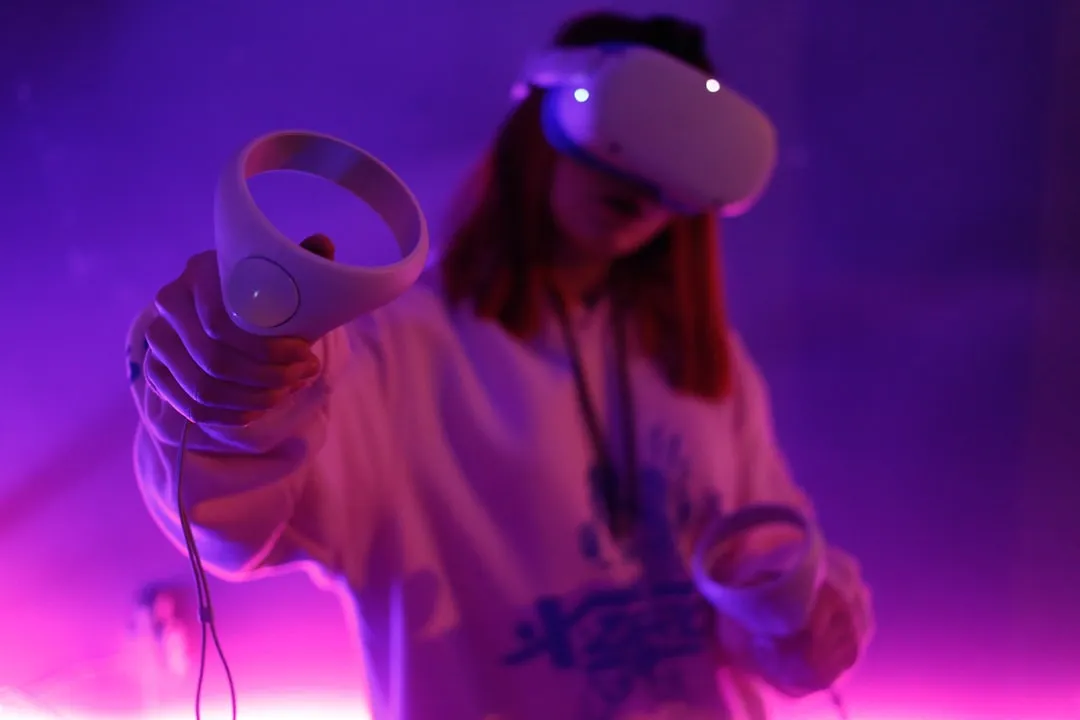
Game and VR content creation is shifting fast, too. A 3D world built in Marble can be walked through on Vision Pro or Quest 3, and Genie 3 conjures an explorable environment from a single line of text. Work that once took weeks of manual 3D modeling compresses into a few sentences.
Scientific research is a candidate as well — drug discovery and materials search, where physics has to be simulated. Running many conditions inside a model is faster and cheaper than staging every experiment in a lab. The same logic that lets a robot practice in simulation lets a researcher explore a vast space of possibilities before ever touching a beaker.
World models also matter to AI agents. An agent that plans and acts over many steps needs to picture how the world will change if it takes a given action. If you’re curious why agent reliability is so hard to measure, our piece on why AI agent benchmarks are breaking digs in.
How Diffusion Models Generate Images and Video From Noise
Limits and Outlook — Why “The Next Frontier”
It isn’t all upside: Genie 3 still supports only minutes of interaction, and holding hours-long consistency remains unsolved. The compute cost of generating frames in real time is also enormous.
Capital and talent are pouring in anyway. Yann LeCun left Meta to found AMI (Advanced Machine Intelligence) Labs, dedicated to world models. Runway raised a $315 million Series E at a $5.3 billion valuation. From startups to Big Tech, the race is on for control of whatever comes after language.
Many researchers see world models as a key stepping stone toward AGI (artificial general intelligence); DeepMind itself framed Genie 3 as progress in that direction. Two signals are worth watching — whether interaction time stretches from minutes into hours, and whether commercial tools like Marble get adopted into real robotics and game pipelines.
Frequently Asked Questions (FAQ)
Q1. What is the difference between a world model and an LLM?
An LLM learns the statistical structure of “what word comes next” from vast amounts of text, and uses it to generate language. A world model learns the “next state” of the world from video, images, and sensor data, simulating space, time, physics, and causality internally. In short, if an LLM speaks, a world model understands how the scene will change.
Q2. Is a world model the same as an image-generation AI (a diffusion model)?
They overlap, but the goals differ. A diffusion model focuses on generating a convincing single image or clip. A world model’s core job is to predict and maintain a physically consistent “next state” in response to a user’s actions. Even when Genie 3 or Marble uses generative techniques under the hood, the interactivity and spatial consistency set them apart.
Q3. How is Genie 3 different from Marble?
Genie 3 (Google DeepMind) is an interactive model you explore in real time (720p, 24 fps) from a text prompt. Marble (World Labs) focuses on building editable, downloadable 3D worlds from text, photos, and video. One is closer to a real-time simulation; the other to a content-creation tool.
Q4. Can you actually use world models today?
Some, yes. Marble launched commercially in November 2025 with tiers from four free generations to $20–$95 a month, and its worlds run on Vision Pro and Quest 3. Genie 3, by contrast, is still a limited research preview that supports only a few minutes of interaction. In other words, content tools are usable now, while a general-purpose real-time simulator is still early.
Q5. What is spatial intelligence?
It is a concept championed by Fei-Fei Li: the ability of AI to understand, reason about, and interact with three-dimensional space beyond language. World models are the core technology for building that spatial intelligence. Where a language model learns the statistical structure of text, a world model learns the statistical structure of space and time.
Q6. Are world models the path to AGI?
Many researchers think so. Yann LeCun argues world models are better suited to human-level intelligence than today’s LLMs, and DeepMind framed Genie 3 as a stepping stone toward AGI. That said, limits on duration and compute cost mean it is safest to treat the direction as promising rather than proven.
AI Agent Benchmarks Are Breaking in 2026
References
- Built In (2026) — Definition: LLMs predict the next word, world models predict the next state in space and time, trained on video, sensors, and physics simulations
- Google DeepMind (Aug 5, 2025) — Genie 3: 720p, 24 fps real-time interaction, auto-regressive frame generation, ~1 minute of spatial memory
- TechCrunch (Aug 5, 2025) — Genie 3’s promptable world events, SIMA embodied-agent training, research preview status
- TechCrunch (Nov 12, 2025) — World Labs’ Marble launch: four free to $20–$95/month tiers, Vision Pro and Quest 3 support, founder Fei-Fei Li
- Built In — Nvidia Cosmos (Jan 2025): a suite of world foundation models for physical AI
- Built In — Meta V-JEPA 2 and JEPA: predicting the next state in latent representation space rather than raw pixels
- Built In — Yann LeCun’s AMI Labs; world models “better suited for human-level intelligence than today’s LLMs”
- Built In — Runway’s first world model (Dec 2025), $315 million Series E at a $5.3 billion valuation
- Ha & Schmidhuber, “World Models” (2018) — Building on Kenneth Craik’s mental models (1943) and Sutton’s Dyna, a VAE encoder + RNN + controller trained inside a latent “dream”
- MIT Technology Review (Apr 21, 2026) — Named world models one of the 10 Breakthrough Technologies of 2026
Stay Ahead of the Curve
Get the latest insights on AI, tech, and markets — delivered in both Korean and English.

Jugger | Backend Developer
A backend engineer working in enterprise solutions software since June 2021. The hands-on perspective from system design, API implementation, and production operations directly informs this site’s
AI, IT, and cloud infrastructure coverage.
For topics outside direct professional experience—blockchain and macroeconomics—analysis is built on primary-source citations such as SEC filings, whitepapers, institutional research, and government
statistics. Speculation is clearly separated from verified fact, and unverified claims are not published.
AI tools assist with drafting, but every article is reviewed, revised, and verified before publication. Errors are corrected with visible notes when discovered.
Contact: jjunggulee@gmail.com