Key Takeaways
AI data center power demand is real, but the viral ‘1,000 TWh by 2026’ figure comes from an older 2024 IEA projection that bundled data centers, AI, and crypto together. The careful 2025 IEA ‘Energy and AI’ report isolates data centers at about 415 TWh in 2024, roughly doubling to 945 TWh by 2030. The bigger story is that the binding constraint is not generation but grid interconnection: new transmission takes four to eight years, transformer lead times have doubled, and about 20% of planned projects risk delay.
- The viral ‘1,000 TWh by 2026’ traces to the IEA’s January 2024 ‘Electricity 2024’ (data centers + AI + crypto combined, 460 TWh in 2022)
- The 2025 ‘Energy and AI’ report isolates data centers: ~415 TWh in 2024 → 945 TWh by 2030 (more than double); AI-specific demand quadruples
- The real bottleneck is connection, not generation: 4–8 year transmission, doubled transformer lead times, ~20% of projects at risk, a 2,600 GW PJM queue
- The response is nuclear PPAs and on-site power — plus the paradox that AI-based grid management could unlock 175 GW without new lines
Eight years. That is how long it now takes to plug a new AI data center into America’s largest power market. In 2008 the same interconnection took under two years; by 2025 it had crossed eight, a stark marker of where AI data center power really gets stuck.
Yet the public conversation points the wrong way. The headline everyone repeats is that the world’s data centers will swallow more than 1,000 TWh by 2026. But almost no one asks where that number came from, or what the real bottleneck is. This piece puts two IEA reports side by side to separate the figure from the hype — and to show that the grid bottleneck, not generation, sets the pace of AI’s expansion.
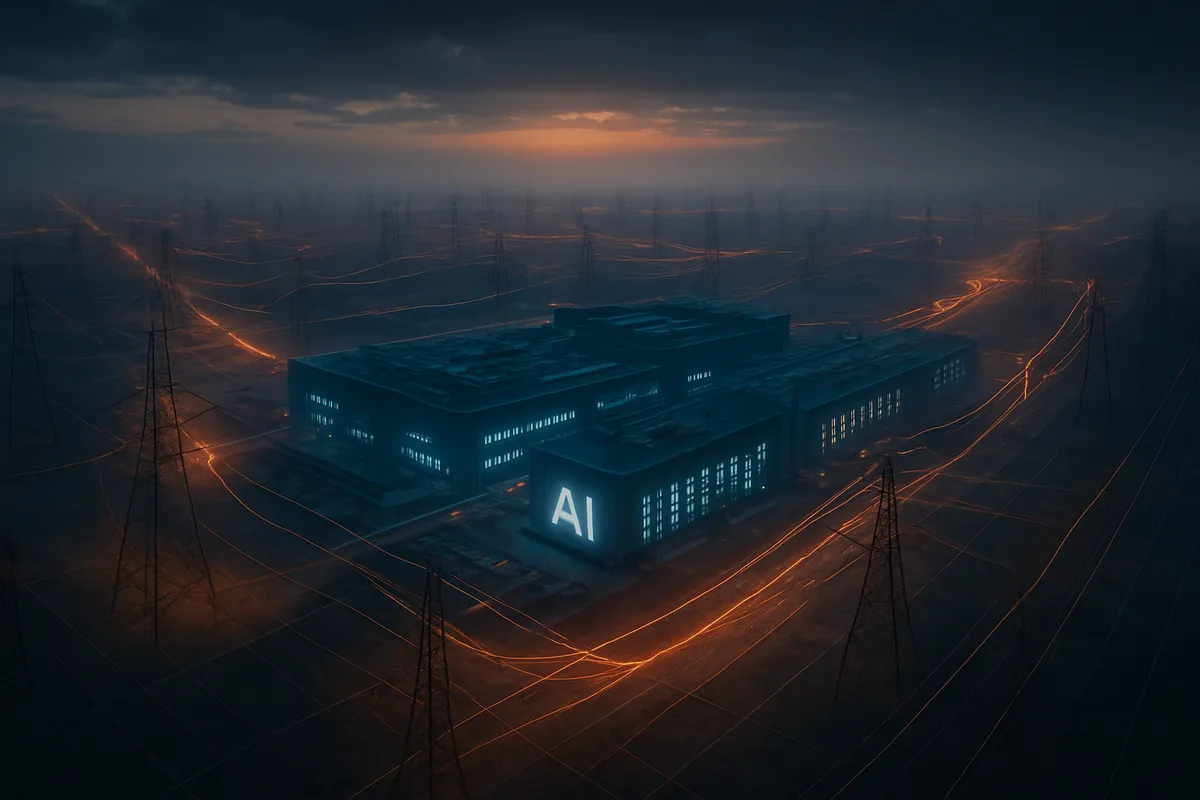
Where ‘1,000 TWh by 2026’ Actually Came From — Two IEA Reports
The confusion starts with two reports from the same agency. The viral number traces back to the IEA’s ‘Electricity 2024,’ published in January 2024. That report lumped data centers, AI, and cryptocurrency mining together and projected their combined draw would double from 460 TWh in 2022 — about 2% of global electricity — to more than 1,000 TWh by 2026.
Inside the same report, crypto’s draw was set to rise from 110 TWh in 2022 to roughly 160 TWh by 2026, while AI server demand was pegged to grow tenfold over 2023 by 2026. In other words, ‘1,000 TWh by 2026’ was never a data-center-only figure; it was a three-part sum that, through repetition, mutated into ‘AI alone will swallow 1,000 TWh.’
A year later, the IEA struck a different note. Its 2025 special report, ‘Energy and AI,’ separated data centers from the other two categories, rebuilt the estimate from the bottom up, and folded grid constraints into the model. This is not a story of one report being wrong; it is two estimates with different scopes that the market blurred into a single line.
| Dimension | IEA ‘Electricity 2024’ (Jan 2024) | IEA ‘Energy and AI’ (2025) |
|---|---|---|
| What it counts | Data centers + AI + crypto combined | Data centers alone (AI estimated separately) |
| Baseline | 460 TWh in 2022 (~2% of global) | ~415 TWh in 2024 (~1.5%) |
| Headline projection | Over 1,000 TWh by 2026 (double) | 945 TWh by 2030 (more than double) |
| When ‘1,000 TWh’ lands | 2026 | Around 2030 (scenario-dependent) |
| Emphasis | Total volume surge | Volume + grid bottleneck |
The Real Trajectory: 415 to 945 TWh — and the 2035 Fork
So what does the real path look like? The ‘Energy and AI’ report put 2024 data center consumption at roughly 415 TWh, about 1.5% of world electricity. That demand is set to more than double to around 945 TWh by 2030, with AI-specific facilities quadrupling over the same window.
Geography explains why that load strains the grid. In 2024 the United States accounted for about 45% of global data center demand, China 25%, and Europe 15% — and nearly half of US capacity sits in just five regions.
Households make the scale tangible. A typical AI data center draws as much power as about 100,000 homes, and the largest now under construction pull roughly twenty times that. Ireland shows where this ends: data centers already consume about 21% of the country’s electricity, and close to 79% in the Dublin area.
Further out, the uncertainty widens. The IEA’s 2035 scenarios fan out to roughly 960 TWh in a high-efficiency case, about 1,200 TWh in the base case, and as much as 1,700 TWh in a lift-off case. Our read: those three branches hinge on two variables — efficiency gains and the pace of AI adoption. For any one of them to land, the matching chip-efficiency and power-supply conditions have to hold together.
The Binding Constraint Isn’t Generation — It’s the Grid
This is where the primary sources tell the real story. You can build more generation, but if you cannot connect it to the data center, it does not help. According to the IEA, new transmission lines take four to eight years to build in advanced economies, and wait times for critical components like transformers and cables have doubled over the past three years.
As a result, the IEA estimates that unless grid risks are addressed, about 20% of planned data center projects could face delays. The on-the-ground numbers are harsher. In the US PJM market, the interconnection queue holds more than 2,600 GW of pending requests with average waits beyond five years, and the path from application to commercial operation has stretched from under two years in 2008 to over eight by 2025.
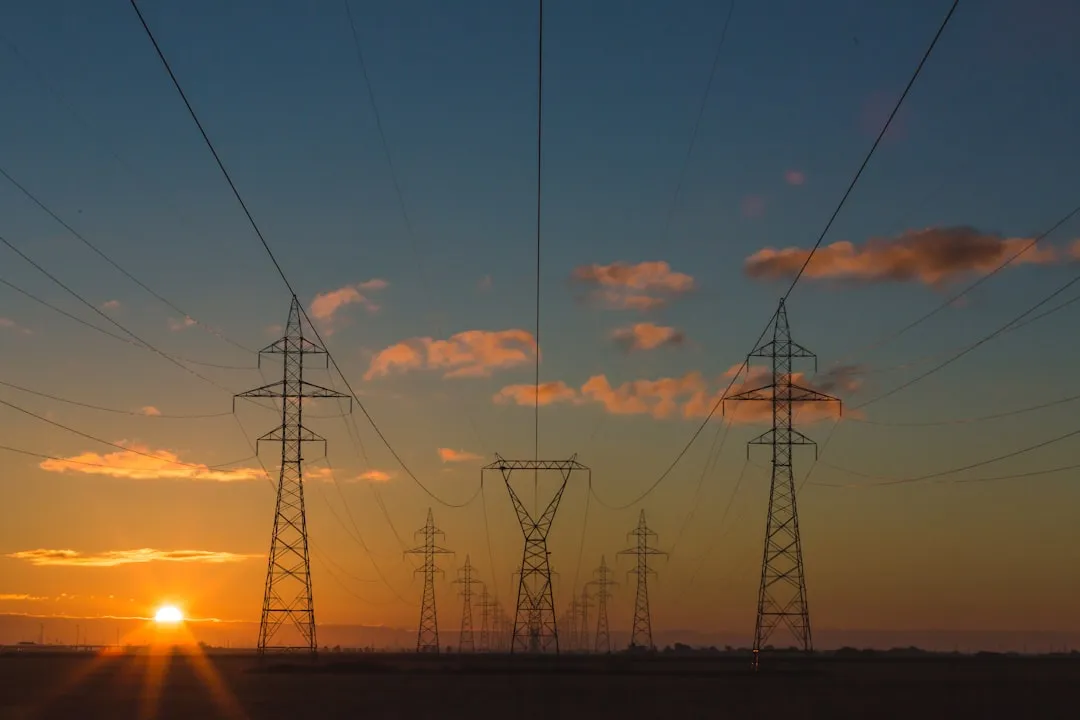
Zoom into the hubs and the bottleneck sharpens. In Northern Virginia, Dublin, Singapore, and Amsterdam, new high-capacity grid connections now wait four to seven years — and those are precisely the places where AI infrastructure clusters, so demand and bottleneck sit on the same map.
Why AI Data Center Power Hits the Grid Hardest — Density, Simultaneity, Time-to-Power
AI data centers punish the grid because of a mismatch in speed. Servers and GPUs can be installed in months, but power plants, transmission lines, and transformer upgrades take years. The industry calls this gap the ‘time-to-power’ problem — the lag from securing a site to actually energizing it.
Density and simultaneity make it worse. As noted, nearly half of US capacity clusters in five regions, and a single facility can hang a 100,000-home load on one point of the network. Unlike residential demand spread thinly across a city, that concentration slams specific substations and transmission corridors over a short window.
This reframes the chip-shortage debate. For two years the constraint on AI was told through AI semiconductors and AI compute costs. But even when chips and capital are abundant, a blocked grid connection pushes the go-live date out anyway. Our read: the center of gravity has moved from chips to power, and now to grid interconnection.
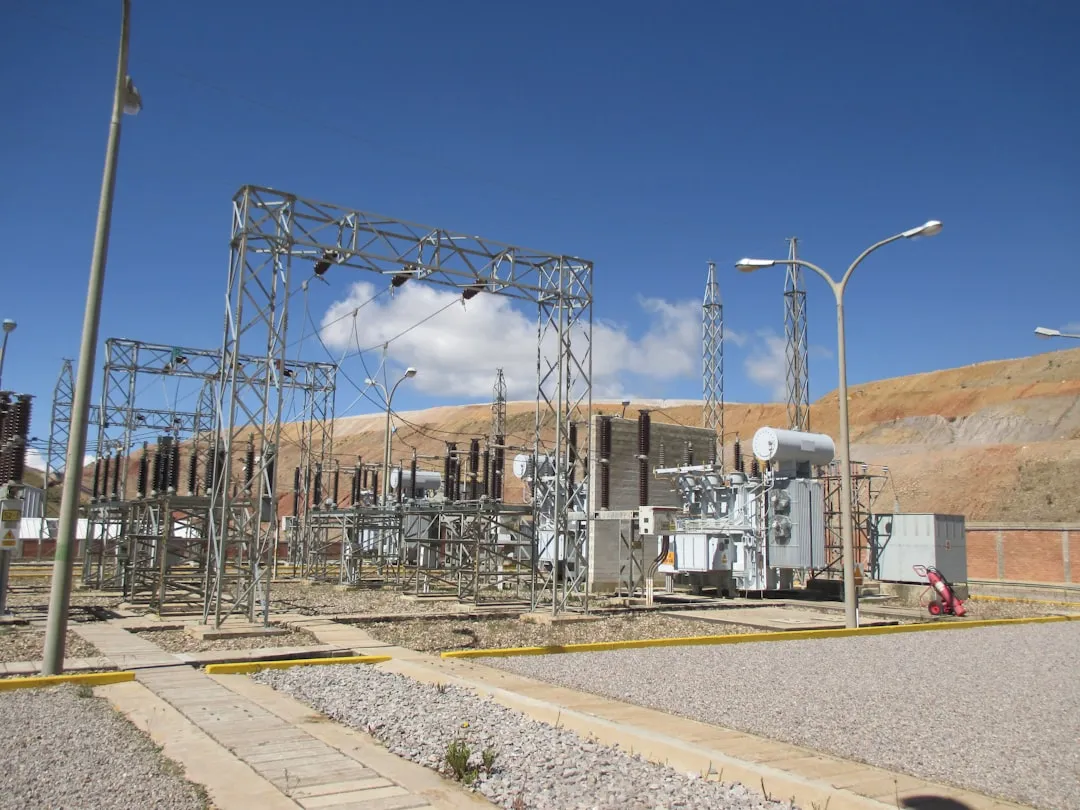
Half of US AI Data Centers Stalled in 2026
How the Industry Is Responding — and the Paradox That AI Eases the Grid
If the bottleneck is connection, the responses cluster around bypassing it. Microsoft, Google, and Amazon have all moved to sidestep grid queues with long-term nuclear power purchase agreements (PPAs, contracts that lock in price and volume in advance) and on-site generation next to their data centers. The aim is to depend less on interconnection that can take years.
Here is the paradox: AI is both the cause and part of the cure. The IEA finds that remote sensors and AI-based grid management could unlock up to 175 GW of transmission capacity without building a single new line.
Demand-side flexibility is the other emerging card. If a data center trims or shifts part of its load when the grid is tight, it can earn faster interconnection in return. That said, this depends on standardization and regulation that are still early, which limits how far it scales today.
What It Means for Investors and Policy — and the Risks
A shifted constraint changes where to look. Attention has fixed on chips and models, but the primary data points elsewhere. Grid equipment, transmission infrastructure, and power procurement are the new limiting variables. For any data center plan to pencil out, securing chips is no longer enough — how it routes around a four-to-eight-year transmission backlog matters just as much.
Our read: Lay the two reports over each other and AI’s constraint has never sat still. It has moved from chips to power, and from power to grid ‘connection’ — and the primary sources put today’s bottleneck at that last step.
- The 2024 outlook framed the problem as total volume — the jump from 460 TWh to more than 1,000 TWh by 2026 was the headline.
- The 2025 report remeasured the same space as data centers alone, 415 to 945 TWh by 2030, and put the ‘connection’ problem front and center: four-to-eight-year transmission, doubled transformer lead times, and roughly 20% of projects at risk.
- PJM’s 2,600 GW queue and eight-year application-to-operation timeline say it plainly: connecting the power is slower than making more of it.
- So grid interconnection, not generating capacity itself, sets the ceiling on how fast AI data centers can scale.
None of this is certain. Even the IEA notes that 2030 AI data center power forecasts span a twofold-to-fourfold range, and reports differ in scope. So rather than treating any single number as a fixed future, the sharper move is to track the ‘connection’ indicators — transmission backlogs, component lead times, and interconnection queues — alongside the headline TWh.
AI Semiconductors Own the Rack — the $1.2T Teardown
References
- Data Center Frontier — IEA ‘Electricity 2024’ summary (2024-03-08) — Data centers + AI + crypto combined draw to double from 460 TWh in 2022 (~2% of global) to over 1,000 TWh by 2026
- Data Center Frontier (2024-03-08) — Crypto draw 110 TWh (2022) → ~160 TWh (2026); AI server demand ~10x over 2023 by 2026
- NS Energy — IEA ‘Energy and AI’ summary (2025-04-22) — 2024 data center electricity ~415 TWh (~1.5% of global); US 45%, China 25%, Europe 15%
- Carbon Brief (2025-09-15) — Data center electricity ~945 TWh by 2030 (more than double); Ireland 21% / Dublin 79%; 2030 projections span twofold-to-fourfold
- Data Center Frontier — IEA ‘Energy and AI’ (2025-04-23) — 2035 data center scenarios: ~960 TWh (high efficiency), ~1,200 TWh (base), ~1,700 TWh (lift-off)
- IEA ‘Energy and AI’ Executive Summary (2025-04-10) — Transmission build 4–8 years; transformer/cable lead times doubled in three years; ~20% of planned data center projects at risk of delay
- IEA ‘Energy and AI’ Executive Summary (2025-04-10) — Remote sensors and AI-based grid management could unlock up to 175 GW of transmission capacity without new lines
- NS Energy (2025-04-22) — A typical AI data center draws ~100,000 households of power; the largest under construction ~20x that
- World Economic Forum (2026-05) — PJM queue 2,600+ GW, average wait beyond 5 years; application-to-operation under 2 years (2008) → over 8 years (2025); hubs 4–7 years
- Novogradac — US interconnection queues and transmission-expansion backlogs are the critical constraint on timely energy deployment
- World Economic Forum (2026-05) — Microsoft, Google, and Amazon expand nuclear PPAs and on-site generation to bypass grid constraints
Stay Ahead of the Curve
Get the latest insights on AI, tech, and markets — delivered in both Korean and English.

Jugger | Backend Developer
A backend engineer working in enterprise solutions software since June 2021. The hands-on perspective from system design, API implementation, and production operations directly informs this site’s
AI, IT, and cloud infrastructure coverage.
For topics outside direct professional experience—blockchain and macroeconomics—analysis is built on primary-source citations such as SEC filings, whitepapers, institutional research, and government
statistics. Speculation is clearly separated from verified fact, and unverified claims are not published.
AI tools assist with drafting, but every article is reviewed, revised, and verified before publication. Errors are corrected with visible notes when discovered.
Contact: jjunggulee@gmail.com